
A lot of travelers reach the same point after a few charter trips. The flight itself is easy. The work around it is not.
Every new request means comparing operators again, checking aircraft options, reviewing contract terms, and trying to judge whether the quote is fair. That process gets old fast, especially for travelers booking more than a few trips a year.
Private jet membership programs exist to reduce that friction, but they do not all solve the same problem. A jet card, a deposit program, and a fractional-style commitment serve very different kinds of flyers. Treat them as interchangeable, and you can end up paying for benefits you will never use or locking yourself into rules that do not fit how you travel.
The range is wide. Entry-level access often starts around $50,000, and higher-tier programs can climb far beyond that. Analysts at Dataintelo estimate the global jet card membership market at USD 10.2 billion in 2024, with projected growth to USD 21.4 billion by 2033. That growth reflects a simple shift. Private aviation memberships are no longer a niche purchase for a handful of ultra-high-frequency flyers. They are a buying category with clear subtypes, pricing models, and service trade-offs.
That is the fundamental question behind any "best private jet membership" list. Best for whom?
A corporate flight department moving executives on short notice needs reliability, booking depth, and predictable service recovery when plans change. A family flying to ski or beach destinations may care more about peak-day access, pet policies, and cabin consistency. A traveler who books one-way trips a few days out will judge a program by flexibility and sourcing power, not by polished marketing.
This guide approaches the market from that practical angle. Instead of flattening every program into the same checklist, it focuses on traveler fit, so you can compare these memberships by how you fly, how often you fly, and how much structure you want.
1. Air Trek, Trek Select Program
A Florida-based traveler heading to the Caribbean three or four times a year usually does not need fractional ownership. They need a program that handles repeat trips well, keeps pricing incentives clear, and does not force a rigid hourly structure that outpaces actual usage.
That is the case for Air Trek's Trek Select program.
The setup is straightforward. It uses a deposit model with tiered entry points, and the appeal is easy to understand for travelers who fly often enough to want preferred treatment but not often enough to justify a heavier commitment. This sits in the middle of the market. More structured than ad hoc charter, less restrictive than some traditional card products.
Best for the regional repeat flyer
The strongest fit here is a traveler profile, not a prestige buyer.
This program makes the most sense for:
- Corporate travelers moving around the Americas on a repeat basis
- Families who want one operator relationship instead of sourcing each trip from scratch
- Leisure flyers who value service coordination as much as cabin time
That distinction matters. A buyer with highly compressed executive schedules may want the deepest guaranteed availability structure in the category. A household planning several warm-weather trips a year may care more about trip handling, pet accommodation, and whether the operator knows their preferences without a long back-and-forth every time.
The practical upside is the program's service style. Ground support touches, including car-related perks tied to the Punta Gorda base, can be useful if that airport is part of your routine. For the right customer, those details save time and reduce friction on departure days. For someone who never passes through that base, they are far less meaningful.
The geographic fit is also specific. This is a more natural match for flyers based in Florida or for travelers moving regularly between the U.S., Canada, the Caribbean, and parts of Central or South America. If your missions stay in that lane, the value proposition is easier to justify. If your travel pattern is broader, the reliance on partner lift outside its core footprint becomes a bigger consideration.
What works and what to watch
What works is the simplicity. Buyers can understand the commitment level, the service proposition, and the kind of user this program is built for without decoding a complicated rate structure.
The trade-off is familiar. You still need to place a meaningful deposit up front, and the benefits are strongest when your routing matches the operator's natural operating base and regional strengths. Travelers chasing nationwide fleet depth or heavy peak-period flexibility may find a larger program better suited to their needs.
For the traveler profile that fits, this is a sensible middle-ground option. It suits the repeat regional flyer who wants a closer operator relationship, family-friendly service, and a membership format that does not overbuild the commitment.
2. NetJets, NetJets Card
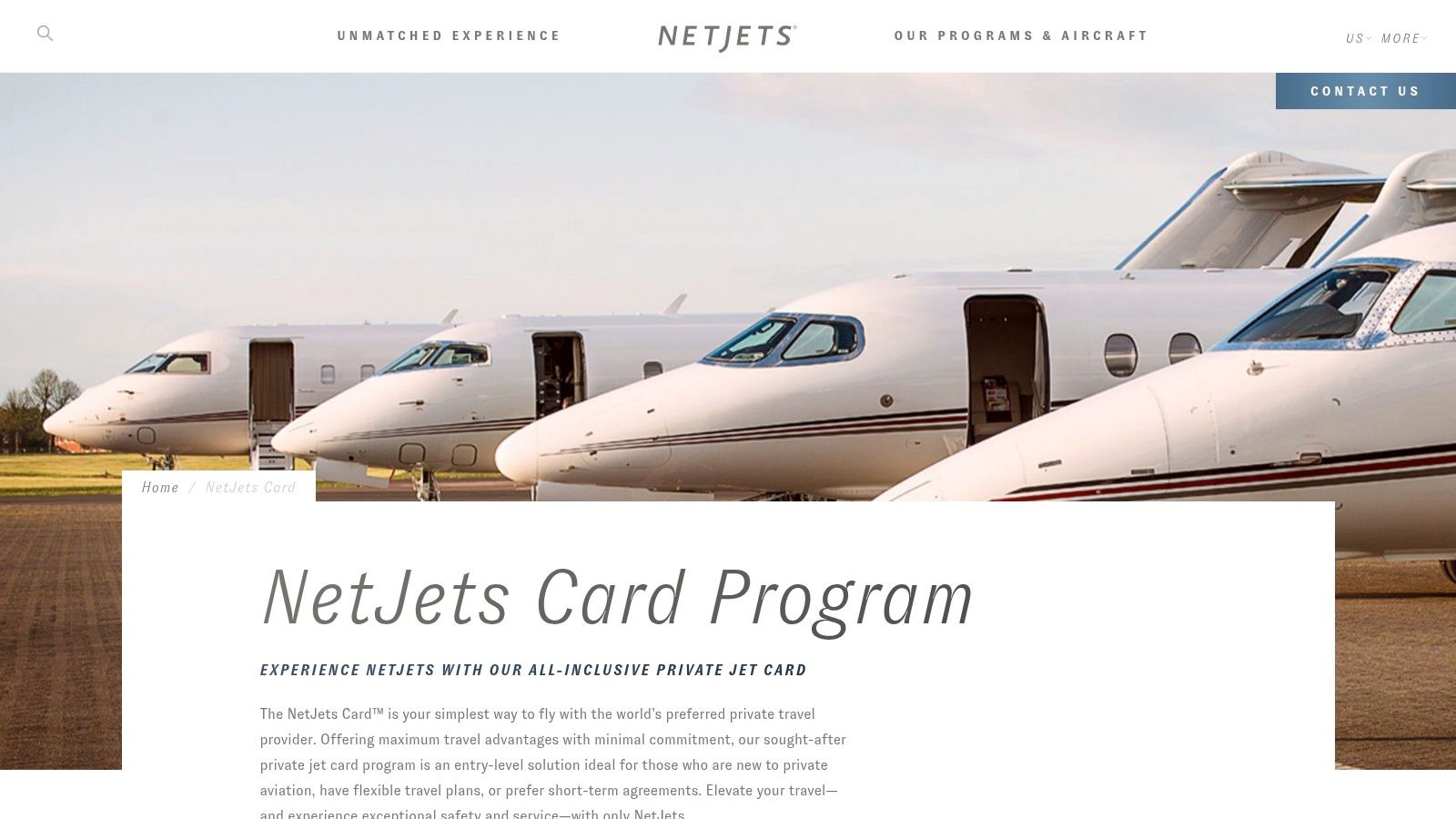
NetJets remains the benchmark name for a reason. If your travel profile is “I can't afford operational drama,” this is the program many buyers compare against first.
Its card product is built around a 25-hour format with fixed hourly rates and guaranteed access. Public pricing isn't listed, so you'll need a quote, but a key selling point is the operating backbone behind the product. NetJets is repeatedly identified as a benchmark provider, and one comparison specifically describes it as the best jet card program for frequent flyers because of its large and diverse fleet and guaranteed availability in this jet card market comparison.
Best for the high-demand corporate traveler
NetJets is the right fit when reliability outranks almost everything else.
That usually means:
- Executive teams with critical schedules
- Frequent flyers who need broad aircraft choice
- Buyers who want an established safety and maintenance ecosystem
A practical advantage here is fleet breadth. You can right-size the aircraft to the mission instead of forcing every trip into one cabin category. That matters when your travel includes a mix of short business hops, longer domestic sectors, and occasional international work.
When a traveler says, “I need this handled,” NetJets is often the kind of program they mean.
The trade-off is cost transparency. You won't get clean public card pricing on the site, so comparison shopping takes more effort. Peak-period rules and related fees can also affect value, which is why you need to read terms instead of just buying the brand.
Still, if you're a corporate travel manager or a high-frequency flyer who wants scale, recovery depth, and fewer operational variables, NetJets is one of the safest choices in the category.
3. VistaJet, Program, VJ25, and Corporate Memberships
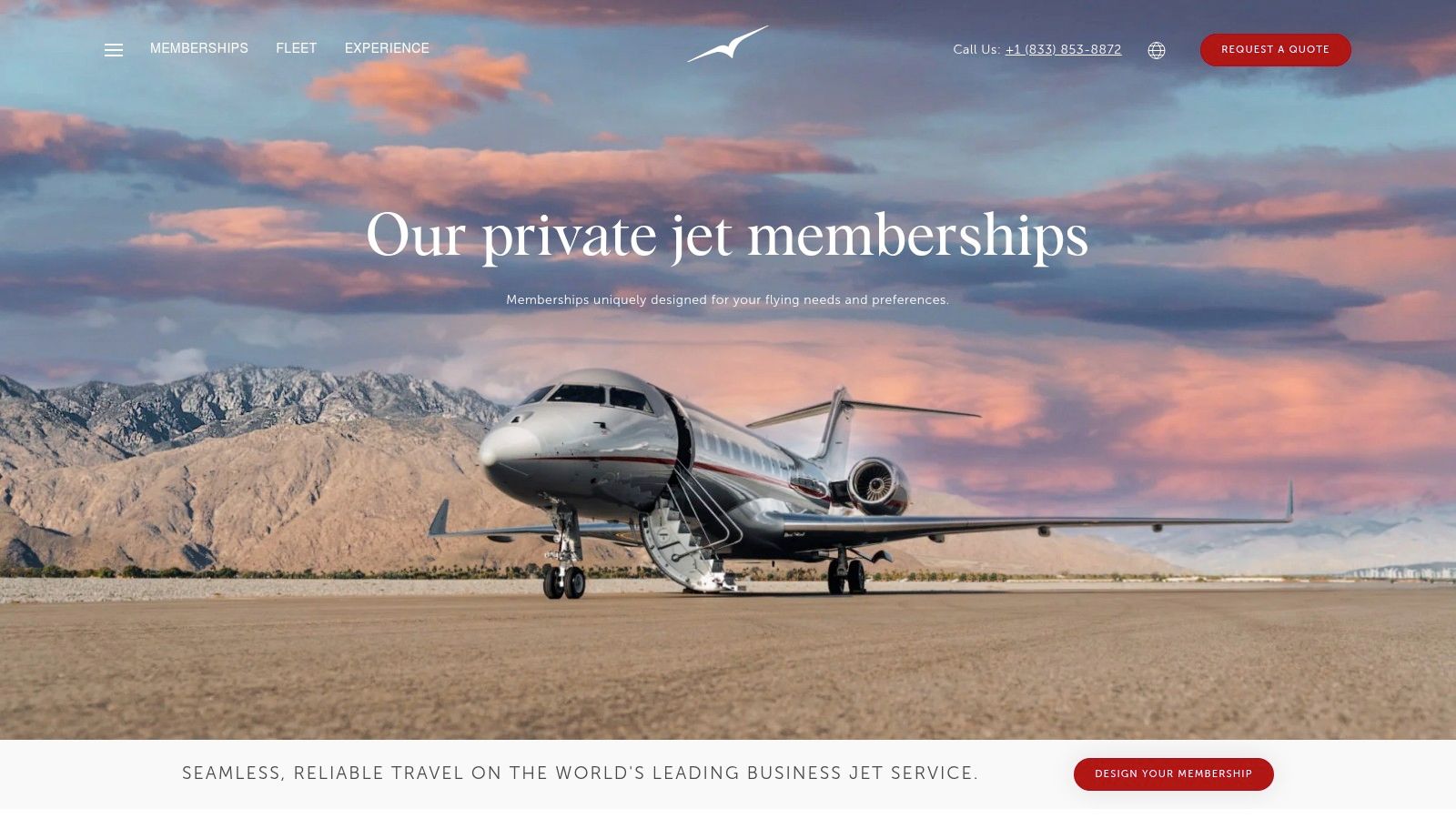
A CEO finishes meetings in London, needs to be in Dubai the next day, then sends family members to Europe a week later. That is the kind of travel pattern VistaJet is built for. It suits buyers who fly across borders often enough that a domestic-focused card starts to feel limiting.
The primary appeal is consistency across international missions. VistaJet sells a standardized service model, so the experience is less dependent on which local operator happens to cover a route. For global executives, family offices, and companies moving teams between regions, that predictability can matter as much as the aircraft itself.
Best for international and long-range use
VistaJet fits a specific traveler profile:
- Executives with regular cross-border schedules
- Family offices booking long-haul leisure and business trips
- Corporate travel planners who want one program that can cover multiple regions
- Buyers who care about cabin and service consistency from trip to trip
That last point gets overlooked. On international flying, inconsistency is expensive. A program can look competitive on paper, then lose value fast if service standards, aircraft quality, or trip execution vary by region.
VistaJet also markets around a simpler cost structure, including no upfront investment and no positioning fees in its own membership materials. That is useful because international buyers should focus less on headline entry cost and more on how the contract handles repositioning, peak periods, upgrades, downgrades, and cancellations.
Where VistaJet makes sense
VistaJet makes the strongest case for travelers who treat private aviation as a global mobility tool, not just a substitute for first class on domestic routes. If your year includes Europe, the Middle East, Asia, or multi-stop international itineraries, the model is easier to justify.
It is a weaker fit for short domestic hops. If most of your flying is two-hour segments inside one country, you may end up paying for a level of global reach you rarely use.
Pricing is customized, not public. Hour commitments and access terms can vary by membership type, including Program, VJ25, and corporate arrangements. That puts more pressure on the buyer to compare the fine print line by line. In practice, VistaJet is usually less about chasing the lowest hourly rate and more about buying consistency on complex international travel.
4. XO, XO Reserve Membership
XO Reserve is one of the more digital-first options in the category. If you like app-based booking, want visibility into pricing, and don't need the structure of a fixed hourly card, XO is a serious contender.
The published structure is clearer than many competitors. XO Reserve carries a $995 annual membership fee and a refundable $250,000 minimum deposit. That's useful because this category often hides the actual commitment behind a sales call. XO also advertises refundable deposits and no blackout dates in market comparisons, which is part of why it appeals to travelers who want flexibility without stepping into ownership.
Best for the spontaneous traveler who still wants access
XO fits a specific type of user. This is the traveler who may not fly on a rigid annual pattern but still wants priority access, a strong app experience, and the option to move quickly when a trip appears.
That profile includes:
- Entrepreneurs booking on short notice
- Leisure travelers with shifting plans
- Users who like digital self-service
XO also allows members to sell unused seats as shared charters and earn loyalty credit. For some travelers, that opens up a more flexible way to use private aviation than a standard one-user, one-trip membership model.
A good digital platform saves time. It doesn't erase the need to understand who actually operates your flight.
That last point matters with XO. It is a broker model, so flights are operated by licensed third-party carriers. Dynamic pricing also means your trip costs move with demand. That can work well in flexible periods and feel expensive in constrained ones.
If you want fixed-hour predictability, XO probably isn't your best fit. If you want priority access, digital convenience, and more flexibility than a rigid card structure, it's one of the better options in the market.
5. Sentient Jet, SJ25 and SJ25+ Jet Cards
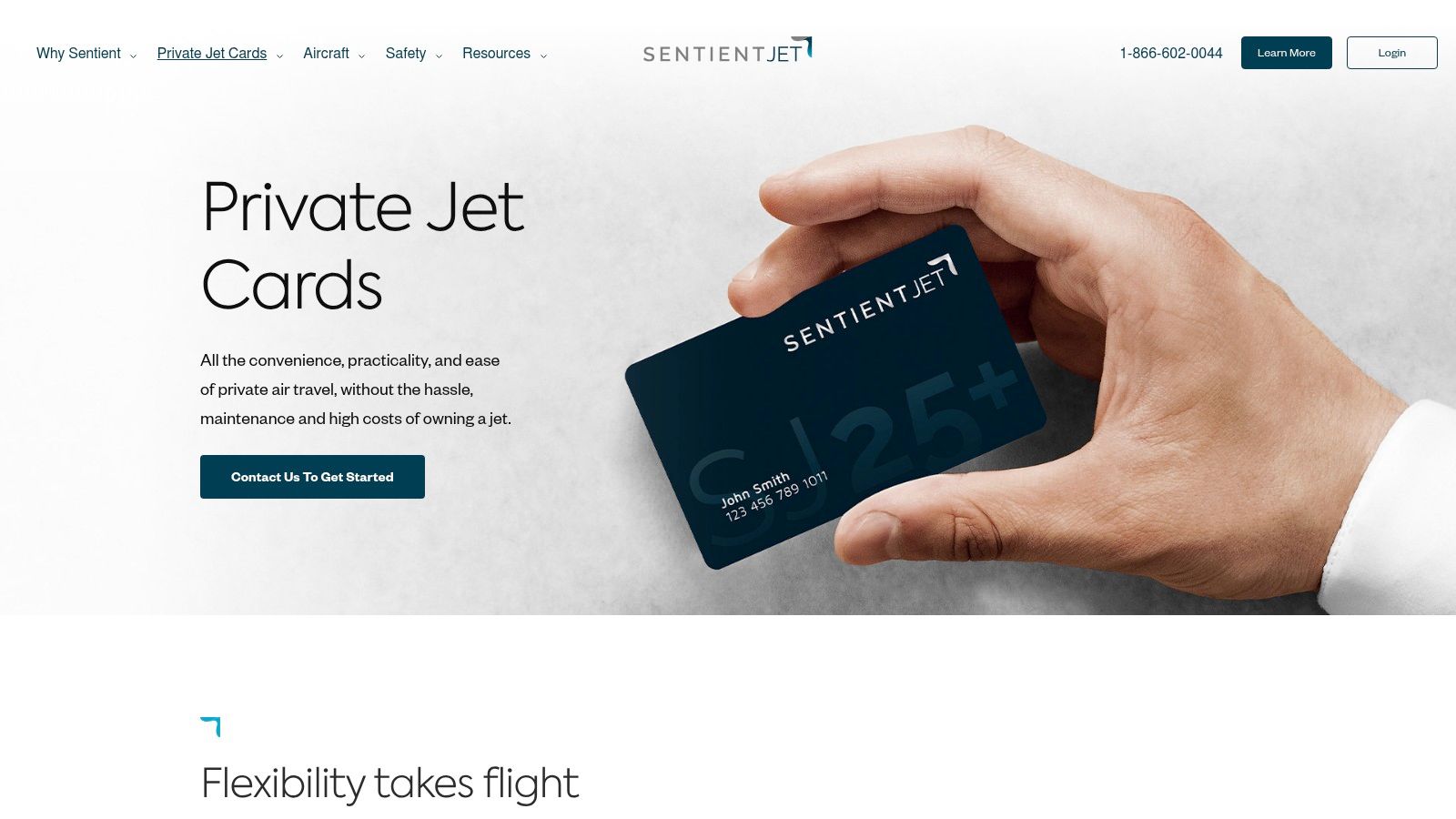
Sentient Jet has long appealed to buyers who want a classic jet card without too much mystery around the basics. Its SJ25 and SJ25+ products are built around 25-hour card blocks, with fixed hourly rates and a nationwide operator network.
The practical hook is transparency. Sentient publishes base pricing for these products, which immediately makes comparison easier than with many quote-only providers. It also offers hours that never expire, a feature that's especially helpful for travelers whose flying volume shifts year to year.
Best for moderate flyers who want fewer surprises
Sentient Jet is often a strong fit for people who fly enough to want structure, but not so much that they need a highly customized membership.
Typical good-fit users include:
- Business owners with recurring but uneven schedules
- Leisure travelers who don't want expiring value
- Buyers comparing fixed-rate card options
Its broker-based network gives it reach, and that reach is useful if your trips vary by destination and aircraft size. SJ25 handles the lighter end of use cases, while SJ25+ opens the door to mid and larger cabin missions.
The real trade-off
The upside of the broker model is flexibility and network breadth. The downside is service consistency. The aircraft and crews vary by operator, so the experience can vary more than it would with a tightly controlled in-house fleet.
Fuel surcharges and federal excise taxes are also additional, which is why published base pricing should be treated as the start of your comparison, not the end of it.
For a buyer asking, “Which program gives me a familiar card structure, non-expiring hours, and clearer public terms than most competitors?” Sentient Jet is one of the easiest names to justify.
6. Jet Linx, Jet Card Membership
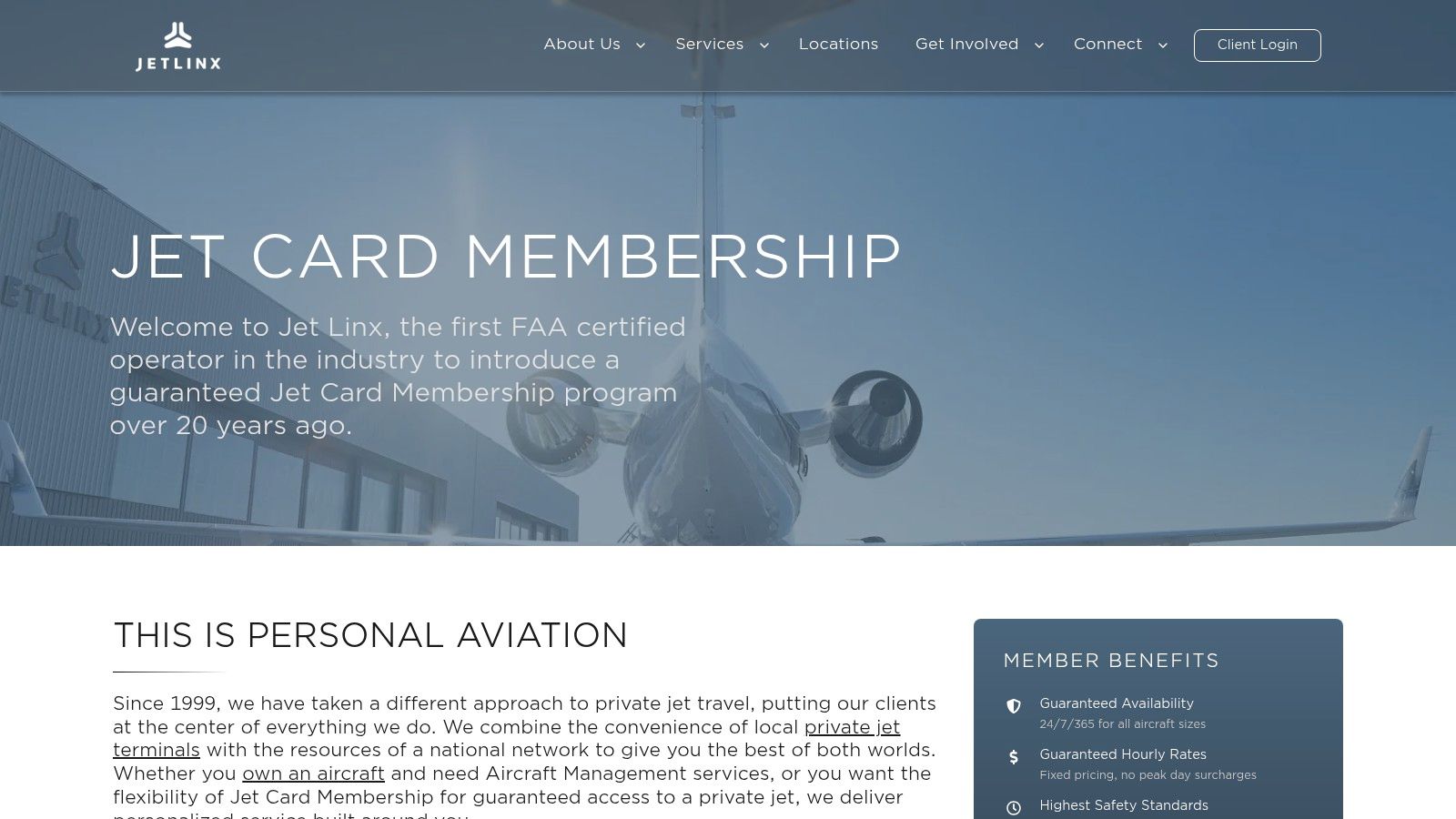
Jet Linx takes a different approach from the national-scale brands. Its value proposition is local. If you originate repeatedly from one of its base markets, that local-service model can feel much better than a giant network relationship.
The company frames the experience around members-only private terminals, local teams, guaranteed availability, and fixed hourly rates with rate locks. It also highlights no peak-day surcharges or reposition fees and a closed fleet under Jet Linx operational control.
Best for travelers who start from the same cities again and again
Jet Linx works best when your trips begin near one of its base cities and you value a predictable departure experience.
That profile often includes:
- Regional executives
- Corporate users with repeat departure points
- Families who prefer a private terminal environment
Its third-party safety credentials are also a legitimate selling point. Jet Linx cites ARGUS Platinum Elite, Wyvern Wingman PRO, and IS-BAO Stage 3. For buyers who treat private aviation as a vendor-management decision, those labels matter.
If you live near a strong Jet Linx base, the local terminal experience can be a deciding factor on its own.
What to watch before signing
The local model is the strength, but it's also the limitation. If you rarely originate near a Jet Linx base, some of the value fades quickly. This isn't the kind of program that looks equally attractive from every city.
Pricing also requires a quote. That isn't unusual, but it means you should compare the full trip economics, not just the promise of guaranteed access and no peak-day surcharges.
For travelers who want a private-club feel tied to real operating control, Jet Linx is one of the more compelling U.S. options.
7. flyExclusive, Jet Club
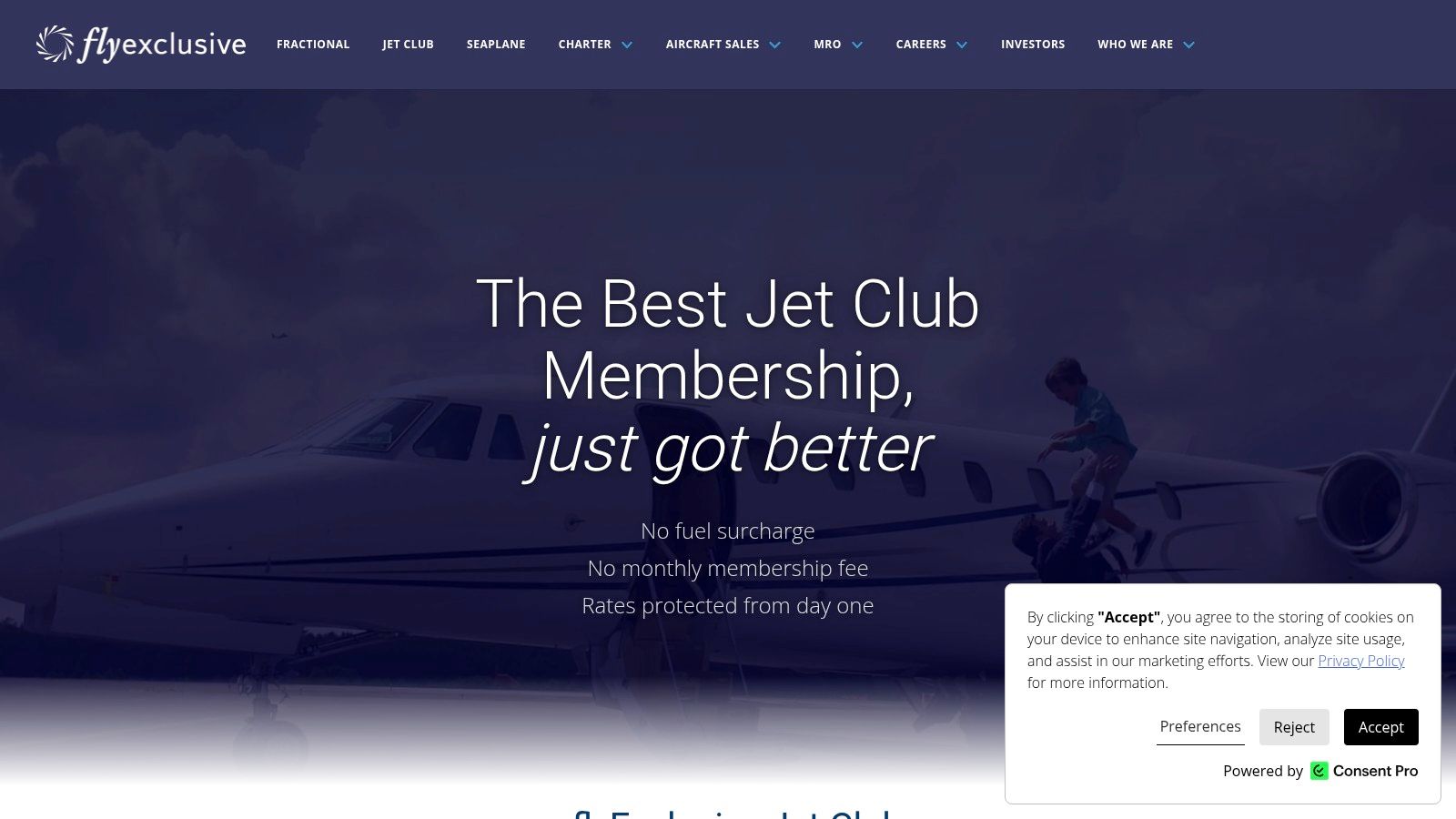
flyExclusive's Jet Club is aimed at travelers who care less about prestige language and more about straightforward operating logic. It's an operator-led program with a focus on predictability, including all-in pricing, rate locks, and a stated emphasis on flying members on company aircraft.
The program pages publicly indicate a $1,000 monthly membership fee. The broader pitch is simple: lock in pricing, avoid fuel surcharges, and keep as much of the flying as possible within the provider's own fleet.
Best for travelers who want operator control
This program tends to appeal to buyers who are skeptical of pure broker models and want stronger alignment between the company selling the membership and the company operating the trip.
That usually means:
- Frequent domestic business users
- Travelers who value predictable billing
- Buyers who prefer fleet control over marketplace access
A big practical point here is structure. If your flying pattern aligns well with Jet Club's trip categories and coverage model, the value can be very good. If it doesn't, the program can feel less efficient than a more flexible card or deposit arrangement.
Why it stands out
The strongest part of the proposition is clarity of intent. flyExclusive is trying to reduce pricing noise and increase operational consistency by keeping member trips close to its own fleet whenever possible.
The weaker point is public rate detail. Specific rate sheets usually require a proposal, so you still need to do real comparison work before committing.
For travelers who ask, “Should I lean toward an operator-run membership instead of a broker-heavy one?” flyExclusive is one of the better examples to evaluate.
Top 7 Private Jet Memberships Comparison
| Program | 🔄 Implementation complexity | 💡 Resource requirements | ⭐ Expected outcomes | 📊 Ideal use cases | ⚡ Key advantages |
|---|---|---|---|---|---|
| Air Trek, Trek Select Program | Medium–High: deposit-based tiers with concierge coordination and partner carriers | High upfront deposit ($50k–$250k) and membership commitment | Predictable 5–15% flight savings; high-touch ground service (localized) | Frequent flyers, families, corporates operating mainly in the Americas | Tangible discounts, premium Punta Gorda ground perks, pet-friendly, family-owned operator |
| NetJets, NetJets Card | Medium: mature operational processes to guarantee availability across large owned/managed fleet | High capital outlay to buy card hours; pricing by quote (not public) | Guaranteed availability, broad aircraft choice, strong safety and maintenance support | Frequent flyers and corporations needing reliability and wide fleet options | Industry-leading fleet size, deep safety/maintenance infrastructure, right-sizing aircraft |
| VistaJet, Program / VJ25 / Corporate | Low–Medium: investment-free memberships with standardized branded service | Moderate–High usage commitments; pricing customized via quote | Predictable fixed hourly rates and consistent branded cabin across long-range fleet | Global travelers flying long-range or international missions | Consistent service standard, no positioning fees in core zones, multiple tier options |
| XO, XO Reserve Membership | Medium: broker model integrated with app-forward dynamic pricing and resale options | $995 annual fee + refundable $250,000 deposit; app-based booking | Priority access to Vista ecosystem; dynamic trip pricing; ability to sell unused seats | Tech-savvy, flexible flyers who value instant pricing and seat sharing | Transparent membership fee, strong digital booking experience, seat resale option |
| Sentient Jet, SJ25 / SJ25+ | Low: simple jet-card structure with published base pricing and 25-hour blocks | Purchase 25-hour cards; published base prices; hours never expire | Fixed hourly rates, pricing transparency, hours that do not expire | Budget-conscious buyers who want fixed-rate simplicity and transparency | Public pricing, hours never expire, vetted operator network |
| Jet Linx, Jet Card Membership | Medium: base-location operator model with private terminals and local teams | Quote-based card purchase; best value near one of 20+ Jet Linx base cities | Guaranteed 24/7 availability, private terminal access, rate locks (12 months) | U.S. residents based near Jet Linx bases seeking local VIP service | Strong safety ratings, private terminals, no peak-day surcharges/reposition fees |
| flyExclusive, Jet Club | Medium: operator-run program emphasizing all-in pricing and on-fleet completion | Membership fee (~$1,000/month publicly indicated) and deposit/proposal-based rates | All-in pricing with long rate locks (24 months), high on-fleet completion likelihood | Members seeking predictable, all-in pricing from a vertically integrated operator | 24-month rate locks, no fuel surcharge, company-operated fleet focus |
How to choose the right fit for how you fly
A buyer who takes six family ski trips a year should not shop the same way as a flight department moving executives every week. That mismatch is where private aviation gets expensive.
Start with usage pattern, not brand recognition. The right program depends on how often you fly, how much schedule certainty you need, how flexible you are on aircraft type, and whether you want predictable budgeting or lower commitment. Buyers who ignore those points usually overbuy into a structure that looks impressive on paper and fits poorly in practice.
Match the program to the traveler profile
- The corporate team: Start with NetJets, Jet Linx, and flyExclusive. These programs tend to fit travelers who care about dispatch depth, service recovery, account support, and fewer financial surprises during heavy use.
- The family vacationer: Air Trek and VistaJet often make more sense here. Family travel usually puts more weight on consistency, pet handling, baggage tolerance, and support for multi-stop leisure itineraries.
- The spontaneous traveler: XO is often a practical fit for flyers who book closer to departure and want app-based access without stepping into a more rigid ownership-style commitment.
- The moderate flyer who wants structure: Sentient Jet works well for buyers who want rate clarity and a simple card format without feeling pressure to jump into a larger capital commitment.
Commitment level matters as much as service style.
At the top end, ownership and premium card models suit travelers who fly enough to justify paying for stronger access and more operating depth. At the lighter end, deposit programs and subscription-style memberships make more sense for buyers who want optionality, lower upfront exposure, or a way to test private flying before committing more capital. The trade-off is straightforward. Lower commitment usually means less certainty on price, access, or aircraft consistency.
A simple screening question helps. Do you need guaranteed lift on your busiest days, or do you mainly want easier access than ad hoc charter can offer? If the answer is guaranteed lift, focus on programs built around availability commitments, service recovery, and clear operating standards. If the answer is easier access with flexibility, a lighter membership can be the smarter buy.
The better question is not which brand sounds strongest. It is which program structure matches your actual flying habits, your tolerance for commitment, and the way you plan trips in real life.
Your aircraft awaits
A delayed board meeting in Chicago, a family ski week in Aspen, a Friday decision to be in Nassau by Saturday morning. Those trips do not ask for the same membership structure, and buyers get in trouble when they shop by brand first and operating model second.
The better approach is practical. Match the program to the way you fly.
A corporate flight department or executive office usually needs fast confirmations, recovery options when an aircraft goes out of service, and account support that does not turn every trip into a negotiation. A family buyer often cares more about cabin consistency, baggage flexibility, pet handling, and whether holiday travel is realistic under the program rules. A traveler who books late and flies irregularly may be better served by a lighter-access model than by paying for guarantees they rarely use.
That is why headline hourly rates rarely settle the decision. The true cost sits in peak-day limits, taxi-time treatment, interchange policies, upgrade pricing, ferry exposure, service area boundaries, and cancellation terms. I have seen buyers save on paper and spend more in practice because the program did not fit their routes or booking habits.
Each provider on this list serves a different profile. NetJets is often the reference choice for flyers who put scale and dispatch depth at the top of the list. VistaJet suits travelers who want a more uniform global product. XO appeals to buyers who value app-based access and flexibility. Sentient Jet and Jet Linx fit travelers who want more structure without jumping straight to ownership logic. Air Trek belongs in the conversation for travelers focused on the Americas who want a more personal service model and a program sized for practical use, not just brand recognition.
Choose based on mission, frequency, geography, and tolerance for upfront commitment. That is what holds up after the sales presentation.
Ready to compare a membership built around practical value across the Americas? Explore Air Trek's Trek Select membership program and see which tier matches the way you fly.