
Figuring out the cost of a private jet charter can feel a little confusing at first, but it’s actually pretty straightforward once you know what you’re looking at. The final price is more than just a simple hourly rate. It’s an all-in cost that includes the aircraft itself, flight time, fuel, airport fees, and a few other key items.
Think of it as a transparent receipt for a highly personalized trip, where every line item has a purpose.
How Private Jet Charter Pricing Actually Works
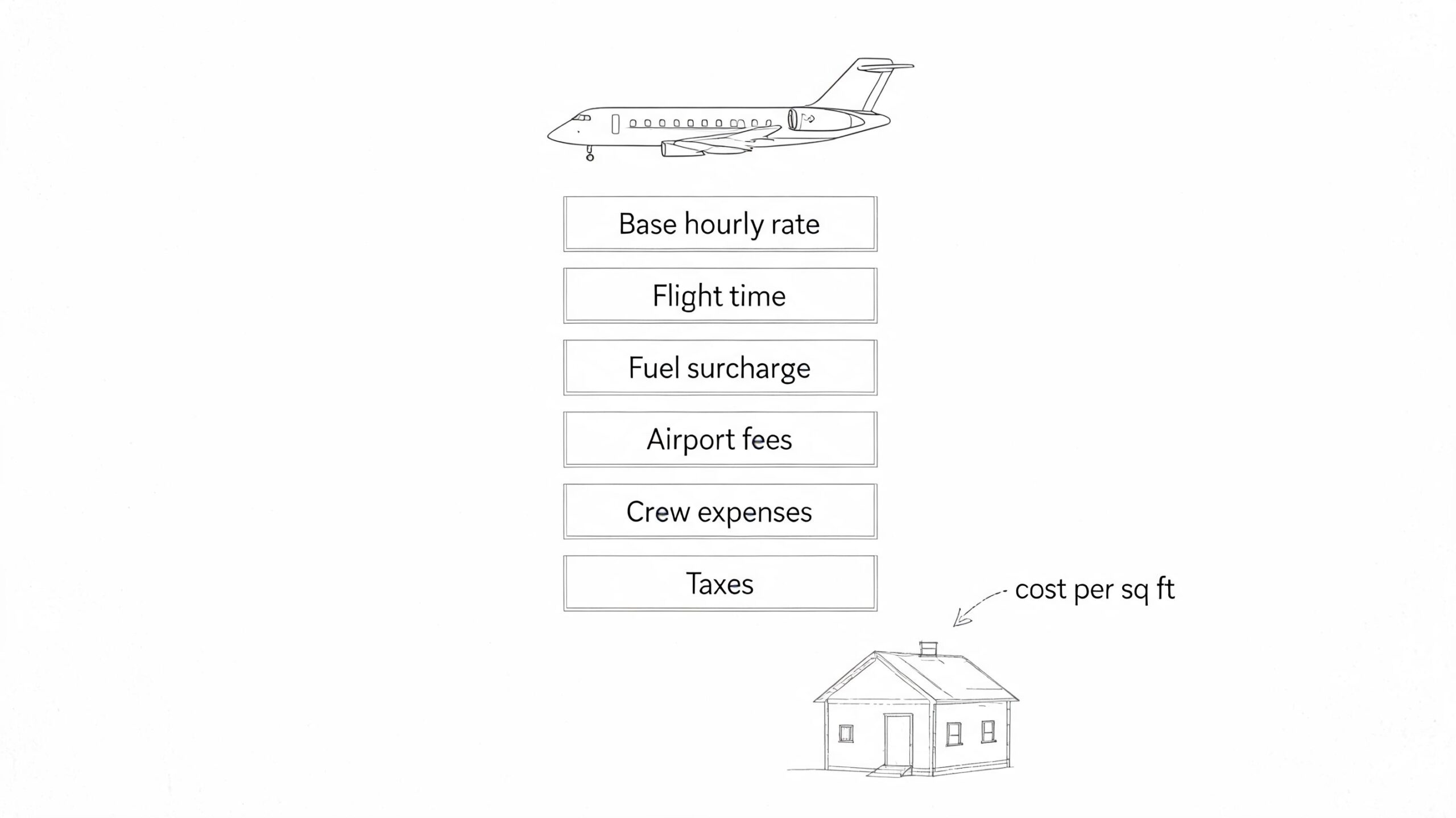
The first step to becoming a savvy flyer is understanding your quote. Many people mistakenly believe the price is just one flat hourly number, but that's only the starting point. It’s a lot like building a custom home—you have a base cost per square foot, but the final price really depends on the specific materials, finishes, and features you choose.
Your charter quote is no different. It’s a collection of distinct costs that come together to create your flight. While the aircraft’s hourly rate is the biggest piece of the puzzle, it's not the only one. Any reputable charter provider will give you an itemized quote so you know exactly where your money is going.
Your Charter Quote at a Glance
A standard charter quote will always have several key line items. Getting familiar with these terms helps you compare different offers and really see the value you’re getting.
Here is a simple breakdown of the main cost components you'll find on a typical private jet charter quote.
| Cost Component | What It Covers | Example |
|---|---|---|
| Aircraft Hourly Rate | The base cost for operating the specific jet model for your trip. | A larger jet like a Gulfstream will have a higher hourly rate than a smaller Citation. |
| Actual Flight Time | The total "wheels up" to "wheels down" time, billed by the hour. | A 2-hour flight will be billed for 2 hours of flight time. |
| Fuel Surcharges | A variable fee that adjusts for the current market price of jet fuel. | This charge fluctuates weekly or daily, similar to gas prices at the pump. |
| Airport & FBO Fees | Landing, parking, and ground handling fees charged by airports and private terminals. | Fees at major hubs like Teterboro (TEB) are typically higher than at smaller regional airports. |
| Crew Expenses | Costs for the pilots' hotels, meals, and ground transport on multi-day trips. | If your trip requires an overnight stay, this covers the crew's expenses. |
| Taxes & Fees | Federal Excise Tax (FET) and per-passenger segment fees on domestic U.S. flights. | A 7.5% FET is applied to the air transportation portion of your charter cost. |
Think of your quote as an open book. Each line item represents a real, tangible cost tied directly to your specific flight. A trustworthy operator makes sure there are no surprises by clearly outlining every charge before you book.
Just like with other high-end personal services, these components can shift based on demand and market conditions. You can see similar dynamics when understanding private chef salaries, where the final cost depends on more than just an hourly rate. This foundational knowledge empowers you to read any private jet charter quote with total confidence.
The 5 Factors That Shape Your Charter Price
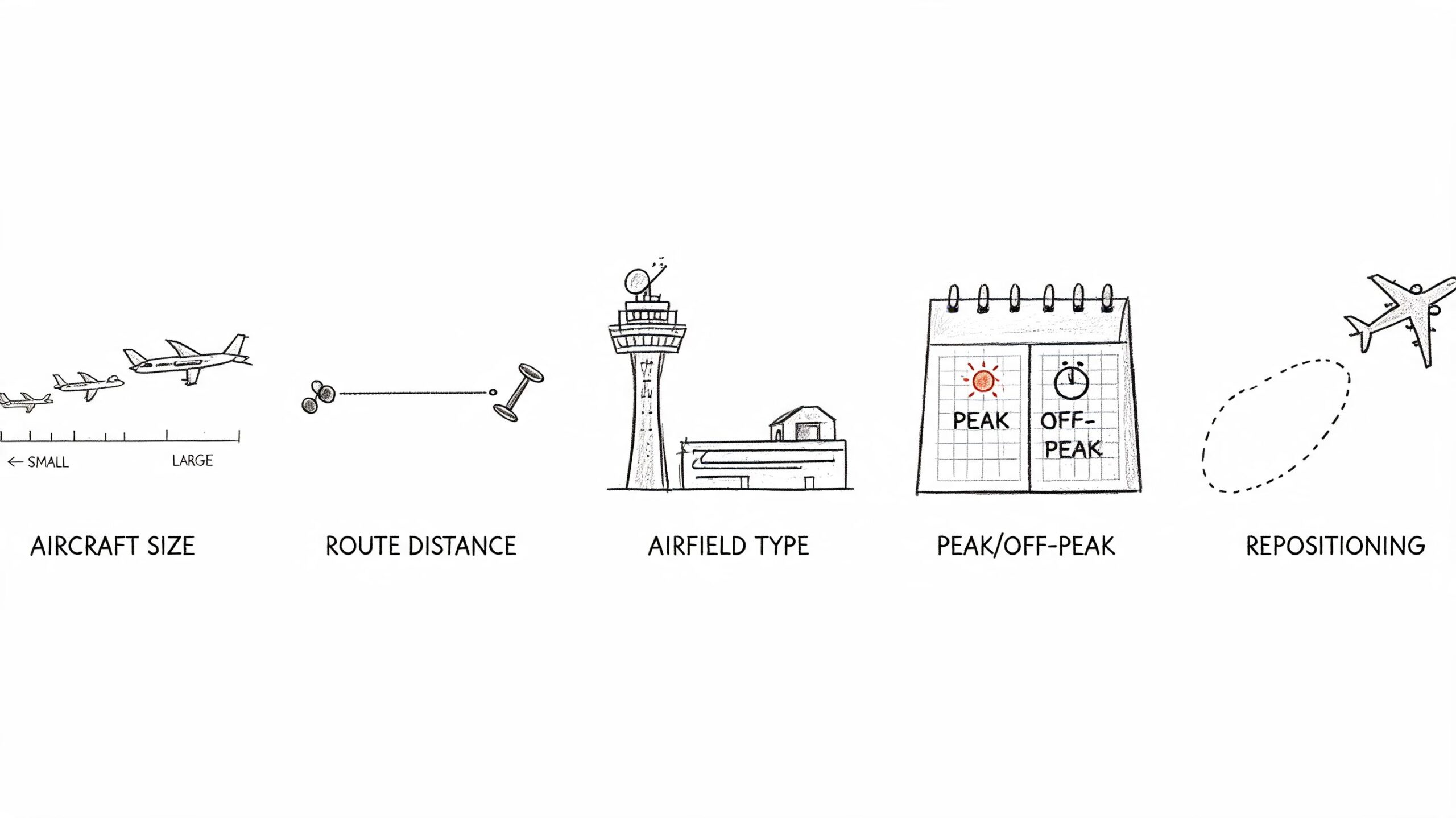
When you look at a private jet charter quote, it’s easy to focus on the final number. But the real story is in how that number comes together. Think of it like this: your final price is built from a handful of key ingredients. Once you understand them, you can see exactly where your money is going and even find ways to make smarter booking decisions.
The private aviation market is busier than ever, with charter flights—the kind most people book for on-demand travel—up 27.4% from pre-2019 levels. All that activity means planning ahead is more important than ever. It’s a dynamic environment, and knowing what drives the cost puts you in a much stronger position. You can dig into more of the 2025 private jet market statistics on SherpaReport, but it all comes down to these five factors.
1. Aircraft Type and Size
This is the biggest piece of the puzzle. The aircraft you choose has the single largest impact on your charter cost. It’s no different than renting a car—a small sedan is going to cost less than a luxury SUV.
- Light Jets: These are perfect for shorter regional trips, like a hop from Sarasota over to the Bahamas. They're efficient, carry a handful of passengers, and can get into smaller airports that bigger jets can't.
- Midsize and Super-Midsize Jets: Step up to these for more cabin space and the ability to fly farther and faster. They’re the workhorses for cross-country flights.
- Heavy Jets: When you’re flying internationally or with a larger group, a heavy jet is the answer. They’re built for long-haul comfort and come with all the space and amenities you need.
The trick is to match the aircraft to the mission. You don’t want to pay for a transcontinental jet when all you need is a quick flight down the coast.
2. Your Itinerary
It’s not just how far you fly, but for how long the aircraft is dedicated to your trip. A quick hour-long flight from Miami to Orlando is straightforward. But what if you need the jet to wait for two days before bringing you back?
That’s where it gets more nuanced. The operator has to account for the crew’s time, airport parking, and the fact that the plane can’t be used for another charter. So, a short flight with a long layover will be priced very differently from a simple out-and-back trip on the same day.
3. When You Fly
Timing is everything in aviation. Flying during a peak holiday season or to a major event like the Super Bowl will always come with a premium. It’s simple supply and demand.
A flight from New York to Miami is a perfect example. Booking that route in the middle of October is one thing. Trying to book it at the last minute right before Christmas is a completely different conversation.
If your dates are flexible, flying during the off-season or even on a Tuesday instead of a Friday can make a real difference.
4. Which Airports You Use
Where you land matters more than most people think. Big, international airports are convenient, but they also come with higher landing fees, handling charges, and more expensive fuel.
Here’s a classic insider tip: look for a smaller "reliever" airport just outside of a major city. You can often cut your costs without adding much time on the ground. It’s a simple trade-off that can have a surprisingly big impact on your final quote.
5. Repositioning or "Ferry" Flights
Sometimes the perfect aircraft for your trip isn't based at your departure airport. In that case, it has to fly empty to come pick you up. That empty flight is called a repositioning or "ferry" flight, and the cost is built into your charter quote.
This is where working with an experienced operator pays off. By choosing an aircraft already based near you or one that’s scheduled to finish another trip in your area, these fees can often be minimized or avoided altogether. It's all about smart, strategic planning.
Putting a Price on Your Flight: How Aircraft Choice Shapes Your Charter Cost
So, we've talked about the different factors that go into a charter quote. Now let’s get down to what most people really want to know: what will my trip actually cost? While things like airport fees and taxes play a role, the single biggest driver of your final price is the aircraft you choose.
Thinking about cost in terms of aircraft categories helps turn abstract hourly rates into real-world budget estimates. Each jet is built for a specific type of mission, and matching the right plane to your trip is the key to getting the best value. Based on 2026 charter market data, private jet charter pricing can fall anywhere between $3,000 to over $18,000 per flight hour, and the aircraft category explains most of that variation.
Light Jets for Quick Regional Hops
If you’re planning a short trip of three hours or less, a Light Jet is almost always the most practical and efficient choice. They're the workhorses of regional travel, perfect for getting a small group of up to six or seven people from one city to the next without the hassle of commercial flights.
- Hourly Rate: Usually in the $3,000–$5,500 range.
- Best For: Short-haul flights, accessing smaller regional airports, and keeping costs down.
- Example Trip: Let's say you're flying one-way from Naples (APF) to Atlanta (PDK). A Light Jet will get you there in about 90 minutes. For a trip like that, you can expect the all-in cost to be somewhere between $10,000 and $15,000.
Midsize Jets for Coast-to-Coast Comfort
When your trip gets a bit longer, stretching across the country, a Midsize Jet hits the sweet spot. They offer a significant step up in comfort and range, easily handling flights of three to five hours. With more passenger room, a stand-up cabin, and an enclosed lavatory, these jets make longer travel days much more pleasant for groups of seven to nine.
Getting a feel for the different aircraft sizes can make your choice a lot easier. You can browse the Air Trek fleet to see real examples of the jets in each category and visualize the difference for yourself.
Heavy Jets for Crossing Oceans
What if your destination is on the other side of the world? For any international or transoceanic journey, a Heavy Jet is what you need. These are large-cabin aircraft designed for the demands of long-range travel, offering maximum space and comfort for 14 or more passengers. It's common for them to include a flight attendant, a full galley for preparing meals, and even seats that convert into lie-flat beds.
A Heavy Jet isn’t just about luxury—it’s about capability. Its ability to fly nonstop for over 12 hours is what makes international travel so seamless. You can connect cities like Miami and London directly, without ever stopping for fuel.
- Hourly Rate: Typically starts around $8,000 and can exceed $12,000 per flight hour.
- Best For: International flights, large groups, and the highest level of in-flight comfort.
- Example Trip: A one-way charter from Miami (OPF) to London (EGLF) is a classic Heavy Jet mission. Factoring in the long flight duration, international fees, and crew requirements, a trip like this could cost between $90,000 and $150,000, or even more depending on the specific aircraft and amenities.
Which Way to Fly Private: On-Demand Charter vs. Jet Cards
Deciding how to fly privately isn’t just about picking an aircraft. It’s about choosing a booking model that actually fits your travel habits, budget, and how much flexibility you need. Think of it like a car: you can rent one for a day, lease one for a year, or grab an Uber for a specific trip. Private aviation offers similar choices.
The three main ways to book are on-demand charter, jet cards, and empty leg flights. Each one approaches pricing differently and serves a very different type of traveler. Understanding which one is right for you is the first step to making a smart, cost-effective decision.
On-Demand Charter: The Ultimate in Flexibility
On-demand charter is the most straightforward way to fly private. It’s a pure pay-as-you-go service where you book a specific jet for a specific trip. There are no upfront costs, no long-term commitments, and no large deposits.
This model is all about freedom. You get a custom quote for each flight based on real-time availability, your route, and other trip-specific details. It’s perfect for travelers who:
- Fly less frequently, typically under 25 hours per year.
- Need different types of aircraft for different trips.
- Want total control over aircraft selection and cost without being locked into a program.
If one trip calls for a quick hop in a light jet and the next requires a long-haul heavy jet, on-demand gives you that freedom without any strings attached.
Jet Cards and Memberships: Convenience at a Fixed Rate
A jet card is essentially a debit card for private flight hours. You prepay a significant sum—often starting at $100,000 or more—to lock in a fixed hourly rate on a certain category of aircraft.
Jet cards are built for predictability and convenience. They guarantee you an aircraft, often with as little as 24 hours' notice, and lock in your price, removing the ups and downs of the on-demand market.
Of course, that convenience comes at a premium. The fixed hourly rates are usually higher than what you might find on the on-demand market because the provider is taking on the risk of guaranteeing that availability. If this model sounds like a good fit, you can learn more about private jet memberships to see how it aligns with your travel profile.
Empty Leg Flights: The Savvy Traveler's Secret
Empty legs are the best-kept secret for finding a great deal in private aviation. These are one-way flights that happen when an aircraft has to fly empty to its next pickup location or return to its home base after dropping off a passenger.
Since the plane has to make the trip anyway, operators will offer these flights at a serious discount—often 25-50% less than a standard charter. The only catch? Your schedule has to be flexible enough to match the jet’s predetermined route and timing.
To help you compare, here's a simple table outlining the key differences between these booking models.
On-Demand Charter vs. Jet Card vs. Empty Leg
| Booking Model | Best For | Pricing Structure | Pros | Cons |
|---|---|---|---|---|
| On-Demand Charter | Infrequent flyers or those needing flexibility in aircraft type. | Pay-as-you-go, per-trip custom quotes. | No upfront commitment; choose any aircraft; cost-effective for occasional use. | Pricing can fluctuate; availability isn't guaranteed during peak times. |
| Jet Card / Membership | Frequent flyers (25+ hours/year) who value consistency and guaranteed access. | Pre-paid block of hours at a fixed hourly rate. | Guaranteed availability; predictable costs; streamlined booking. | Large upfront investment; hourly rates are higher; potential restrictions. |
| Empty Leg | Travelers with highly flexible schedules looking for one-way deals. | Deeply discounted fixed price for a specific one-way flight. | Significant cost savings (25-50% off); access to larger aircraft. | Limited availability; no flexibility on route or timing; primarily one-way. |
Each option has its place, and a good operator can help you decide which one makes the most sense for any given trip.
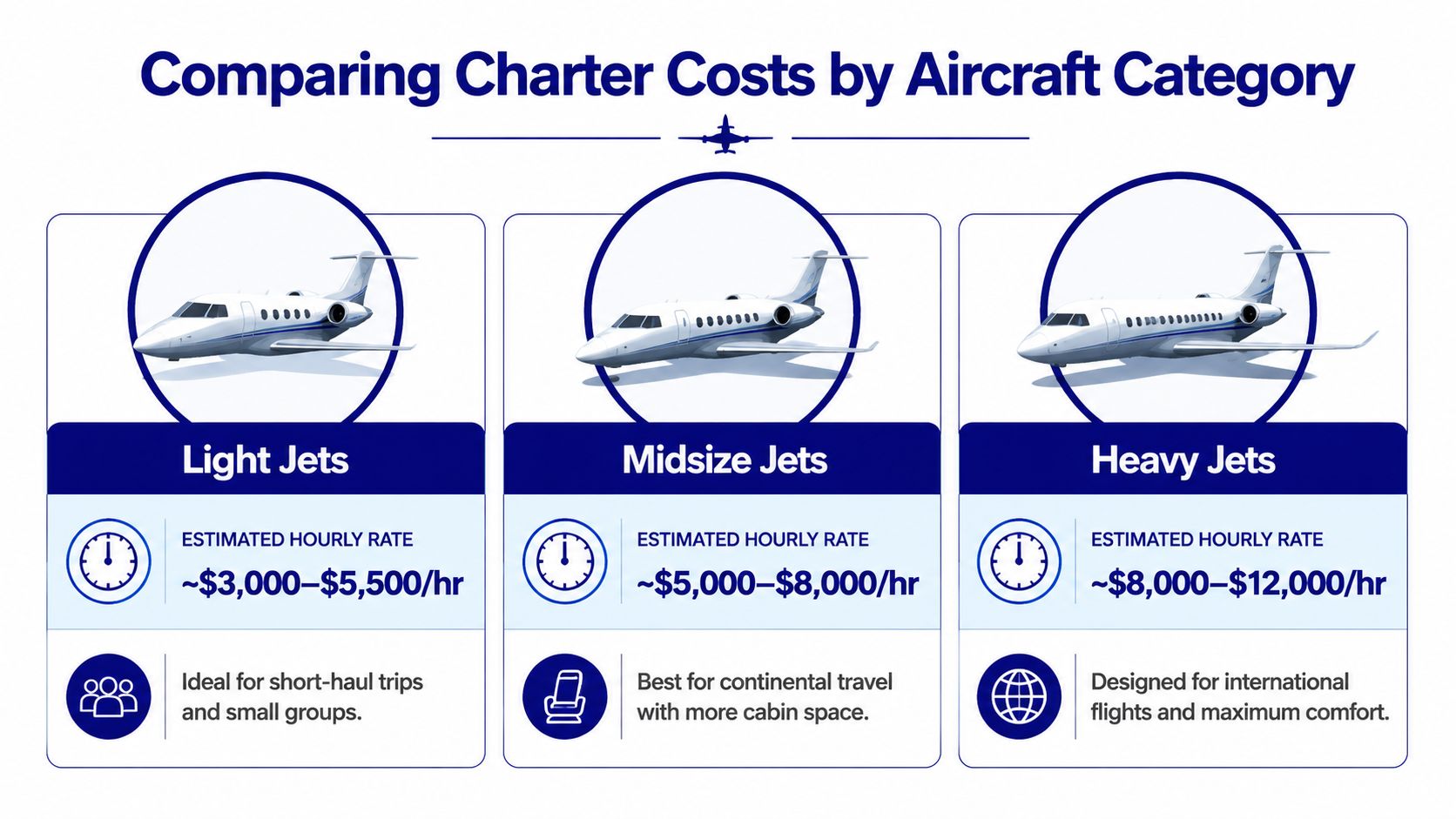
As you can see, the hourly costs climb as the aircraft gets bigger, which directly impacts the price of on-demand charters and the different tiers of jet card programs. Having an operator who understands all three models ensures you get the right value every time you fly.
Insider Strategies to Reduce Your Charter Costs
Knowing how private jet charter pricing works is one thing. Actually getting a great price without cutting corners on quality? That’s the real goal. Experienced flyers know that a little bit of strategic planning can make a huge difference in the final cost. It’s not about finding the cheapest option; it’s about finding the smartest one.
The secret is to think like an operator. Once you understand how flexibility, timing, and aircraft positioning affect your quote, you can make small adjustments that save you thousands.
Plan Ahead but Stay Flexible
One of the easiest ways to bring your charter cost down is to be flexible with your travel dates and times. Just like any other industry, private aviation has its own peak and off-peak periods.
- Book in Advance: Sure, last-minute charters are always an option, but booking a few weeks ahead gives your provider more time to find an aircraft that’s already positioned nearby. This can dramatically reduce or even eliminate expensive ferry flights.
- Fly During Off-Peak Times: Flying on a Tuesday or Wednesday is almost always less expensive than on a Friday or Sunday. The same goes for the time of day—a mid-day departure is often more cost-effective than one during the morning rush.
- Consider Alternate Airports: Major international airports come with hefty landing and handling fees. By flying into a smaller, regional airport just outside the city, you can often save a surprising amount on ground fees without adding much to your travel time.
Maximize the Value of the Aircraft
Once you've booked a flight, think about how to get the most out of it. An empty seat is wasted money, plain and simple.
When you charter a jet, you’re paying for the entire aircraft, not just your seat. Filling those seats is the key to maximizing value. When you travel with a full aircraft, the per-person cost drops significantly, often making private travel a competitive choice against business class for small groups.
This is where having an experienced charter provider really pays off. A good coordinator knows how to match clients with aircraft already close to their departure city, sometimes arranging flights for as much as 40% below standard hourly rates. It all comes down to smart logistics.
Hunt for Empty Leg Flights
If you’re looking for the single best deal in private aviation, this is it: empty leg flights. These are one-way trips that happen when an operator needs to move a jet for its next charter or fly it back to its home base.
Because the plane has to make that flight anyway, operators offer these seats at a deep discount—often up to 50% off the normal charter price. The only catch is that your schedule and destination have to match the aircraft’s pre-set itinerary. If you have that flexibility, it’s an incredible value. To learn more, check out our guide on what an empty leg flight is and how you can find them.
Finding a Partner Who Will Give You Transparent Pricing
Knowing how private jet charter pricing works is the first step. But the real difference comes from finding a partner you can actually trust to turn all that complexity into confidence. The right operator isn't just a booking service; they become your advocate, making sure every line on your quote is clear, fair, and right for your trip.
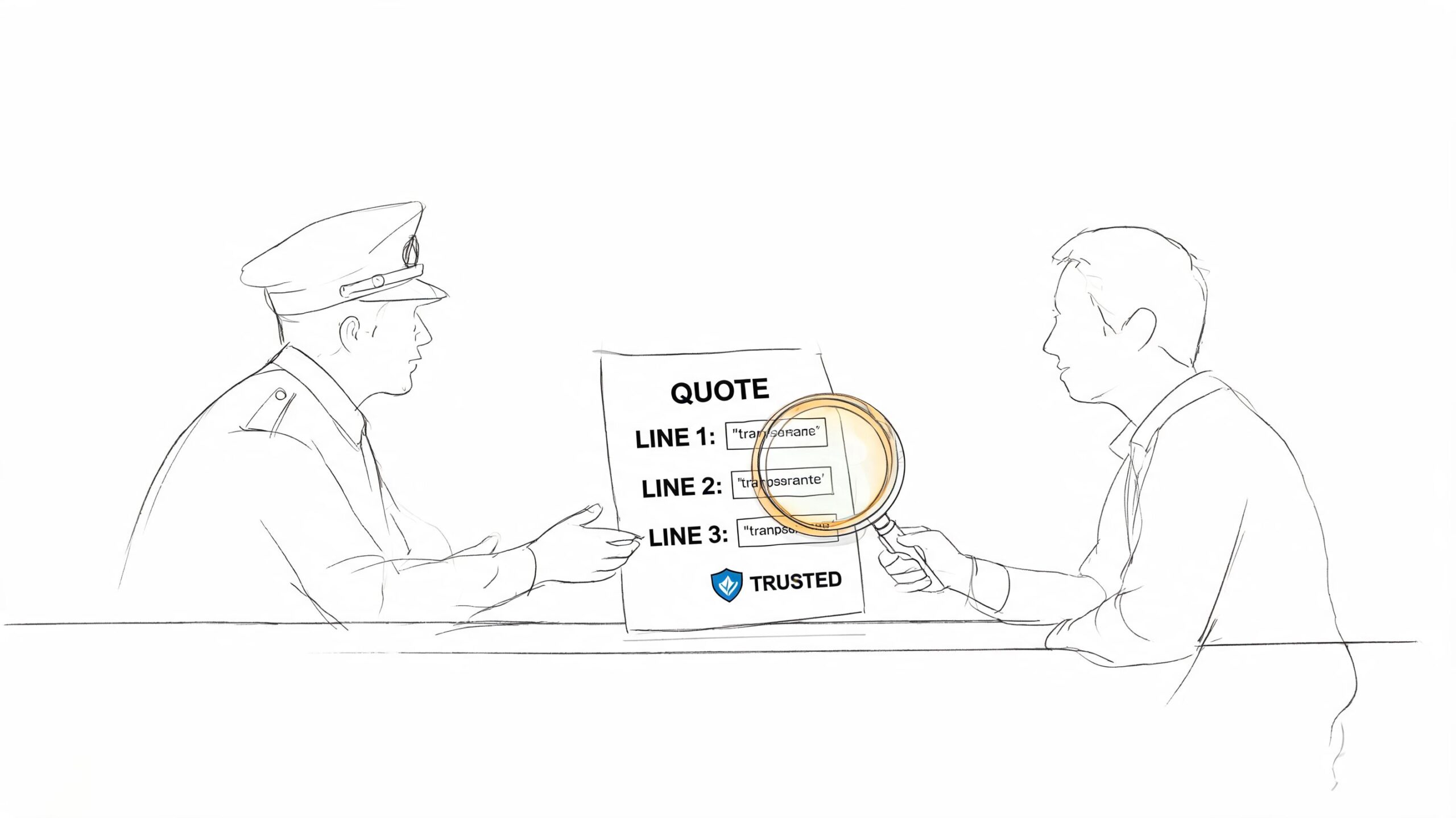
When an operator, especially a family-owned one with decades of history, puts safety and transparency first, the whole experience changes. It stops feeling like a simple transaction and starts feeling like a genuine partnership.
What does transparent pricing on a private jet charter look like?
Instead of just handing you a final number and expecting a signature, a dedicated partner gives you a fully itemized quote with no hidden fees. They take the time to walk you through it, answering questions until you understand where every dollar is going.
The right operator doesn't just give you a price—they give you peace of mind. Their experience means they can point you to the most efficient aircraft and smartest route, delivering real value from takeoff to landing.
A great partner helps you do three things:
- Verify every cost: They'll break down airport fees, fuel surcharges, and crew expenses so there are absolutely no surprises on the final bill.
- Choose the right aircraft: Their job is to match the jet to your passenger count, flight distance, and budget—not to upsell you on a bigger plane you don't need.
- Make travel seamless: From arranging a car service to handling special in-flight requests, they manage all the small details so you can just focus on your trip.
At the end of the day, transparent private jet charter pricing is about more than the numbers on a page. It’s about the assurance that comes from flying with a team that is completely dedicated to your safety, satisfaction, and peace of mind.
Answering Your Questions About Private Jet Costs
Even after breaking down the numbers, a few questions always seem to come up. It's completely understandable—booking a private charter is a significant decision, and the details matter. Let's tackle some of the most common questions head-on.
What is the hourly cost to charter a private jet in 2026?
People often look for a simple hourly rate, but the truth is it varies quite a bit. In 2026, you can generally expect a range from $3,000 per flight hour for a light jet to well over $18,000 per hour for a large, ultra-long-range aircraft. But that hourly figure is just the starting point, not the final all-inclusive price.
Is it cheaper to charter a jet for a group?
In terms of per-person cost, absolutely. When you charter a jet, you’re paying for the entire aircraft, not just a single seat. If a flight costs $30,000, that’s the price whether you have two passengers or eight. Splitting that cost among a group can make the per-person price surprisingly competitive with business-class tickets, especially when you factor in the time saved and convenience.
Why do private jet charter quotes change for the same route?
This is a great question because it gets to the heart of how the charter market works. Private aviation pricing is dynamic, not fixed. A quote for a flight to Miami will almost always be higher during a peak holiday week than it would be in the middle of October. Aircraft availability, fluctuating fuel prices, and seasonal demand all play a major role. It’s a lot like how hotel rooms or commercial airline tickets are priced—the same room or seat has a different value depending on when you book it.
The most important thing to remember about private jet charter pricing is that every trip is unique. A good quote is built on real-time factors, not just generic estimates.
Are there any hidden fees in private jet charter pricing?
There shouldn’t be, and if you’re working with a reputable operator, there won’t be. Transparency is key. A proper quote is an itemized document, not a single mysterious number. You should always see every cost broken out clearly, including the aircraft’s hourly flight rate, Federal Excise Tax (currently 7.5% on domestic flights), specific airport landing and handling fees, and crew expenses, especially for multi-day trips. A trustworthy partner will walk you through every line item before you ever commit. If a quote feels vague or you can’t get straight answers, that’s a major red flag.