
You’re probably not thinking about the FBO first.
You’re thinking about getting into Scottsdale without the drag of commercial travel. You want to leave on your schedule, avoid a crowded terminal, step off the aircraft, and move straight into the rest of your day. Maybe that means a board meeting, a golf weekend, a resort check-in, or a major event in town. The aircraft matters, but the ground experience shapes whether the trip feels smooth or fragmented.
That’s where southwest jet center matters. For private flyers, the FBO is the arrival and departure environment that replaces the commercial terminal. It’s where the trip either stays efficient and discreet, or starts picking up avoidable friction.
Why Your Choice of FBO Matters
A lot of travelers assume private aviation begins and ends with the airplane. In practice, the airport-side experience often determines whether the day runs cleanly. If the aircraft is ready but the ground side is disorganized, you still feel the delay.
That’s why the FBO matters. A Fixed Base Operator, or FBO, handles the private side of the airport experience. For passengers, that usually means a separate terminal environment, efficient arrival, lounge space, and direct coordination with the aircraft and ground transportation.
What a strong FBO changes
On a Scottsdale trip, the difference shows up in small moments.
Instead of walking through a busy public terminal, you arrive at a private facility. Instead of waiting for luggage systems and curbside pickups to catch up, your driver can be coordinated around your actual arrival. Instead of feeling like the airport is an obstacle, the airport becomes a handoff point.
A strong FBO improves the parts of travel that frequent flyers notice most:
- Privacy: You’re not moving through public lines or crowded gate areas.
- Speed: Check-in, boarding, and arrival procedures are far more direct.
- Control: Staff can align the ground side with your schedule, not an airline bank of departures.
- Service: Last-minute requests are easier to handle when the team on site is used to bespoke travel.
Practical rule: If you care about a smooth door-to-door trip, don’t evaluate a private charter only by aircraft type. Evaluate where you’ll actually arrive, depart, wait, board, and be met.
Why travelers should care
This matters to more than aviation insiders. Executive assistants care because timing gets tighter when the itinerary is full. Families care because a calm terminal environment makes the whole trip easier. Leisure travelers care because a vacation shouldn’t start with logistics stress.
What doesn’t work is treating the FBO like a parking spot for the jet. That’s too narrow. A premier FBO functions more like a service platform for the whole trip. It supports the aircraft, the crew, the passengers, and the handoff to the next leg of the day.
When people ask, “Why should I care about this specific FBO?” the practical answer is simple. Because the right facility helps private travel feel finished, not merely booked.
What Is Southwest Jet Center
Your car pulls up in Scottsdale, bags come out once, and within minutes the crew has the aircraft, passengers, and ground logistics aligned. That experience does not happen by accident. It depends heavily on the FBO.
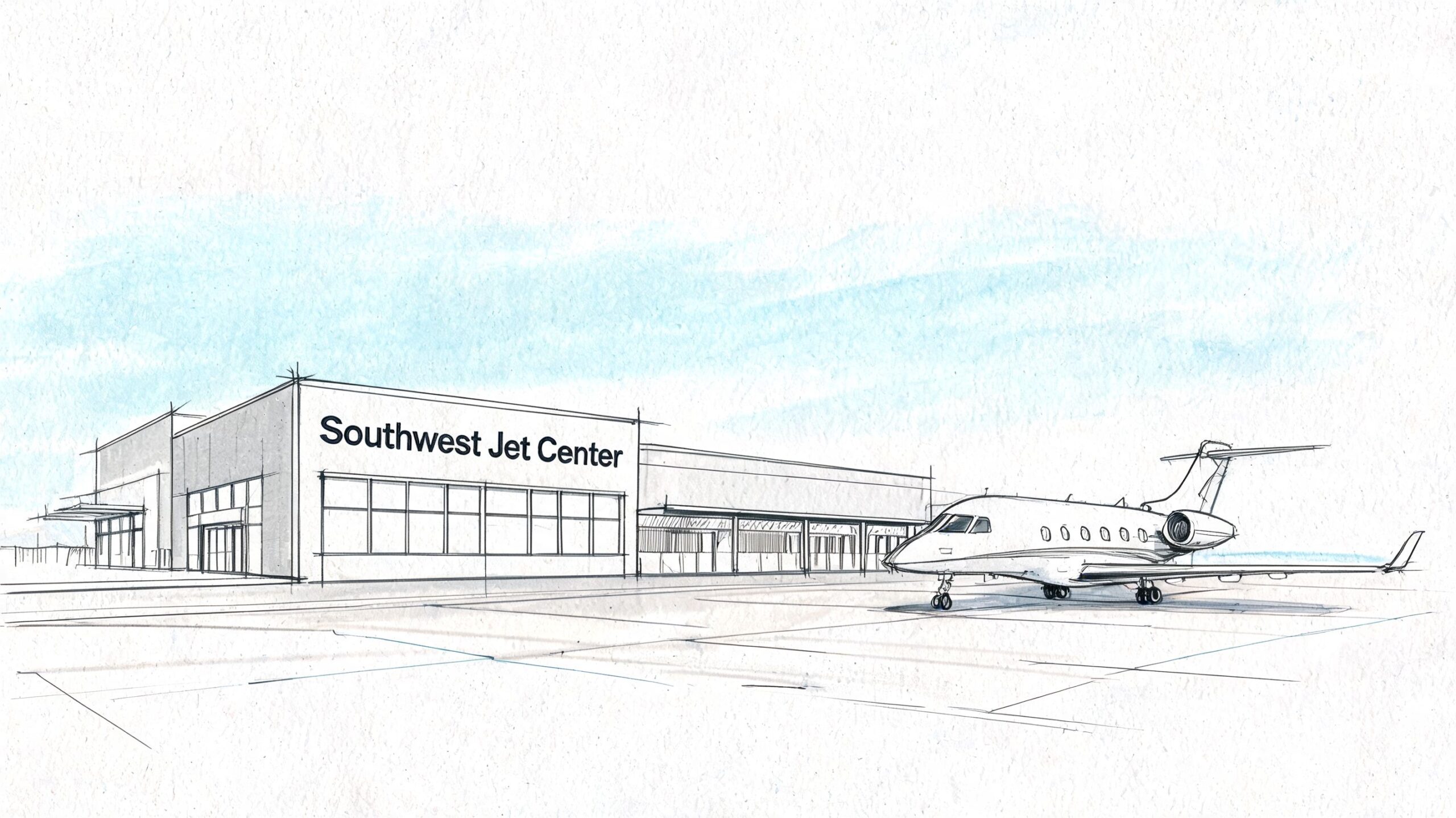
Southwest Jet Center is one of the defining private aviation facilities at Scottsdale Airport, and travelers feel that difference in practical ways. The operation has been based at SDL for more than 20 years and occupies addresses at 14988 and 15010 N 78th Way, Scottsdale, AZ 85260, beside the FAA control tower, according to Southwest Jet Center’s facility overview. It is also described as the airport’s largest private hangar facility, with 80,000 square feet of premium hangar space built to handle large-cabin aircraft such as the Bombardier Global 8000 and Gulfstream G700.
Where it sits and why that matters
Inside the airport, placement affects the day more than travelers may realize. A well-positioned FBO can shorten the handoff from vehicle to lounge to aircraft, reduce ramp confusion, and help crews coordinate fueling, catering, and departure timing with fewer delays.
That matters for both business and leisure flyers. An executive with a tight meeting window wants predictability. A family heading into a resort weekend wants the trip to feel calm from the start. In both cases, the right facility removes wasted motion.
From a charter operator’s side, that same setup helps us deliver a cleaner experience. Through Air Trek’s private aviation services, the goal is not just to get a passenger on an aircraft to Scottsdale. It is to make arrival and departure at a place like Southwest Jet Center feel organized, private, and easy.
Scale that travelers actually notice
Size only matters if it improves the trip.
Here, it does. Hangar capacity supports larger aircraft and protects scheduling flexibility when weather, parking, or aircraft positioning become factors. A serious operating footprint also tends to mean the staff, ramp space, and tenant infrastructure are built for repeat high-end traffic, not occasional private arrivals.
For travelers, that usually translates into a few practical advantages:
- Large-jet capability: Better suited to long-range business aircraft and heavier charter missions.
- More dependable aircraft accommodation: Helpful for owners, charter clients, and corporate flight departments that need hangar support.
- Stronger operational flow: Crews and ground teams can handle more without the process feeling improvised.
- A more polished arrival environment: Office and support space usually signal an FBO built for sustained business aviation activity.
Southwest Jet Center matters because it supports the full trip, not just the parked aircraft. For an Air Trek client, that distinction shows up in the moments that matter most. Faster handoffs, better coordination, and an arrival experience that feels finished rather than pieced together.
A Look at Premier FBO Services and Amenities
A premium FBO has to serve two audiences at once. Passengers want calm, privacy, and immediate help. Crews need operational support that keeps the flight legal, efficient, and ready for the next leg. If either side is weak, the whole experience suffers.
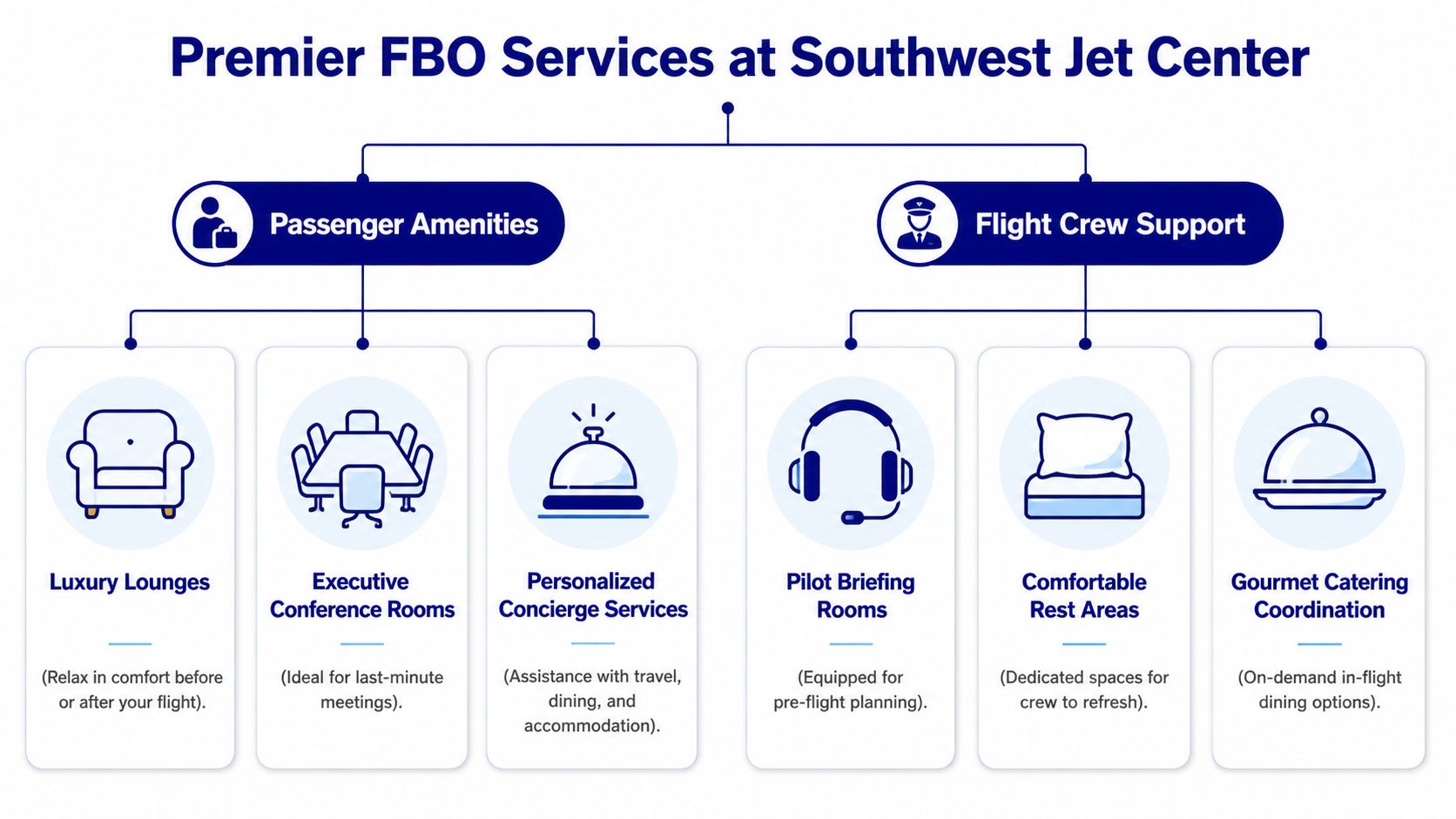
Southwest Jet Center operates in that full-service category. The project profile at Theory R’s Southwest Jet Center page describes it as Scottsdale Airport’s dominant private FBO, with 100,000 square feet of combined office and private airplane hangar space plus a 70,000 square foot ramp.
Passenger experience that feels intentional
The best passenger amenities aren’t flashy. They remove friction.
That usually means lounge space that doesn’t feel transient, concierge support that can handle itinerary details, and conference space when a traveler needs to work before wheels up. For a business flyer, that can mean using ground time productively. For a leisure traveler, it means the trip starts in a private, calm setting rather than in a rushed public space.
Good FBO service also respects pacing. Some passengers want immediate boarding. Others need a quiet holding point while ground transportation, catering, or family logistics settle into place.
Crew support that passengers rarely see
Passengers don’t always see the crew side, but they feel the result.
When the flight crew has proper briefing space, rest areas, and coordinated support on the ground, departures tend to stay cleaner. Requests get handled faster. Turn times are easier to manage. The experience feels composed because the crew isn’t trying to solve basic support issues on the fly.
That’s one reason discerning travelers often prefer working with providers that understand the full service chain, not just the aircraft. A charter experience only feels smooth when the operator and the FBO work in sync. For a broader view of how that travel support can be coordinated, Air Trek outlines its private aviation service options.
Southwest Jet Center services at a glance
| Service Category | Examples |
|---|---|
| Passenger amenities | Private lounges, concierge assistance, executive meeting space |
| Flight crew support | Briefing areas, rest space, trip coordination support |
| Aircraft services | Fueling, line service, hangar access, ramp handling |
| Ground coordination | Transportation handoff, catering coordination, arrival and departure support |
What works: Facilities that support both passengers and crews with equal seriousness.
What doesn’t: Attractive passenger spaces backed by thin operational support.
That trade-off matters. A polished lobby can create a strong first impression, but private aviation runs on execution behind the scenes. Premier FBOs earn their reputations by making both sides work together.
Understanding Aircraft Handling and Ground Support
If you want to know whether an FBO is strong, look past the lounge and study the ramp. That’s where professionalism shows up.
Aircraft handling and ground support are what keep a private trip moving without avoidable delays. To passengers, this can feel invisible. To pilots, dispatch teams, and experienced charter clients, it’s the core of the operation.
What good ground support looks like
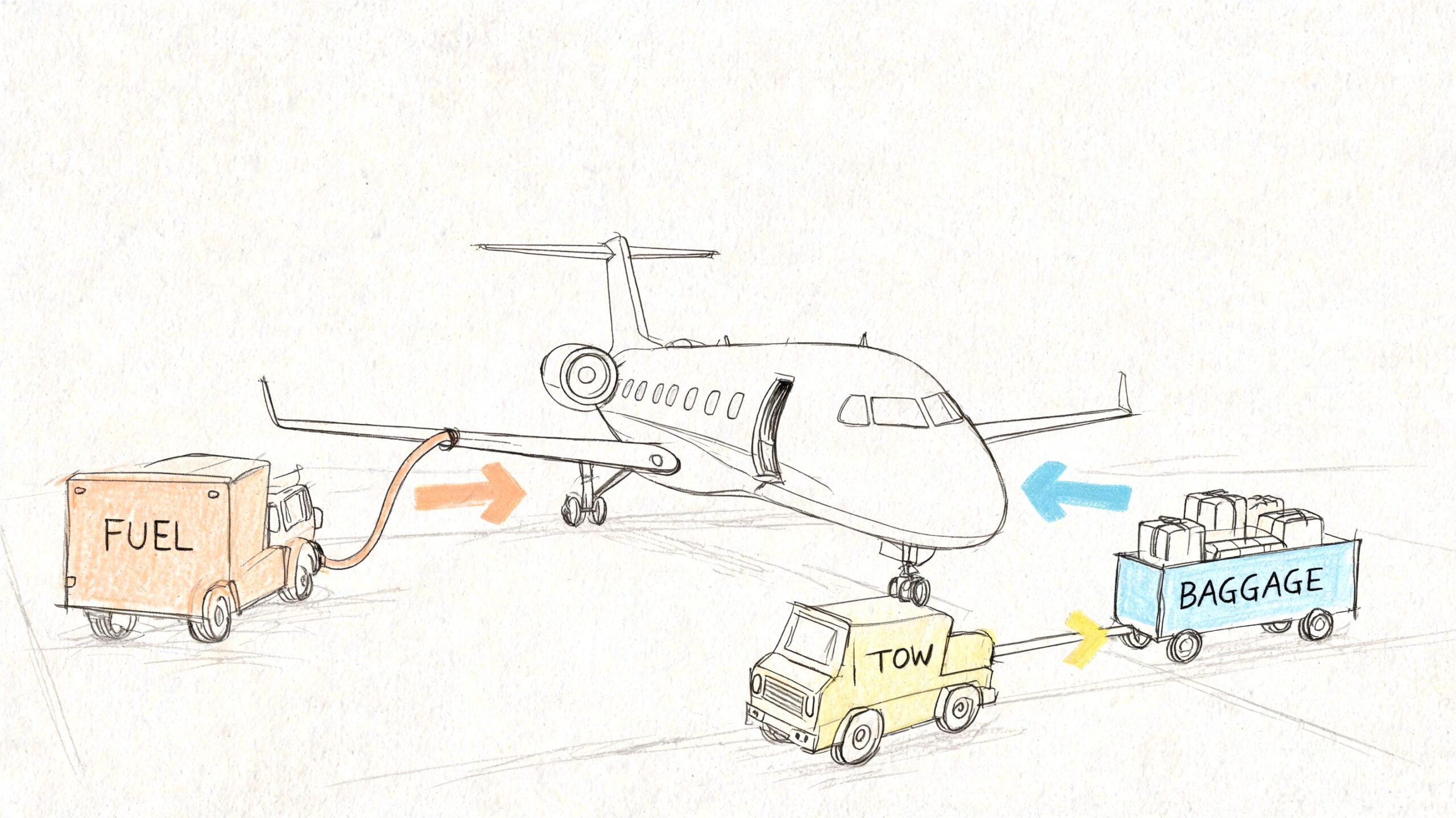
At a facility like southwest jet center, the practical priorities are straightforward. The aircraft needs a clear parking plan, line staff need to marshal and secure it correctly, fueling must be coordinated efficiently, and the passengers need to transition between vehicle and aircraft without confusion.
That sounds basic. It isn’t. Small failures on the ground can cause large disruptions in timing and comfort.
The strongest FBO teams get the basics right every time:
- Professional line service: Safe aircraft movement, marshalling, chocking, towing, and ramp coordination.
- On-site fueling: Faster coordination matters, especially on quick turns or tightly timed departures.
- Secure hangarage: Valuable aircraft need protection from weather exposure and ramp congestion.
- Ground transport alignment: Drivers, luggage handling, and pickup points need to match the aircraft schedule, not a generic ETA.
Why passengers should care about ramp operations
Even if you never step onto the ramp yourself, ramp quality affects your day.
If fueling runs late, departure slips. If a vehicle isn’t positioned correctly, arrival feels clumsy. If the aircraft sits exposed when hangar access would be more appropriate, the operator has fewer options during poor conditions or schedule changes.
A polished private flight experience usually depends on disciplined work that most passengers never see.
There’s also a reason experienced travelers ask detailed questions about ground support. They’ve learned that reliability isn’t built only in the cockpit. It’s built through coordination between crew, dispatch, line service, and the FBO team.
A short visual overview helps illustrate the kind of ramp-side support that matters on private flights:
The difference between adequate and excellent
An adequate FBO can park the aircraft and process a basic departure. An excellent one reduces friction across the whole ground segment.
That includes details like having a car ready at the right place, coordinating lavatory and cabin service without drama, and helping crews reset efficiently for the next mission. For travelers, those details register as confidence. The trip feels under control.
That’s why southwest jet center matters beyond branding. It supports the parts of private aviation that make premium travel dependable, not just attractive.
How to Book Charters to Southwest Jet Center
Most travelers don’t want to piece this together themselves. They want one point of coordination that handles the aircraft choice, timing, airport fit, and ground-side execution.
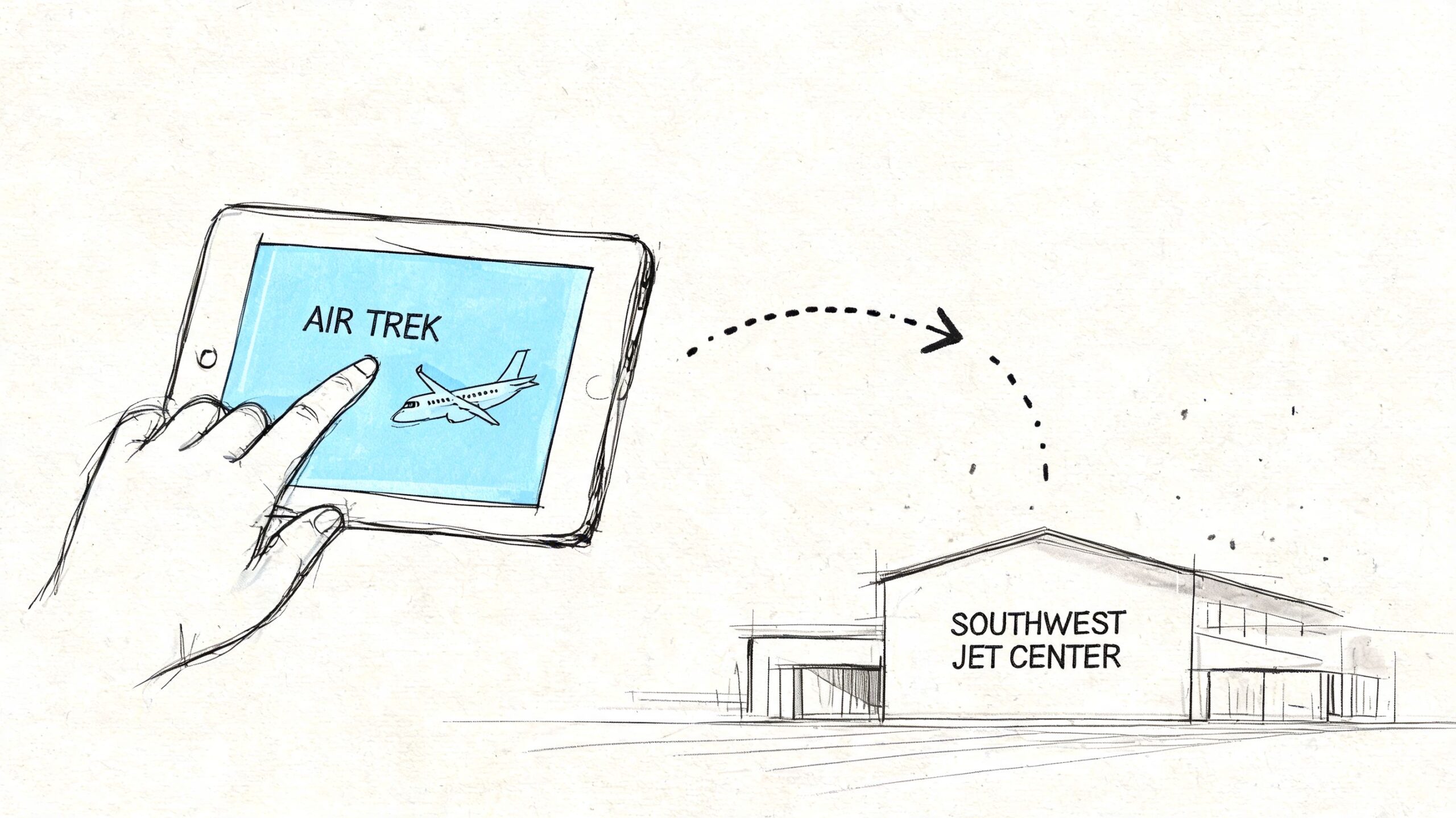
That’s the sensible approach. A facility like southwest jet center delivers value when the trip is built around it properly. That means matching the mission to the right aircraft, confirming the airport plan, and lining up the arrival and departure details early enough that nothing feels improvised.
The simplest way to approach the booking
For most travelers, the cleanest path is working with a charter provider that can coordinate both the flight and the FBO experience.
That starts with the mission profile. Are you flying solo or with a group? Is this a same-day business turn, a family leisure trip, or an itinerary tied to a major Scottsdale event? Are you optimizing for cabin size, nonstop capability, budget flexibility, or timing? Those questions shape the aircraft recommendation.
From there, the booking process typically works best in this order:
Define the trip clearly
Departure city, passenger count, dates, flexibility, luggage needs, and any pet or catering requests.Choose the aircraft around the mission
The right aircraft isn’t always the largest one. It’s the one that fits range, comfort, airport operations, and schedule needs.Coordinate the Scottsdale ground side
The FBO's role becomes critical. Arrival procedures, vehicle access, and service requests should be aligned before departure day.Confirm any cost-saving alternatives
Some travelers can use repositioning opportunities or flexible timing to improve value.
Different ways to fly
Not every private flyer books the same way. Some need a straightforward one-off charter. Others watch for opportunistic pricing. Frequent travelers may want a more structured relationship.
Common options include:
- On-demand private charter: Best for travelers who want direct control over schedule and itinerary.
- Empty leg opportunities: Useful when your route and timing can flex.
- Membership models: Often attractive for repeat flyers who want a more predictable booking experience.
For travelers who want a direct charter option into Scottsdale, Air Trek’s private charter service page is the most practical place to start.
Booking advice: Don’t wait until the last minute to ask about airport-side details. The earlier the trip is coordinated, the easier it is to align aircraft, crew, and FBO support around your priorities.
What works is integrated planning. What doesn’t is treating the aircraft booking and the ground experience as separate problems. Travelers feel the difference immediately.
Your Questions About Flying to Scottsdale Answered
Is southwest jet center only relevant to aircraft owners?
No. Charter passengers benefit from the FBO just as much as owners and corporate flight departments do.
If you’re booking a private flight into Scottsdale, the FBO is the facility where you’ll typically arrive, wait, board, deplane, and connect to ground transportation. You don’t need to own an aircraft to care about privacy, speed, and service quality.
Why would a traveler ask for a specific FBO?
Because not every private terminal experience feels the same.
Some travelers ask for a specific FBO after they’ve learned how much the ground side affects the whole trip. If you’re particular about discretion, quick arrivals, efficient departures, and polished support, the FBO becomes part of the travel decision.
Can I bring pets through a private terminal?
In many private charter situations, traveling with pets is much simpler than it is on commercial airlines. The exact process depends on the itinerary, aircraft, and any destination-specific rules, but private terminals are generally easier environments for pet travel because they avoid the noise and congestion of public terminals.
The right move is to declare pets early when booking. That gives the charter provider time to match you with a suitable aircraft and confirm any handling details.
How early should I book for Scottsdale during busy event periods?
Earlier is better, especially if your trip aligns with major Scottsdale demand periods.
You don’t need a generic rule of thumb as much as you need realism. Busy weeks tighten aircraft availability, crew scheduling, and airport-side coordination. If your schedule is fixed, booking early gives you more control over aircraft options and the overall experience.
Is ground transportation usually coordinated with the flight?
Yes, and it should be.
A strong private aviation experience doesn’t end when the wheels stop. Ground transportation is often arranged so the handoff from aircraft to vehicle feels direct and efficient. That’s one of the clearest differences between a polished private trip and a loosely coordinated one.
Are fueling and basic aircraft services available on site?
At a full-service FBO, yes. Travelers may not need the technical details, but they should care that the support exists and is handled well.
Reliable fueling, line service, and routine ground support help keep departures on time and reduce stress for crew and passengers alike. Those services matter most when the schedule is tight or the itinerary includes a quick turn.
What about hangar space for larger aircraft?
That’s one of the notable strengths associated with southwest jet center, as covered earlier. For travelers using large-cabin aircraft, hangar capability isn’t just an owner concern. It reflects the facility’s ability to support advanced operations and premium equipment.
It’s a useful signal that the airport-side experience is built for serious business aviation traffic, not just occasional light-jet activity.
Do I need to understand aviation terminology to book private travel into Scottsdale?
No. You don’t need to know the technical language as long as your charter partner does.
What helps is being clear about your priorities. Tell them where you’re going, how many people are traveling, how much flexibility you have, whether pets are joining, and whether the trip is business, leisure, or event-driven. A good provider will translate that into aircraft and airport recommendations.
Are empty legs worth considering for Arizona trips?
They can be, if your schedule is flexible.
An empty leg can be a smart option when the route lines up with where you need to go and you’re comfortable with less certainty than a dedicated charter provides. If you’re new to the concept, Air Trek has a useful explanation of how empty leg flights work.
What should an executive assistant or family office ask before confirming a flight?
Ask practical questions, not just price questions.
A strong checklist includes:
- Which airport-side facility will the flight use
- How ground transportation will be coordinated
- Whether pets, catering, and luggage needs have been confirmed
- What arrival process the passengers should expect
- Who handles changes if the schedule shifts
Those questions usually reveal whether the trip is being managed thoroughly.
The best private flights feel simple to the traveler because somebody handled the complexity before the travel day.
Does a premier FBO really make that much difference on a short trip?
Yes, often more than people expect.
On shorter trips, the time spent in transit to and from the aircraft can represent a larger share of the overall day. If the airport-side process is efficient, the whole trip feels faster and calmer. If it’s clumsy, that friction stands out immediately.
What’s the bottom line for travelers choosing southwest jet center?
You should care about southwest jet center because it’s not just a building at Scottsdale Airport. It’s part of the private travel product.
When the FBO is well positioned, operationally capable, and service-oriented, everything around the flight gets easier. That includes timing, privacy, comfort, coordination, and first impression. For travelers heading into Scottsdale, those aren’t side benefits. They’re the reason private aviation feels worth doing in the first place.
If you want that Scottsdale experience coordinated end to end, Air Trek can help arrange the charter, aircraft selection, and airport-side planning around your schedule. Explore Air Trek’s private flight solutions to start planning your trip.