
For anyone who considers their pet part of the family, the idea of flying with them on a commercial airline is often a non-starter. The thought of putting a beloved animal in a carrier, let alone the cargo hold, is enough to cancel the trip altogether. This is exactly why a pet friendly private jet charter changes the entire equation. It transforms a source of anxiety into a seamless, shared experience where your pet travels comfortably right in the cabin with you.
Why Fly Privately with Your Pet?
At its core, the appeal is simple: on a private jet, your pet never leaves your side. You’re not handing them over to a stranger to be loaded like luggage. They are with you from the moment you board until the moment you arrive. This shift away from the stress and risk of commercial travel is becoming more and more common.
In fact, the private aviation industry has seen an 86% increase in animals flown privately since 2019. This isn't a coincidence. As commercial airlines have tightened their rules, making it tougher for pets to travel in the cabin, savvy owners have turned to a better solution. The focus has moved from just getting there to getting there together, safely and without compromise.
Unmatched Comfort and Freedom
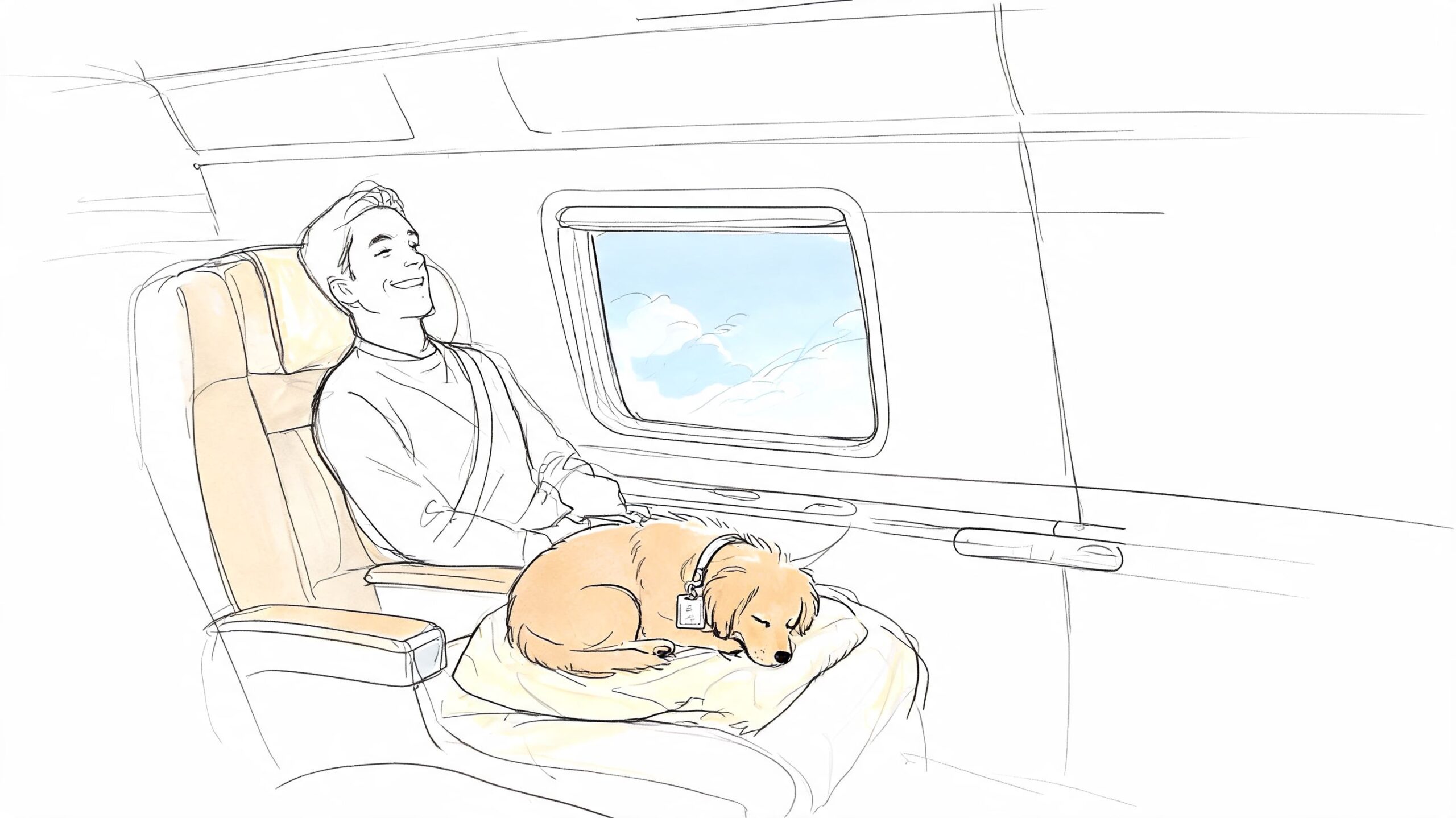
Forget about cramped carriers stuffed under a seat or the terrifying prospect of the cargo hold. On a private flight, the cabin is your pet’s space, too. They can relax on a couch, curl up in your lap, or stretch out on the floor right next to you. This freedom is what truly makes the difference, dramatically reducing stress for both you and your animal.
The real luxury isn't the plane—it's the peace of mind. It’s knowing your pet is safe, comfortable, and sharing the same first-class experience you are. Travel stops being a logistical nightmare and becomes a shared adventure.
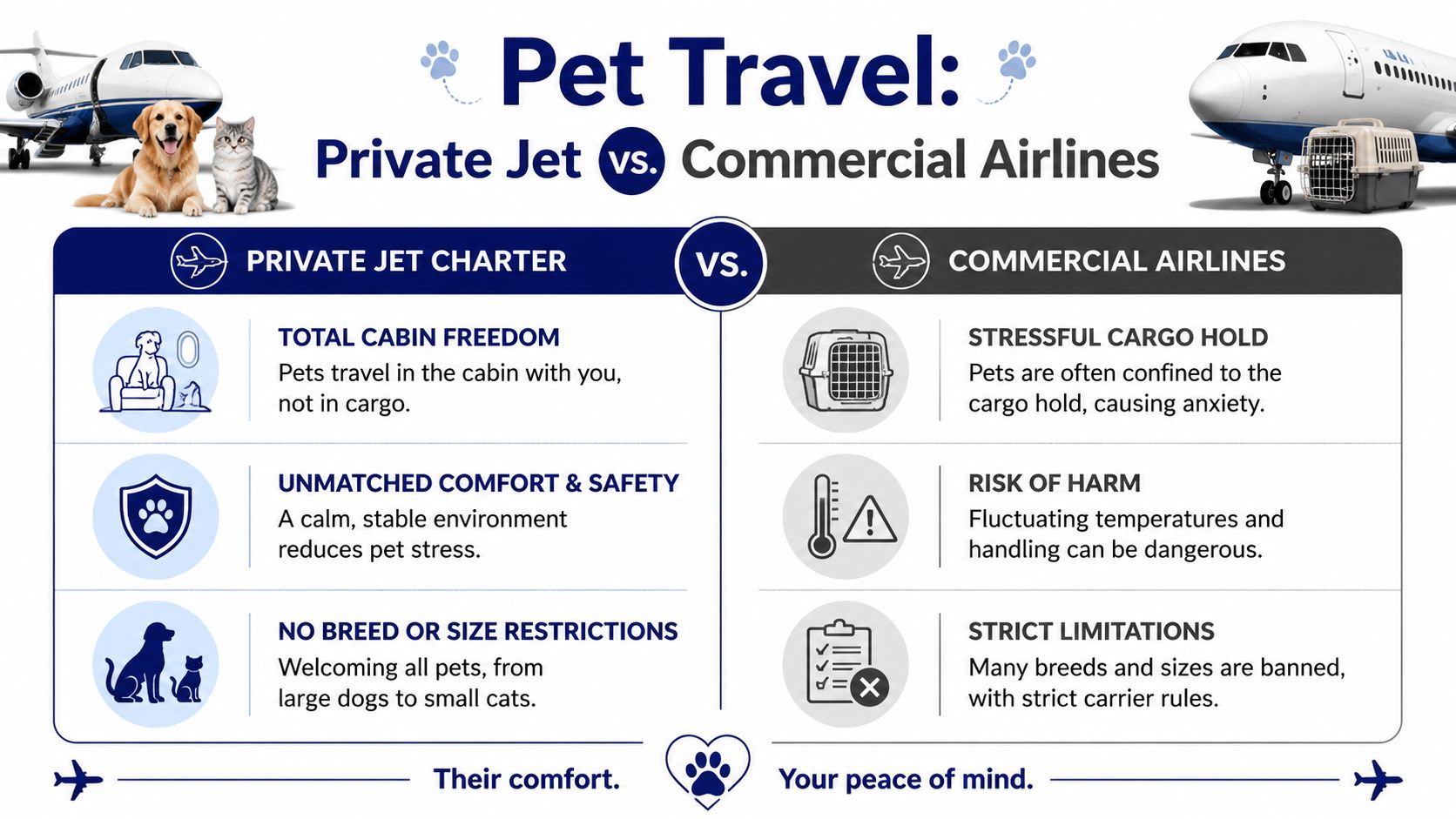
To really see the difference, it helps to compare the two experiences side-by-side. The gap between private and commercial pet travel is significant, highlighting how one prioritizes well-being while the other often treats pets as cargo.
Pet Travel Comparison Private Jet vs Commercial Airlines
| Feature | Private Jet Charter (e.g., Air Trek) | Commercial Airlines |
|---|---|---|
| Cabin Access | Pet travels in the main cabin with you | Pet may be in a carrier under the seat (if small enough) or in the cargo hold |
| Comfort | Free to move, sit on seats, or relax on the floor | Confined to a small carrier for the entire flight |
| Stress Level | Minimal; pet is with its owner in a calm environment | High; separation anxiety, loud noises, and temperature fluctuations in cargo |
| Safety | Directly supervised by you throughout the flight | Risks of injury, heatstroke, or loss in the cargo hold |
| Number of Pets | Multiple pets are usually welcome | Often limited to one pet per passenger, with total cabin limits |
| Breed Restrictions | Very few, if any, restrictions | Many breeds (especially brachycephalic dogs like bulldogs) are banned |
| Boarding | Simple, stress-free boarding at a private terminal | Crowded airport terminals, long security lines, and complex check-in |
This comparison makes the choice pretty clear for owners who put their pet’s well-being first.
The entire process is streamlined. Instead of navigating chaotic public terminals, you'll use a dedicated private terminal, known as a Fixed-Base Operator (FBO). This means you and your pet can arrive shortly before your flight and board in a calm, quiet setting. You can learn more about the advantages of using a private jet FBO and see how it completely changes the departure experience.
How Do I Choose the Right Pet-Friendly Charter?
Finding a pet-friendly private jet charter sounds simple, but the term “pet-friendly” can mean very different things. Some operators merely tolerate animals onboard, while others genuinely welcome them as the four-legged family members they are. The difference is in the details, and knowing what to look for is key.
Before you book, you’ll want to get a feel for the operator's actual experience with pets. How often do they fly with them? What are their in-cabin rules? And what’s their policy if an accident happens? A truly experienced charter company will have straightforward, confident answers because they’ve handled it all before.
What Questions Should I Ask a Charter Company?
When you reach out for a quote, it’s about more than just the price. This is your chance to understand how committed they really are to making the flight safe and comfortable for your pet.
Here are a few essential questions to get the conversation started:
- What are your specific rules for pets in the cabin? Some might require a dog to be leashed during takeoff and landing, while cats may need to stay in their carrier for certain phases of flight.
- Have you flown with my pet's breed or size before? This is especially important if you have a very large dog, multiple pets, or a breed with specific needs.
- What happens if my pet has an accident? A good company will have a reasonable cleaning fee policy but won't penalize you for minor issues. They understand that pets are not people.
This is one area where a family-owned operator like Air Trek really shines. We’ve always seen pets as passengers, not cargo, which means we’re already thinking about the little details to make their trip—and yours—go smoothly.
A great private jet charter company won't just say they are pet-friendly; they'll prove it with their policies, experience, and the questions they ask you about your pet's needs.
Does the Aircraft Size Matter for My Pet?
Yes, the right aircraft is just as important for your pet’s comfort and safety as it is for yours. A light jet might be perfectly fine for you and a small cat, but it’s a different story for a family traveling with two Golden Retrievers. Everyone needs enough space to stretch out and relax.
A good flight coordinator will help you think through the options and select an aircraft that fits your entire traveling party, pets included. For a closer look at how different aircraft types can impact your trip, our guide on the best private jet companies explains how fleet variety makes a difference.
What Paperwork Do I Need for My Pet?
One of the best parts of flying private with your pet is skipping the usual airport chaos, but that doesn't mean the paperwork disappears entirely. Fortunately, with a pet friendly private jet charter, the process is far simpler. Getting the right documents ready ahead of time is the key to making sure your trip is smooth for everyone—especially your four-legged companion.
For domestic flights within the United States, the requirements are refreshingly straightforward. Most operators, including us here at Air Trek, just need to see a couple of key items to ensure everyone's safety and to comply with regulations.
- A recent health certificate: This is a simple document from a licensed veterinarian confirming your pet is healthy and fit to fly. You’ll usually need to get this issued within 10-30 days of your travel date.
- Proof of rabies vaccination: A current rabies certificate is pretty standard for any pet traveling across state lines.
For most trips within the country, that’s all you’ll need. International travel, however, is a different story and requires a lot more planning.
Understanding International Pet Travel Rules
Flying to another country with your pet isn't something you can plan at the last minute. Every country has its own strict import rules, and not meeting them can lead to your pet being denied entry or, worse, put into a long and stressful quarantine.
This is where planning months in advance becomes critical. You’ll need to assemble what’s often called a "pet passport"—though it’s not a single, universal document. You can find resources to help you secure UK pet medical records and similar documents, but each destination has its own checklist.
Think of it as your pet's travel visa. It consolidates their microchip information, vaccination history, and health certifications into one official package endorsed by government veterinarians.
So, what kind of paperwork are we talking about for an international flight? The list can be long, but it often includes:
- An ISO-compliant microchip for identification.
- Rabies titer test results (a blood test that proves the rabies vaccine is working effectively).
- A government-endorsed health certificate, which is a step above the standard vet-issued one.
- Records showing recent parasite treatments for things like fleas, ticks, and tapeworms.
While your charter coordinator can help point you in the right direction, the responsibility for gathering these documents ultimately falls to you. The best advice we can give is to start the process as soon as you know your travel plans. It’s the surest way to avoid any surprises when it's time to fly.
How to Prepare Your Pet for a Calm Flight
A calm pet almost always guarantees a calm flight for everyone. The real secret to a smooth journey with your animal companion isn't what happens on the plane, but the preparation you do long before you even leave for the airport. This proactive approach is a huge reason why so many pet owners now exclusively choose a pet friendly private jet charter.
It’s an understandable shift, especially when you consider the risks of commercial travel. Data from the U.S. Department of Transportation revealed that over 200 pets died on commercial flights in the last decade alone. That's a sobering statistic, and it has pushed many owners to find a safer, more humane way to fly. You can read more about the growing trend of private jet travel for pets.
Create a Familiar and Positive Vibe
Your goal is to make the entire experience feel more like a fun car ride and less like a stressful, unfamiliar event. It all comes down to building positive associations with their travel gear well in advance.
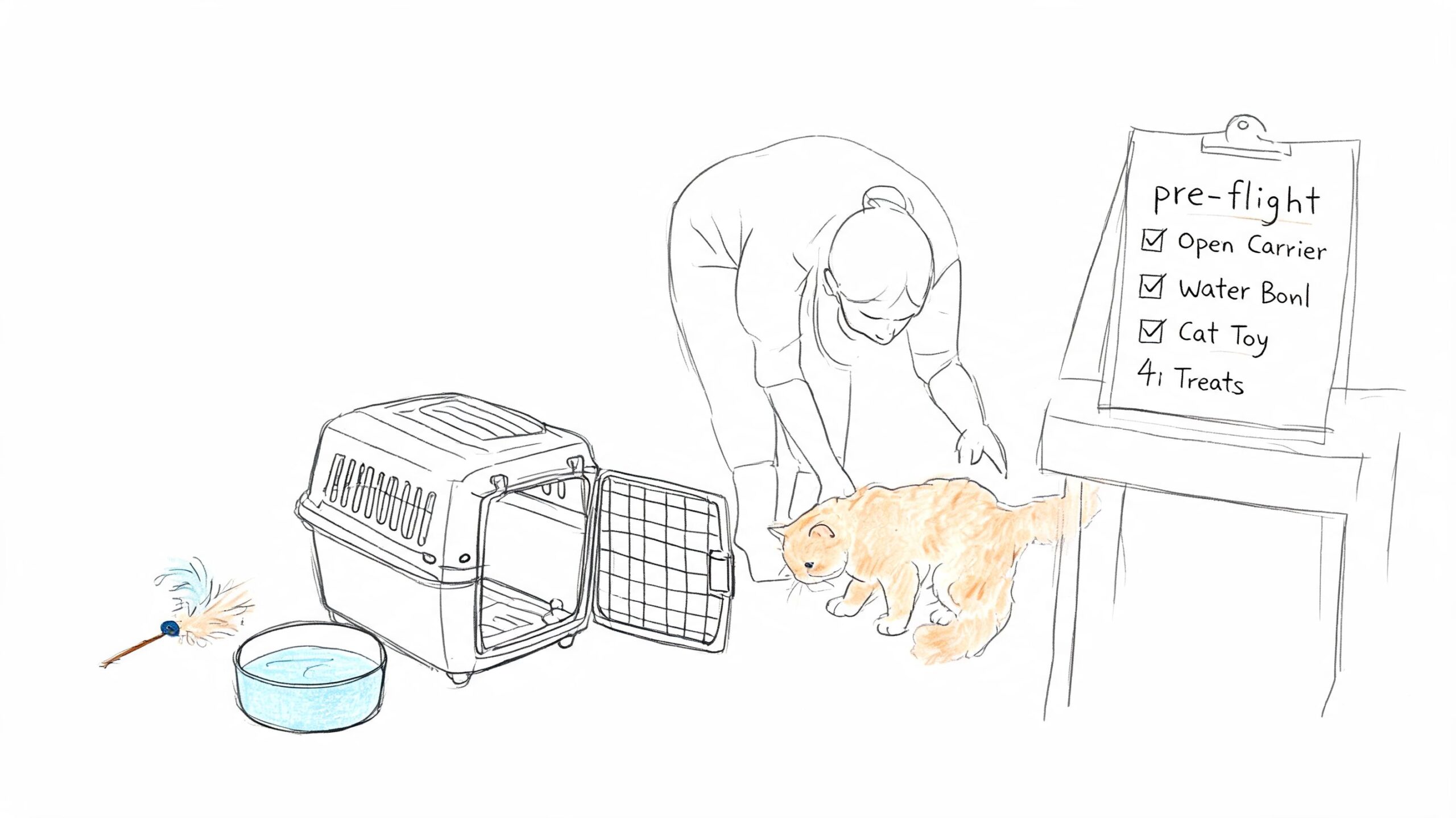
Make the Carrier a Safe Space: If you’re using a carrier, don’t just pull it out on travel day. Leave it open in your living room for a week or so beforehand. Put their favorite blanket, a few toys, and some treats inside. You want them to see it as their personal den, not a box for a scary trip.
Burn Off That Extra Energy: A tired pet is a happy pet. Before you head to the airport, a long walk, a game of fetch, or an energetic play session can work wonders. It helps them settle down naturally once you're on board.
Think About Their Tummy: It’s best to feed your pet a light meal a few hours before the flight, but try to avoid a full meal right before departure. You can absolutely offer water, but do it in smaller amounts to prevent an upset stomach or the need for an urgent potty break mid-flight.
We get asked about sedation all the time. The reality is, most veterinarians advise against it for air travel. Sedation can affect a pet's ability to regulate their breathing and balance, especially with changes in altitude. Calming supplements or even just a familiar, well-loved toy are much better options.
Taking these small steps makes a massive difference. When you put in the effort beforehand, you set the stage for a flight where your pet arrives just as relaxed and happy as you are.
How Can I Ensure My Pet is Comfortable During the Flight?
Alright, so you’ve booked the flight and handled the paperwork. Now, what happens once you and your four-legged family member are actually on board? This is where flying private really shows its value for pet owners.
Unlike a commercial flight with its unpredictable temperature swings and pressure changes, a private jet offers a calm, stable environment. The cabin pressure and temperature are kept consistent, which is a huge relief for animals who are sensitive to those shifts. It’s far less stressful than being in a cargo hold.
This controlled setting means your pet stays right there in the cabin with you. No cargo holds, no separation anxiety. Depending on the charter operator’s rules and your pet's personality, they can relax in a carrier, on your lap, or even buckled into the seat next to you. It’s that kind of flexibility that makes all the difference.
Creating a Comfort Zone at 40,000 Feet
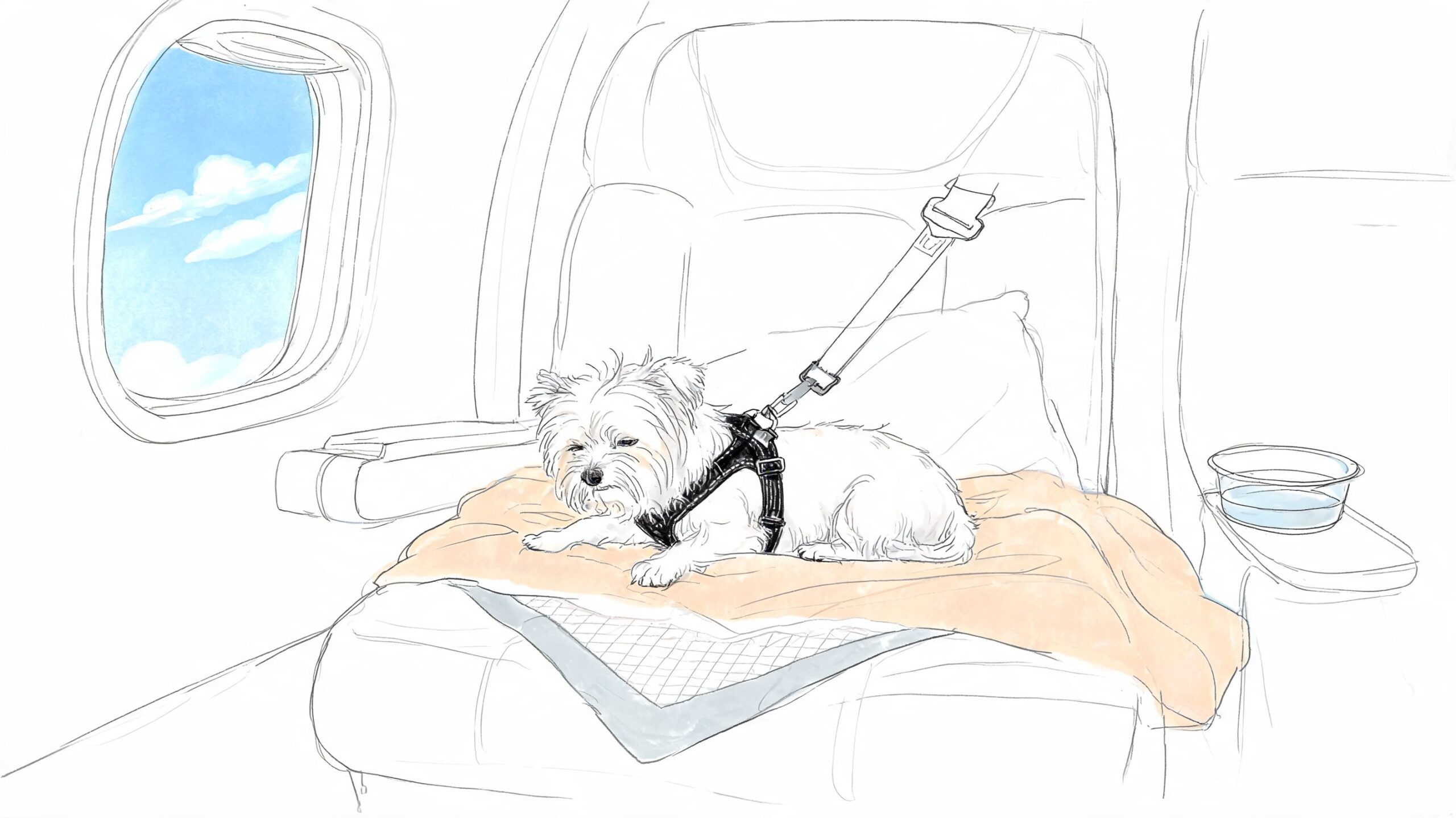
Even in a comfortable cabin, the experience is still new for your pet. A few simple things can go a long way in making them feel secure. We always recommend bringing their favorite blanket, a bed, or a well-loved toy—anything that carries a familiar scent can instantly turn an unfamiliar space into a little piece of home.
For a deeper dive into making travel easier on your canine companion, these tips for traveling safely with your dog are fantastic. The advice is solid no matter how you're traveling.
One of the best parts of flying private is simply having the space and privacy to manage your pet’s needs without an audience. Worries about things like potty breaks just disappear.
On longer flights, it’s easy to lay down some absorbent puppy pads in a discreet spot. You have the privacy to handle any accidents or needs without feeling stressed or disrupting anyone. It’s also smart to keep your pet hydrated, so have a travel bowl and water handy. Offering them small sips throughout the flight prevents dehydration but also helps you avoid too many emergency potty breaks.
Ultimately, the goal is a peaceful journey for everyone, pets included. With a small comfort kit and a plan for their in-flight needs, the private jet experience becomes a genuinely positive and relaxing one for your best friend.
Your Pet Travel Questions Answered
When you're thinking about a pet friendly private jet charter, it’s only natural to have a few questions. You want to be sure you’re making the safest and most comfortable choice for your four-legged family member. We’ve heard all the common questions over the years, so we’ve put together some straightforward answers to help you plan.
How Much Extra Does It Cost to Bring a Pet?
This is usually the first question people ask, and the answer is one of the best parts of flying private. With a reputable operator like Air Trek, there is typically no extra charge to bring your pet. We see pets as part of the family, not as cargo that needs an extra fee.
Your charter price is based on the aircraft, the flight time, and your route. The only exception might be a cleaning fee if there’s a significant mess, but honestly, that’s incredibly rare. This is a world away from commercial airlines, which often charge hundreds just to put a pet in the stressful and unfamiliar cargo hold.
Are There Size or Breed Restrictions?
Almost never. This is single-handedly one of the biggest reasons pet owners choose private charters. From Great Danes and Bernese Mountain Dogs to the smallest cats or even birds, your pet is welcome in the cabin right alongside you.
Commercial airlines are notorious for their breed blacklists and strict weight limits, but private aviation is built on flexibility. For safety, we might ask that a very large dog be on a leash during takeoff and landing, but they will never be separated from you or put in a crate. It’s always smart to mention your pet’s details to the charter coordinator when booking, but the answer is almost always a welcoming yes.
The core philosophy is simple: if they're family to you, they're a welcome passenger to us. The goal is to remove the barriers and stress that commercial travel imposes on pet owners.
What If My Pet Needs a Bathroom Break In-Flight?
This is a totally valid and common concern, and it’s something that is easily managed on a private jet. The space, privacy, and relaxed environment make all the difference.
- For shorter flights: A good walk and a potty break at the private FBO terminal right before you board is almost always enough.
- For longer journeys: You have plenty of room to bring absorbent puppy pads or even a small, portable litter box for cats. Our flight crews are well-accustomed to having furry co-pilots and understand these needs completely. It’s a non-issue.
If you have any last-minute questions about your pet's health or readiness to fly, a quick consultation can offer great peace of mind. Resources like Tampa pet tele-medicine and tele-advice can be invaluable for getting professional input before your trip.
What Paperwork Will I Need for My Pet?
The documents you need will depend entirely on where you’re going. For domestic flights within the U.S., it’s incredibly straightforward. You will typically only need two things:
- A recent health certificate from your veterinarian.
- Proof of an up-to-date rabies vaccination.
International travel is a different story and gets more complex. Every country has its own specific import rules, which can include microchipping, specific vaccination timelines, and government-endorsed health certificates (often called a "pet passport"). A good charter provider will walk you through the exact requirements for your specific itinerary, so you know exactly what’s needed.
Of course, understanding all the costs associated with your flight is key. You can get a clearer picture of your travel investment and estimate your private jet charter pricing to see how everything fits together.