
You've reached the point where commercial travel is costing more than the ticket price. Hours disappear in security lines, schedule changes ripple through your day, and even a “good” first-class experience still puts the airline in control. That's usually when people start looking up the best private jet companies, not because they want a status symbol, but because they need a better operating model for travel.
The challenge is that private aviation isn't one product. It's a mix of on-demand charter, jet cards, memberships, leases, and fractional ownership. A company that's ideal for a board chair flying internationally every month may be a poor fit for a family that mainly shuttles between Florida, the Northeast, and the Caribbean. A slick app doesn't matter much if you need recovery options on a difficult weather day. A giant fleet isn't always the best answer if most of your flying is regional and you don't want a long-term commitment.
This guide provides assistance by comparing major names in private aviation while keeping the practical question front and center. What is the right fit for the way you fly?
If you're asking questions like “Should I buy into a program or stay on-demand?”, “Which operators are strongest in the Americas?”, or “Is the biggest fleet always worth the premium?”, these are the distinctions that matter.
1. NetJets

A common scenario: a meeting runs late in New York, weather starts moving across the Midwest, and the next morning's schedule still cannot slip. That is the kind of traveler NetJets serves well. It is usually the first serious option for buyers who place the highest value on fleet depth, dispatch coverage, and a program that has been tested at scale.
NetJets has long set the standard for institutional private aviation. The attraction is not just size for its own sake. Size matters because it improves recovery options when an aircraft goes mechanical, a crew times out, or a routing problem forces a last-minute adjustment. Buyers who fly often, across multiple regions, tend to notice that difference quickly.
Where NetJets makes sense
NetJets is strongest for travelers who want structured access rather than one-off charter shopping. Its program lineup is built for clients deciding how much commitment they want, not whether they want private aviation at all.
- Best fit for frequent use: Fractional ownership and lease programs suit travelers who want dependable access and standardized service.
- Lower-risk way to start: Jet card options can make sense for clients who want to try the platform before taking on a longer obligation.
- Better disruption coverage: A larger operator usually has more ways to handle substitutions, maintenance events, and irregular operations than a smaller fleet can offer.
One practical rule applies here. If a missed board meeting, a failed family transfer, or an overnight schedule change costs more than the premium you pay for a top-tier operator, NetJets can justify itself.
Its ownership by Berkshire Hathaway also matters to many buyers. For families, corporate flight users, and advisors thinking years ahead, that level of financial backing can reduce concern about counterparty risk and program continuity.
Trade-offs to watch
NetJets is rarely the low-cost answer. The premium is real, and the paperwork deserves careful review. Call-out requirements, peak-day restrictions, interchange terms, and upgrade rules all affect how useful the program feels in day-to-day use.
Fit matters more than brand recognition. Some travelers do not need a global-scale platform with ownership-style structure. If most trips are shorter regional missions and flexibility matters more than long-term commitment, a specialized operator or lighter membership model may deliver better value. That's the practical appeal behind options like Air Trek memberships.
Visit NetJets.
2. Flexjet

A client is flying New York to Aspen one week, Palm Beach the next, then wants a transcontinental trip that still feels like the same product every time. That is the kind of buyer who usually puts Flexjet on the short list.
Flexjet appeals to travelers who place real value on presentation, cabin standards, and a more personalized service culture. The flying matters, of course, but so does what happens before boarding and during the trip. For principals using the aircraft as an extension of the office or home, that consistency has practical value, not just cosmetic value.
Why Flexjet stands out
Flexjet is usually strongest for clients who want a premium program with more than one way to buy access. Fractional ownership, leases, and the FLEXJET 25 card give buyers room to match the structure to their actual usage instead of forcing every flyer into the same model. Red Label has also built a reputation around a more refined onboard experience, which matters to travelers who notice the difference between generic lift and a carefully managed product.
A few areas where Flexjet often fits well:
- High-touch service expectations: Good fit for buyers who care about crew presentation, cabin finish, and repeatability.
- Several commitment levels: Useful for households or companies still deciding whether card access, leasing, or ownership makes the most sense.
- Frequent premium domestic travel: Often attractive for travelers with regular North American flying who want a more polished feel than a basic charter solution.
The key point is fit. Flexjet sits in the tier where service design is part of the value proposition. That can be worth paying for if the travel pattern is frequent, the passengers are demanding, and the client wants a more controlled experience than ad hoc booking usually delivers.
Where clients misjudge it
The mistake I see most often is paying for a premium structure without having a premium usage pattern. If trips are sporadic, routes change constantly, or annual hours are still uncertain, the extra polish may not offset the cost and commitment.
That is where this ranking should be read carefully. A large national provider like Flexjet can be the right answer for repeat flyers who want a defined program and a luxury-standard experience. It is not automatically the right answer for every private flyer. If your mission profile is mostly regional, more flexible, or less predictable, a smaller high-service operator may produce better day-to-day value than a bigger brand name.
Buyers should also pressure-test the operating terms before signing. Peak days, booking windows, interchange rules, and upgrade assumptions affect the actual experience far more than brochure language does. A program can look excellent on paper and still feel restrictive if your schedule changes at the last minute or your busiest travel falls on high-demand dates.
Visit Flexjet.
3. VistaJet

VistaJet is one of the more compelling answers for travelers who think globally first. If your typical mission crosses borders, continents, or time zones, the company's membership-driven model can feel more natural than domestic-first programs adapted for international use.
Its appeal is simple. You're buying into a consistent service framework with worldwide orientation, rather than trying to piece together a global pattern from regional solutions.
Best fit for international flyers
VistaJet is usually strongest for people who want long-range capability and a standardized client experience across markets. That includes multinational executives, family offices, and travelers who don't want the friction of re-vetting operators in different regions.
Its model tends to work well for:
- Cross-border schedules: Travelers moving between major business centers who need consistency.
- Lower capital commitment than ownership: Membership structures can be more attractive than buying into a share.
- Governance-minded companies: Corporate travel teams often like defined access rules more than informal ad-hoc booking.
The caution here is that membership systems reward enough flying to justify the framework. If you only need a handful of flights a year, flexibility may matter more than standardization.
Practical trade-off
VistaJet is less about spontaneous bargain hunting and more about dependable premium access. That's a strength if your travel is steady and international. It's a weakness if you mostly buy one-off trips and want to shop each mission independently.
There's also a larger market story worth noticing. Coverage often centers on the biggest three names, but that can obscure where specialized operators provide better value for regional missions. Private Jet Card Comparisons notes that while the largest players dominate attention, family-owned companies such as Air Trek can be the better fit for travelers focused on the U.S., Canada, Caribbean, and South America rather than global fleet prestige, according to its 2025 market ranking analysis.
That's the right framing for VistaJet too. It's excellent when your mission is international consistency. It's less compelling when your mission is regional flexibility without a membership-heavy approach.
Visit VistaJet.
4. XO
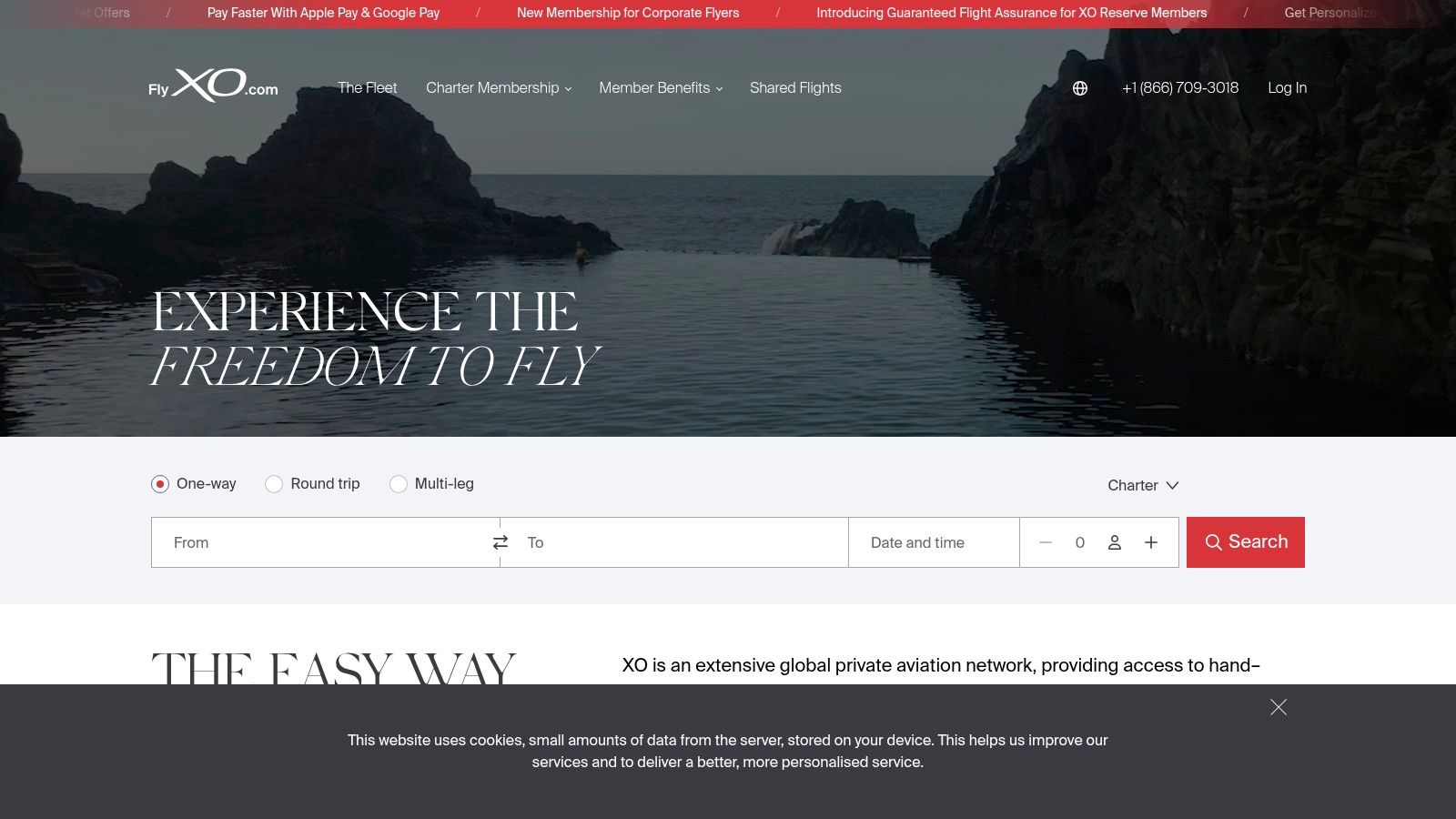
A client needs to get from New York to South Florida on short notice, then may add a family leg to the Bahamas two weeks later. That traveler usually does not need a long-term ownership commitment. They need access, fast quoting, and enough flexibility to book differently as the trip profile changes. XO is built for that buyer.
What makes XO relevant in this lineup is its middle-ground position. It sits between traditional membership logic and pure one-off charter shopping. For travelers who are still defining their private flight pattern, that can be a smart place to start.
Why XO fits certain travel profiles
XO works well for buyers who want optionality without immediately committing to the heavier structures used by some larger programs. The platform combines on-demand charter, shared flight options, and membership pathways in a model that can adapt as flying volume increases.
That matters for two groups in particular. First, newer private flyers who want a more guided digital process than calling brokers trip by trip. Second, experienced charter users who value speed and app-based access, but are not ready to lock themselves into a stricter program.
A few strengths stand out:
- Low-friction entry: Useful for travelers shifting from occasional charter to more frequent private use.
- Digital booking experience: Faster trip requests and clearer workflow than a fully manual quoting process.
- Multiple access paths: Buyers can stay flexible or move into a more structured program if their travel becomes predictable.
Where the trade-offs show up
Flexibility is only valuable if the fine print matches how you fly. With XO, buyers should pay close attention to notice requirements, peak-day limitations, aircraft-category availability, and the difference between standard charter pricing and membership benefits.
That is the real diligence point here.
A traveler doing mostly short-notice regional missions may like XO's convenience, but still find better value with a specialized operator that focuses tightly on those routes and service patterns. This article is not only about who has the biggest platform. It is about matching the provider to the mission. Global brands bring scale. Regional specialists can win on responsiveness, consistency, and cost discipline for the right flyer.
Empty legs also deserve a realistic look. They can reduce cost on certain routes, but they work best for travelers with flexible timing and flexible airports. If that's part of your strategy, Air Trek has a useful explainer on how empty leg flights work.
XO is a strong fit for travelers who want private aviation to feel easier to access and easier to manage. It is less compelling for buyers who already know they want either full international program consistency or a high-service regional operator suited to a narrower footprint.
Visit XO.
5. Wheels Up

Wheels Up is often the right conversation for U.S.-focused travelers who want a membership-led experience and prefer booking through a familiar digital interface. It has broad brand recognition, and that matters for some buyers because private aviation can feel opaque at first.
The practical appeal is less about exclusivity and more about usability. Membership tiers, app-based scheduling, and corporate-oriented options make it approachable for both individuals and managed travel programs.
Where Wheels Up fits best
Wheels Up tends to make sense for domestic or near-regional flyers who want a branded ecosystem rather than pure one-off charter sourcing. It can be especially relevant for companies that want traveler access without forcing every trip through a bespoke charter process.
The strongest reasons to consider it are straightforward:
- App-centered booking: Useful for travelers who value speed and familiarity.
- Corporate membership pathways: Better aligned than some competitors for teams with repeat travel needs.
- Mixed fleet access: The combination of owned, managed, and partner lift can widen trip options.
This model can work well when your trips are mostly within the U.S. and your team values consistency in process even if the aircraft sourcing behind the scenes is mixed.
What to verify before joining
Wheels Up requires due diligence. That's not a criticism unique to this company. It's the right standard for any membership operator using a broad network. Ask how availability works in your core city pairs. Ask what happens during peak dates. Ask who operates the flights you're most likely to use.
A lot of disappointment in private aviation comes from mismatched expectations, not bad companies. A traveler expects frictionless access every time. The program offers very good access, with some constraints around timing, geography, and aircraft category. Those are not the same thing.
If you're considering Wheels Up, compare the membership logic to your actual usage. If your profile is highly scheduled and domestic, it can be a sensible option. If your flying is sporadic, highly regional, or value-sensitive, on-demand charter may still be the cleaner answer.
Visit Wheels Up.
6. flyExclusive
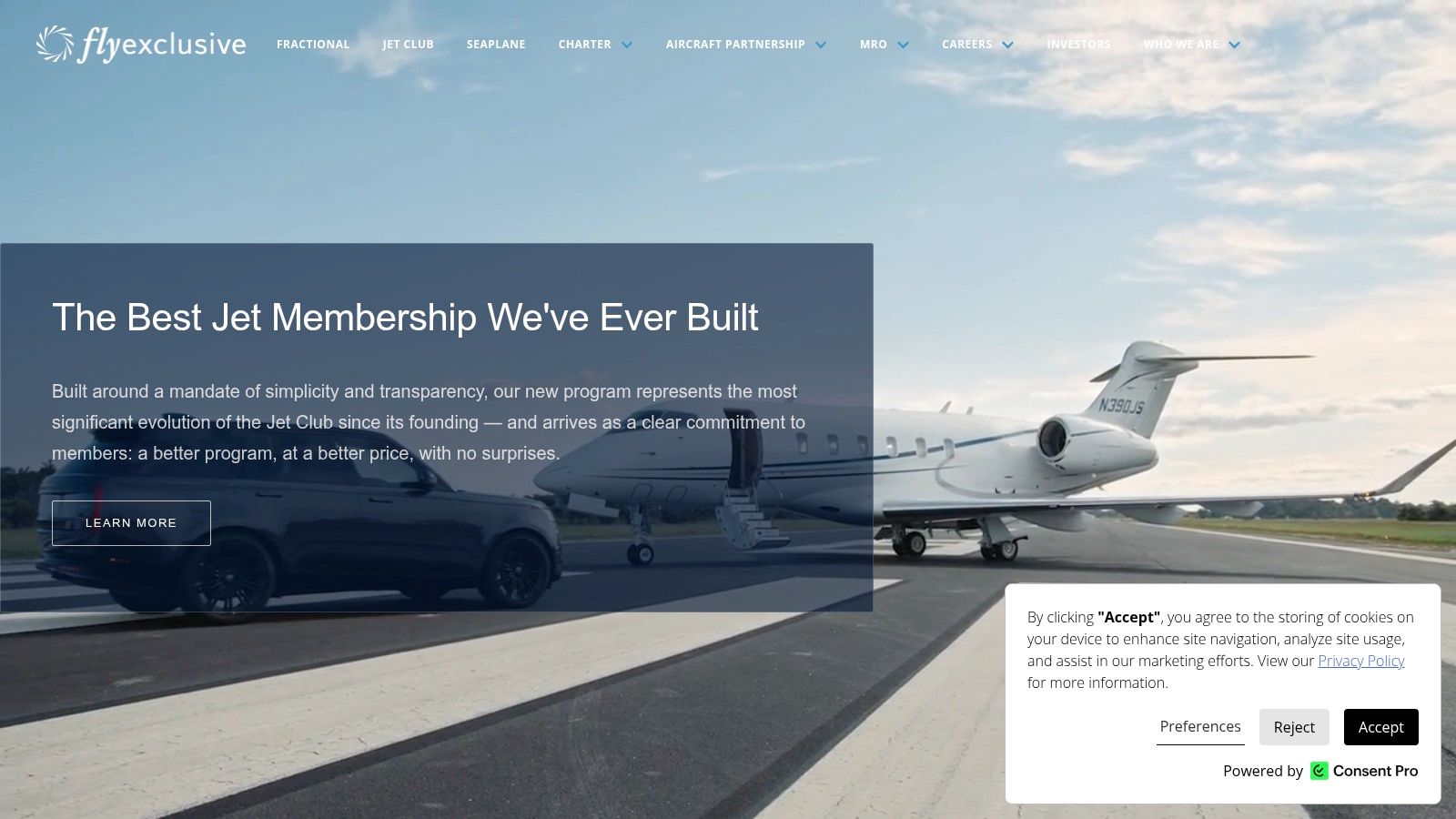
A traveler based in Florida who flies to the Northeast, Texas, and the Caribbean several times a year usually does not need the biggest name in private aviation. That traveler needs reliable lift, clear program rules, and an operator that can keep aircraft in service. flyExclusive fits that profile better than many global brands.
Its appeal starts with operational control. In-house maintenance, paint, and completions do not sell memberships on image alone, but they do matter when you care about dispatch reliability, aircraft condition, and how much of the operation stays under one roof. For buyers comparing large membership platforms to more specialized operators, that is a real distinction.
Why the model works
flyExclusive sits in a useful middle ground. It offers more structure than pure on-demand charter, but it does not require the same level of commitment or global ambition that often comes with the largest fleet programs. That makes it relevant for clients who fly often, mostly within the U.S., and want pricing and access to feel more defined.
A few strengths stand out:
- Operator-controlled infrastructure: More in-house oversight can mean fewer handoff points and better consistency.
- Program simplicity: Jet Club and fractional options are easier to evaluate than some layered membership models.
- Strong regional fit: U.S. and Caribbean demand is not a niche. For many travelers, it is the core mission set.
That last point matters. A mega-fleet can be the right answer for intercontinental travel or highly varied routing. A strong regional operator can be the smarter answer if most trips are concentrated in a repeatable footprint.
Best fit and trade-offs
flyExclusive is a good match for travelers who want accountability from the operator and do not need a worldwide platform for every mission. It is especially relevant for clients whose travel pattern is domestic, Southeast-heavy, or Caribbean-facing.
Cost discipline also matters here. Final pricing on these trips can move with aircraft category, repositioning, peak-day demand, and airport choices. Air Trek explains those variables clearly in its guide to what changes the price of a private jet charter in Florida.
The trade-off is reach. If your flying regularly extends into Europe, the Middle East, or Asia, a larger global platform may serve you better. If your mission profile stays closer to home and you want a company with meaningful in-house control, flyExclusive deserves serious consideration.
Visit flyExclusive.
7. Jet Linx

Jet Linx takes a different route than the giant network brands. Its local-base model is the main reason to consider it. For travelers who want private aviation to feel personal, not industrial, that distinction matters.
A large operator can be excellent at scale and still feel centralized. Jet Linx tends to resonate with clients who want a home-base relationship, local service teams, and support that feels closer to concierge than call center.
What Jet Linx does well
Its appeal starts with localized service, but it doesn't end there. Jet card membership, aircraft management, and acquisition support make it relevant to both frequent flyers and owners.
The strongest parts of the Jet Linx proposition are:
- Local relationship model: Especially appealing if you repeatedly depart from the same major market.
- Private terminal experience: Useful for travelers who value discretion and ease on departure day.
- Owner support: Management and acquisition services can be valuable if your aviation needs evolve beyond charter.
Jet Linx is also one of the easier companies to recommend to safety-conscious buyers because it's known for emphasizing third-party credentials in a very visible way. That kind of transparency helps when families or corporate risk teams are involved.
Real limitation
The limitation is scale. A local-service model can be a major strength, but it won't replicate the sheer network depth of the largest multinational fleets. If your flying patterns are highly variable across continents, local intimacy may matter less than giant-system recovery capability.
That doesn't make Jet Linx a lesser choice. It makes it a specific choice. For many travelers, especially those flying repeatedly from the same regions, that specificity is exactly the point.
If you're asking, “Do I want the biggest platform, or do I want a company that knows my family, my route patterns, and my preferences?” Jet Linx sits firmly in the second camp.
Visit Jet Linx.
Top 7 Private Jet Companies Comparison
| Provider | Complexity 🔄 (implementation) | Resources 📊 (requirements) | Expected outcomes ⭐ (quality/coverage) | Ideal use cases 💡 | Key advantages ⚡ |
|---|---|---|---|---|---|
| NetJets (Berkshire Hathaway) | High, fractional contracts, peak‑day rules | Very high, fractional capital, large diverse fleet, global ops | Very high, guaranteed access, strong recovery and safety programs | Frequent high‑hour users and corporates needing guaranteed availability | Unmatched scale, recovery capability, rigorous safety/training |
| Flexjet | High, multi‑year fractional commitments and Red Label operations | High, premium cabins, dedicated crews, long‑range fleet | High, consistent premium cabin experience and service reliability | Travelers who prioritize high‑touch, consistent in‑flight experience | Red Label dedicated crews, consistent interiors, strong corporate support |
| VistaJet | Medium, membership/fixed‑hour structure | High, uniform global fleet focused on mid/long‑range | High, consistent international experience and clear hourly pricing | International travelers needing standardized cabins and global reach | Global guaranteed access, standardized cabins, fixed hourly model |
| XO (Vista Global) | Medium, app‑driven mix of on‑demand, shared, and membership options | Medium, digital platform plus partner/global network | Medium‑High, flexible booking with transparent program rules | Users valuing digital convenience and mixed ad‑hoc + membership flying | App convenience, flexible options (charter/shared/membership) |
| Wheels Up | Medium, tiered memberships and partner access rules | Medium, managed/partner/owned fleet, U.S. focus | Medium, strong U.S. presence with published member benefits | U.S. corporate buyers seeking app‑centric booking and tiered benefits | App scheduling, clear member guides, broad U.S. network |
| flyExclusive | Low‑Medium, simplified fractional and Jet Club structure | Medium, vertically integrated operator, in‑house maintenance | Medium‑High, predictable all‑in pricing and operational consistency | U.S. flyers seeking predictable rates and operator stability | Vertically integrated ops, rate locks, transparent membership terms |
| Jet Linx | Medium, local‑base model with Jet Card and management services | Medium, localized bases, private terminals, managed fleet | High (locally), personalized service with elite third‑party safety ratings | Travelers who prioritize localized, personalized service and safety | Local‑base personalized support, top third‑party safety credentials |
Your Flight Plan for Choosing the Best Jet Company
The best private jet companies solve different problems. That's the main takeaway. Buyers often start with a ranking mindset, but private aviation is usually a fit decision, not a trophy decision.
If you fly globally, need high dispatch confidence, and want the deepest infrastructure available, NetJets belongs near the top of your list. If you want a similarly premium environment with strong service identity, Flexjet is a serious contender. If your travel pattern is international and membership-based consistency matters more than ownership structure, VistaJet can be the smarter match.
That said, not every traveler needs a mega-fleet answer. Some need flexibility more than institutional scale. XO is attractive for buyers who want app-driven access and a mix of on-demand and structured options. Wheels Up can make sense for U.S.-focused travelers and companies that prefer a branded membership environment. flyExclusive offers a practical middle ground for people who value operator control and predictable program design without requiring the largest global platform. Jet Linx stands out for local service and relationship-driven support.
The underserved decision point is regional specialization. Many “best private jet companies” lists fall short on this point. They over-reward size and underweight mission fit. If most of your flying is across the United States, Canada, the Caribbean, and Central or South America, a specialized operator can be a better business decision than a giant global program. Air Trek, for example, has been family-owned since 1978 and is built around flexible charter across the Western Hemisphere, with strategic partner support for broader reach. That model often fits travelers who want personalized service, pet-friendly travel, strong regional knowledge, and on-demand flexibility without stepping into a large ownership commitment.
The right way to choose is simple. Start with your mission profile.
Ask yourself:
- Where do I fly most often?
- How frequently do I need private access?
- Do I want guaranteed access, or do I want maximum flexibility?
- Am I optimizing for global reach, regional expertise, cabin consistency, or cost control?
- Will I use a card or membership enough to justify the structure?
When clients answer those questions candidly, the shortlist usually becomes obvious. The best company isn't the one with the loudest brand or the largest brochure claim. It's the operator whose model fits your routes, your timing, and the way you want to travel.