
If you're booking a trip across Florida or out to the Bahamas, the flight itself usually isn't the hardest part. The wasted hours before and after it are. You sit in traffic on I-95 or the Turnpike, build in extra time for a major terminal, wait through security, then learn the departure has moved or slipped.
That's why people who use air charter in florida regularly rarely talk about “luxury” first. They talk about control. They want to leave closer to home, land closer to the meeting, keep the family together, bring the dog, avoid a layover, and stop giving away half a day to airport friction.
Florida is unusually well suited to this kind of travel. It has dense business corridors, resort markets spread across the peninsula, easy access to the Caribbean, and a deep general aviation network that makes private flying practical rather than theatrical.
The Real Value of Time for Florida Travelers
A common Florida travel day looks efficient on paper and messy in practice. An executive in Boca Raton schedules a morning meeting in Tampa. A family in Naples needs to get to South Florida before continuing on. A team heading to Miami leaves early, yet still loses time to traffic, parking, terminal lines, and gate delays.
Commercial service works when your route lines up with the airline's schedule. It breaks down when your day has moving parts.
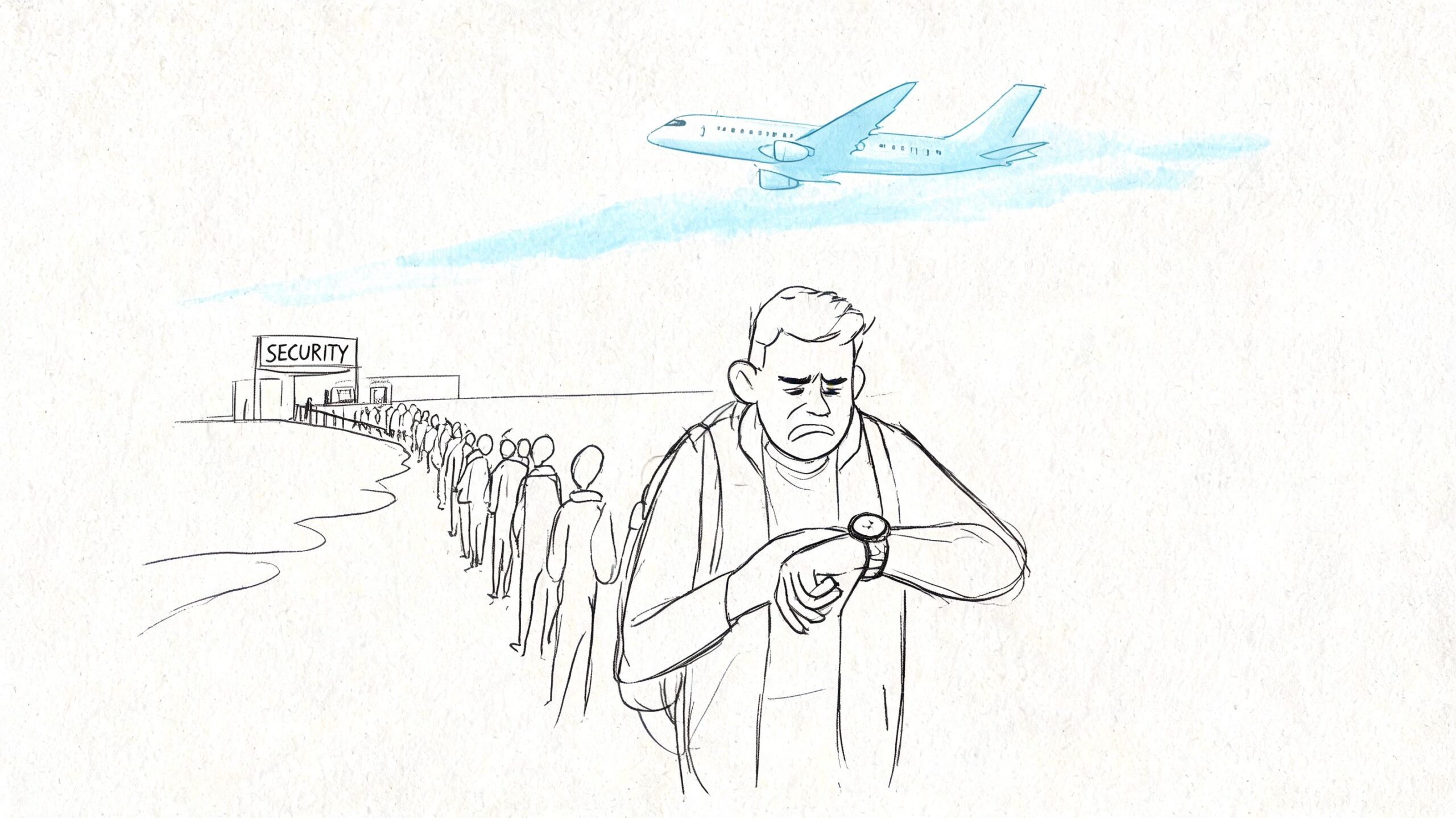
With charter, the experience changes before the aircraft even starts engines. You drive to a private terminal, arrive much closer to departure, board with your own group, and fly to the airport that best fits your actual destination. That difference matters in Florida because distance alone is deceptive. A short flight can still turn into an all-day event if the airport choice is wrong.
Florida's private aviation footprint is large enough to support that flexibility. General aviation airports contribute more than $27.4 billion annually to the state's economy, and the network includes 108 public-use general aviation airports, supporting 75,551 active pilots and 20,007 registered aircraft, according to Florida aviation economic impact figures.
Why this matters more in Florida
Florida isn't one market. It's several. South Florida, Central Florida, the Gulf Coast, the Panhandle, the Keys, and the islands beyond all create different travel patterns. The result is simple: travelers who rely only on major commercial airports often accept delays that are avoidable.
A few examples come up again and again:
- Same-day business turns: A leadership team can leave in the morning, meet in another Florida city, and return without overnighting.
- Family itinerary control: Parents can keep kids, luggage, and pets together instead of splitting logistics across connections.
- Multi-stop efficiency: Private travel can support a route built around your schedule, not a carrier's network.
Practical rule: In Florida, the biggest time savings often happen on the ground, not in the air.
That's also why private travel becomes attractive to families, not just executives. If you're coordinating children, grandparents, golf bags, or pets, fewer handoffs usually mean fewer problems. Air charter can turn a complicated travel day into a direct one, which is part of why many travelers looking at South Florida private flying also read about why families choose private jet travel from South Florida.
The real luxury is schedule control
People often ask, “Isn't charter just for special occasions?” Sometimes, yes. But in practice, the strongest use case is often schedule protection.
If missing a meeting creates a business problem, if a delayed connection costs a vacation day, or if a pet can't travel well in the cargo system, then charter stops being a vanity purchase. It becomes a tool for reducing friction.
That's the frame that makes air charter in florida worth evaluating seriously. Not as an indulgence. As a way to buy back time that commercial travel keeps taking.
What Air Charter in Florida Really Means
Air charter is easier to understand if you stop thinking about aircraft first and think about service design. Commercial aviation is a fixed-route system. Charter is a custom trip built around your mission.
The simplest analogy is this. A commercial airline is like a bus network. It runs where and when the operator decides. A charter flight is closer to a premium car service. You choose the pickup, the destination, the timing, and the passenger list.
The service, not just the plane
When people search for air charter in florida, they often assume they're shopping for a jet model. In reality, they're buying a travel solution that includes several moving parts:
- Aircraft selection: The plane should match the route, passenger count, baggage, and runway conditions.
- Crew and legal operation: The flight needs to be conducted by a properly certificated charter operator.
- Routing and airport planning: The right departure and arrival points can save hours.
- Ground coordination: Cars, luggage handling, timing, and special requests all affect the trip.
That's why two quotes for the “same route” can feel very different in execution. One provider may price an aircraft. Another may build around your actual day.
The three practical reasons people choose charter
Most decisions come down to three things.
Time savings
This is the clearest advantage. You spend less time in lines, less time inside large terminals, and often less time driving to and from airports. For business travelers, that can protect the part of the day that produces value.
Flexibility
Charter works when plans don't fit a fixed airline pattern. Maybe the meeting ends early. Maybe you need a later departure. Maybe you need to land closer to a coastal community, a resort area, or an executive airport the airlines don't serve directly.
Privacy
A private cabin gives executives room to work and families room to travel without the usual public-airport stress. Sensitive conversations stay private. Kids can settle in. Pets can stay with their owners if the operator allows it.
Charter works best when your trip has consequences. Tight timing, multiple travelers, unusual baggage, pets, or a destination that's awkward commercially all push the value higher.
Common questions people ask
Is charter always a jet?
No. The right aircraft may be a turboprop, light jet, midsize jet, or larger cabin aircraft depending on the mission.
Can I pick smaller airports?
Usually, yes. That's one of the main advantages, especially in a state with so many useful executive and regional fields.
Is it only for corporate travelers?
No. Families use charter for vacations, school breaks, island trips, and travel with pets or older relatives. Groups use it for events and retreats.
What doesn't work well with charter?
Very simple solo trips on heavily served airline routes don't always justify the cost. If your schedule is flexible and the commercial route is nonstop from a convenient airport, the airline may still be the sensible choice.
Where people get the decision wrong
The most common mistake is focusing only on cabin appearance or brand name. The better question is whether the trip plan fits the traveler.
A sleek aircraft that requires extra repositioning or the wrong airport can be less useful than a more practical option that departs closer in, lands closer out, and fits the mission cleanly. Good charter planning starts with the traveler's day, not the brochure photo.
Navigating Florida Skies Routes and Airport Choices
Airport choice is where Florida charter strategy becomes real. Many travelers think first about MIA, MCO, TPA, or FLL because those are the names they know. In private aviation, that's often the wrong starting point.
The better question is, “Which airport gets me closest to the actual destination with the least ground friction?”
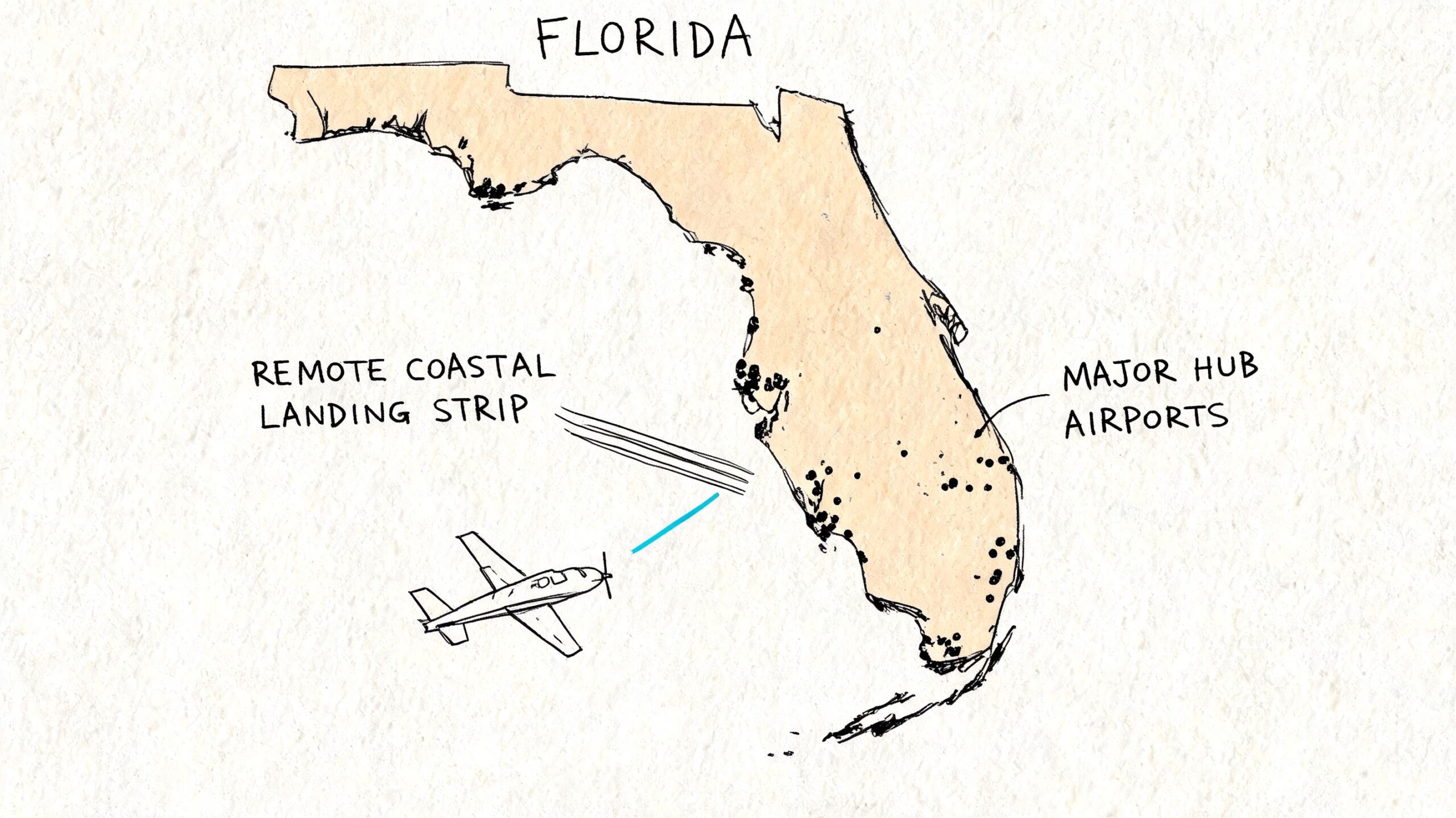
Florida's demand supports this approach. Private flying in the state had surpassed pre-2019 levels by 32.1% as of mid-2024, and Palm Beach International Airport recorded 14,339 private and charter flights in March alone, according to WPTV's reporting on Florida private air travel. Rising demand is exactly why smaller, less congested airport options matter.
Major hub versus executive field
Through this, experienced travelers save time.
A few common examples:
- Miami area: Depending on the mission, Miami-Opa Locka Executive can be more practical than a large commercial hub.
- Orlando area: Orlando Executive may suit a business itinerary better than the main airline airport.
- South Florida corridor: Boca Raton, Fort Lauderdale Executive, and Palm Beach area options can reduce drive time depending on where the traveler needs to be.
- Gulf Coast access: Regional airports near Naples, Sarasota, Punta Gorda, or Fort Myers can simplify resort and residential access.
If you're comparing facilities, fixed-base operators, and what the private terminal experience looks like, a useful reference is this guide to a private jet FBO.
Route planning is really ground planning
The flight is only one segment. The smarter move is to plan door to door.
A Florida charter coordinator usually works backwards from the final address. If the client is staying in Naples, a large airport farther away may create unnecessary transfers. If the meeting is in downtown Tampa, the best arrival field may not be the one most familiar to airline travelers.
That same logic applies to outbound departures. Flying from the nearest viable executive airport can keep the trip from starting with a long car ride.
Here's a quick visual overview of how airport and routing choices shape the trip:
Common Florida trip patterns
Business corridors
Business travelers often move between South Florida, Orlando, Tampa, and the Gulf Coast on short notice. The value comes from same-day movement and airport proximity, not just airtime.
Island and near-international leisure trips
Families heading from Florida to the Bahamas or Caribbean often prioritize direct routings, customs handling, pet policies, and baggage flexibility.
Long-range connections
Travelers also use Florida as a launch point into the Northeast, Canada, Central America, and South America. In those cases, the best Florida departure point may depend on where the aircraft and crew are positioned, along with the client's ground schedule.
The best charter airport is often the one your commercial-travel habits ignore.
Questions worth asking before you lock the route
- Which airport is closest to my actual destination, not just the city name?
- Will using a smaller airport reduce drive time on both ends?
- Does the runway and facility support the aircraft that best fits the trip?
- If weather or congestion shifts, is there a practical alternate nearby?
That kind of planning is where air charter in florida separates itself from generic private flying. The state gives you many options. The value comes from choosing the right one.
Decoding Air Charter Costs and Pricing Models
A Fort Lauderdale departure at 8:00 a.m. for a same-day meeting in Tallahassee prices very differently from a flexible one-way weekend flight to Key West. The aircraft may look similar on paper. The cost drivers are not.
The useful starting question is which pricing model fits the trip you need to fly. In Florida, that means looking past the headline hourly rate and checking three practical variables first: how fixed the schedule is, whether the aircraft must reposition, and which airport pair makes operational sense.
Comparing Florida Air Charter Pricing Models
| Model | Best For | Flexibility | Cost Structure |
|---|---|---|---|
| On-demand charter | Travelers with occasional or irregular trips | High | Trip-by-trip quote based on aircraft, routing, and trip details |
| Empty leg flights | Flexible travelers who can adapt to an existing routing | Low | Discounted pricing tied to repositioning availability |
| Memberships or jet cards | Frequent private flyers who want repeat booking simplicity | Medium to high, depending on provider terms | Program-based access, typically with structured pricing or usage terms |
What a Florida charter quote is actually built on
Hourly price matters, but it is only one part of the quote.
A real charter estimate usually includes aircraft time, repositioning legs if the jet starts somewhere else, crew expenses on overnights, airport and handling fees, and taxes. Florida adds its own wrinkles. South Florida airport congestion, event-driven demand in Miami, winter peak traffic, and island departures that require customs planning can all change the final number.
Airport choice also affects cost in ways travelers do not always expect. Using a smaller reliever airport can save time on the ground, but it is not automatically cheaper. In some cases, a larger field offers better aircraft availability or lower repositioning exposure because more charter aircraft are already based nearby.
For travelers who want a clearer breakdown of how quotes are assembled, this guide to private jet charter pricing covers the moving parts in plain language.
On-demand charter versus empty leg versus membership
On-demand charter
On-demand charter fits many Florida trips because the schedule drives the decision. Executives heading from Boca Raton to Jacksonville for a fixed meeting time, or families trying to reach Naples before a weekend event, usually need control more than novelty.
You pick the date, departure window, aircraft category, and airport strategy. That control carries standard market pricing, but it also reduces the risk of rebuilding the whole day around someone else's aircraft movement.
Empty leg flights
Empty legs can offer real value, but only when the traveler is fully flexible.
The aircraft is already committed to another mission. Your booking fills a repositioning segment that would otherwise depart empty. That is why pricing can be lower. It is also why the trip can change or disappear if the primary customer adjusts plans.
In Florida, empty legs show up most often around heavy traffic flows such as South Florida to the Northeast, weekend leisure routes, and post-event repositioning. They work well for a couple planning a flexible getaway or a family with room to shift by a few hours. They are a poor fit for deposit-driven vacations, medical appointments, cruise departures, or business meetings where a late change costs more than the discount saved.
Memberships and jet cards
Memberships and jet cards appeal to travelers who fly often enough to value consistency over deal-by-deal shopping. The benefit is usually administrative. Faster booking, known program rules, and less back-and-forth on each trip.
The trade-off sits in the fine print. Peak day surcharges, blackout dates, taxi-time policies, interchange fees between aircraft categories, and recovery options during irregular operations matter more than the sales brochure. I tell clients to read those terms before they compare hourly numbers.
Florida-specific trade-offs that change price
Florida is a short-leg market with heavy seasonal swings. That combination creates pricing patterns that surprise first-time buyers.
A turboprop can be the smart choice for shorter hops such as Tampa to Marathon or Orlando to the Panhandle, especially when runway access matters more than cabin size. A light jet may look like the upgrade, but if the stage length is short and the passenger count is modest, the extra spend may buy very little practical benefit.
One-way pricing also deserves a careful look. A one-way charter can be efficient when an aircraft already needs to move in that direction. It can be less attractive when the operator has no follow-on use for the aircraft and must price in the return positioning. Air Trek and other experienced coordinators usually sort that out by comparing multiple aircraft origins, not just multiple aircraft types.
Questions worth asking before you accept the quote
Why is one option cheaper than another?
It may reflect a different airport plan, a longer repositioning leg, an older aircraft category, or tighter contract terms around schedule changes.
Should a group book two smaller aircraft or one larger cabin?
For Florida family and executive travel, one larger aircraft often wins on coordination, baggage handling, and arrival timing, even if the upfront quote looks higher.
Does waiting on the ground cost less than dropping and returning later?
Sometimes yes. Sometimes no. It depends on crew duty limits, parking availability, and whether the aircraft can be used elsewhere during your stop.
Is the lowest quote the best value?
Only if the operating assumptions match the trip. A cheaper quote built around the wrong airport, unrealistic departure timing, or weak recovery options can become the expensive choice fast.
Good charter pricing is not about finding the smallest number on the page. It is about buying the right level of certainty for the trip in front of you.
The Non-Negotiable Guide to Charter Safety and Vetting Providers
Price matters. Cabin comfort matters. Neither comes first.
Safety is the filter that should remove options before you compare anything else.
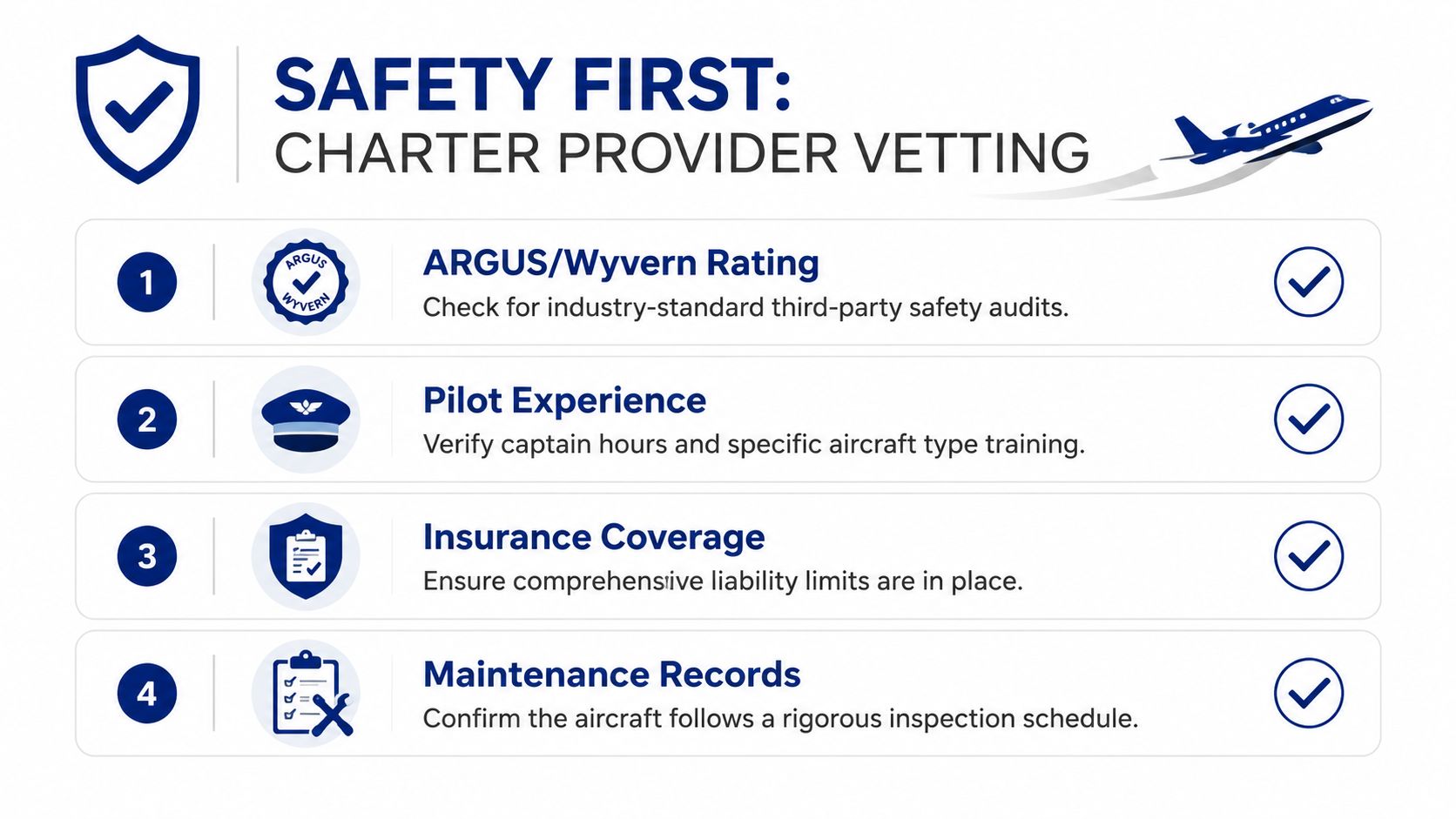
Florida has 148 FAA-certificated Part 135 operators, and travelers should verify the operator's certificate and look for added credentials such as ARGUS or Wyvern ratings, according to Florida Part 135 operator data and vetting guidance. In a busy charter market, that verification step isn't optional.
Start with the legal operating standard
A proper charter flight in the United States should be conducted under an FAA Part 135 Air Carrier Certificate. That's the baseline legal framework for commercial charter operations.
Travelers don't need to become regulatory experts. They do need to ask direct questions:
- Who is the actual operator of this flight?
- Is the trip operated under that company's Part 135 certificate?
- What aircraft is listed and approved for that operation?
If a broker is involved, that question becomes even more important. You need to know who is physically operating the aircraft, not just who is arranging the quote.
What ARGUS and Wyvern tell you
Third-party audit programs matter because they look beyond a glossy website. When an operator carries an ARGUS or Wyvern credential, it signals that the company has met standards that go beyond basic FAA minimums.
That doesn't mean you stop asking questions. It means the operator has subjected itself to outside scrutiny, which is exactly what serious travelers should want.
A practical vetting checklist
Some providers make safety sound mystical. It isn't. You can ask concrete questions and expect concrete answers.
- Operator identity: Confirm the exact certificate holder operating the trip.
- Pilot qualifications: Ask about captain experience and training on the specific aircraft type.
- Maintenance approach: Find out whether maintenance is managed with discipline and whether records are current and organized.
- Insurance: Verify that appropriate coverage is in place for charter operations.
- Operational transparency: Notice whether the company answers directly or hides behind general language.
If a provider gets slippery when you ask who operates the flight, keep looking.
What experienced buyers notice quickly
Seasoned travelers usually pick up on warning signs fast. Vague answers. Constant substitutions. Unclear responsibility between broker and operator. Pressure to move before documentation is reviewed.
The opposite signals are just as clear. Specific answers, clean paperwork, direct identification of the operator, and a calm willingness to explain the aircraft and crew assignment.
That's also where operator history becomes useful. Longevity doesn't replace due diligence, but it often tells you something about discipline, repeat business, and operational culture. A long-running family-owned provider like Air Trek, for example, offers on-demand charter, empty legs, memberships, and accredited air ambulance services from Florida under a business that has operated since 1978. The relevant point isn't branding. It's that long-tenured operators are usually accustomed to detailed vetting and client scrutiny.
Questions people should ask before booking
Who is actually flying me
This single question clears up many misunderstandings. The seller and the operator are not always the same entity.
Can you provide the operator credentials
A reputable provider should be able to identify the certificate holder and aircraft details without hesitation.
What happens if the assigned aircraft changes
Aircraft swaps can happen for valid operational reasons. You want to know how the replacement is vetted and communicated.
Good charter providers don't resent safety questions. They expect them.
For anyone considering air charter in florida, safety review is the part to take most seriously. The state's market is active and competitive. That creates options, but it also means buyers have to separate polished marketing from sound operations.
Planning for Pets Groups and Special Medical Needs
The strongest case for charter often appears when a trip doesn't fit the standard airline mold. A dog needs to stay with the family. A group wants to travel together instead of arriving in fragments. A patient needs medically supported transport.
That's where private aviation becomes less about convenience and more about fit.

Demand for pet-friendly flying is rising. The U.S. pet travel market was reported as growing 12% year over year, and charter demand in Florida is following that shift, with the added advantage that pets can often travel in the cabin with their owners instead of being separated, according to Florida air charter pet travel context.
Pets in the cabin changes the whole trip
For many families, this is the deciding factor. Commercial travel often turns pet transport into a separate logistics problem. Charter can keep the trip unified.
Still, “pet-friendly” shouldn't be treated as a vague promise. Ask specific questions:
- Cabin policy: Can the pet remain with the family throughout the flight?
- Documentation: What health paperwork is required for the route?
- Cleaning or prep requirements: Are there extra procedures tied to pet travel?
- International legs: Are there import or handling rules that affect the trip?
If you're comparing broader airline rules before deciding whether to charter or use another method, this guide to airline info for pet transport is useful context.
Group travel works best when timing matters
Groups often assume charter is only for celebrities or very large budgets. In reality, it becomes practical whenever keeping people on the same schedule matters more than splitting them across airline options.
That can include:
- Corporate retreats
- Executive roadshows
- Multi-generational family trips
- Destination events and weekends
One aircraft means one departure, one arrival flow, and one set of luggage decisions. For the trip organizer, that can remove a surprising amount of coordination work.
Medical transport is a separate category
Medical flights need to be handled differently from standard leisure or business charter. Aircraft setup, onboard support, patient condition, and ground coordination all matter.
A provider offering air ambulance or medically configured transport should be evaluated on those capabilities directly, not grouped together with ordinary charter sales language. Families dealing with a medical move usually need clarity on timing, equipment, escorts, and destination handoff much more than they need cabin aesthetics.
The more specialized the traveler's needs are, the more valuable charter flexibility becomes.
That's the connective thread across pets, groups, and medical trips. Standard airline systems are built for volume. Charter is built for exceptions, which is exactly why it works for life situations that don't fit the standard template.
Your Step-by-Step Guide to Booking a Florida Charter Flight
Booking charter gets easier once you know what information drives the quote. The process isn't complicated, but accuracy at the start saves time later.
A strong request gives the provider enough detail to match the trip correctly. A vague request produces vague options.
Step 1 gather the trip details first
Before requesting quotes, have the basics ready:
- Travel dates and preferred departure windows
- Departure and destination airports, or at least the actual addresses involved
- Passenger count
- Luggage profile
- Any pets, mobility issues, or special onboard needs
If the trip has flexibility, say so. If it doesn't, say that too. Charter providers build better options when they know what can move and what can't.
Step 2 request more than a price
A good quote should tell you more than a total.
Ask for:
- Aircraft type proposed for the trip
- Who the actual operator is
- Airport pairing assumptions
- How schedule changes are handled
- Whether the option is standard on-demand or tied to repositioning
This is also the stage where some travelers benefit from outside itinerary help, especially for complex South Florida stays. If your trip combines flights, hotels, transfers, and event timing, this perspective on how travel agents enhance Miami trips is a good complement to charter planning.
Step 3 compare the mission fit, not just the number
Don't line up three totals and pick the cheapest. Compare the logic behind them.
One option may use a better airport. Another may have cleaner timing. Another may depend on a less stable repositioning setup. The quote only makes sense once you understand the operational assumptions.
A quick review framework helps:
| Checkpoint | What to look for |
|---|---|
| Operator | Clear identification of who is flying the trip |
| Aircraft | Appropriate cabin, baggage, and route fit |
| Routing | Airports that reduce total travel time |
| Flexibility | Realistic terms if your plans shift |
Step 4 confirm the itinerary carefully
Before you approve the trip, read the itinerary line by line. Confirm passenger names, airport codes, dates, departure times, and special notes.
This is also the moment to confirm practical items people forget until late:
- Pet approval
- Catering requests
- Ground transportation
- Passport and customs details for international legs
- Arrival instructions for the private terminal
Small errors in names, airports, or timing create outsized problems on charter trips because the itinerary is custom.
Step 5 know what the day of travel looks like
Day-of travel is usually simple, which is one reason people stick with charter once they've used it. You'll receive terminal details, arrival timing, and a point of contact. Show up on the advised schedule, check in privately, and board with your group.
Common question: How early should you arrive?
Much earlier isn't usually better. Too little time isn't wise either. Follow the operator's guidance for the specific airport and mission.
Another common question: What should you watch for on travel day?
Mainly communication. If weather, timing, or ground logistics shift, a responsive charter team will update quickly.
For air charter in florida, the booking process works best when you act like a buyer, not a browser. Give clear trip data. Ask direct questions. Compare operational fit. That's how you get a charter flight that solves the actual problem instead of just sounding impressive.
If you're weighing air charter in florida for business travel, family trips, pet-friendly vacations, or specialized transport, the smartest next move is to define the mission first: who's flying, where you need to be, how fixed the schedule is, and what can't go wrong. Once those details are clear, the right aircraft, airport, and pricing model usually become much easier to identify.