
You’re probably looking at a private jet quote that seems oddly low and wondering what the catch is. That reaction is reasonable. In private aviation, unusually low pricing usually means one of two things: the flight is highly constrained, or the aircraft was going that way anyway.
That second scenario is where the private jet deadhead comes in. If you understand how these flights are created, who they work for, and where they can go sideways, you can use them well. If you don’t, a bargain can turn into a schedule problem fast.
The Secret to Surprisingly Affordable Private Flying
A client sees a jet available for a one-way trip at a price that looks far below a normal on-demand charter. The first assumption is usually that something is wrong with the aircraft, the operator, or the service level. In most cases, none of that is true.
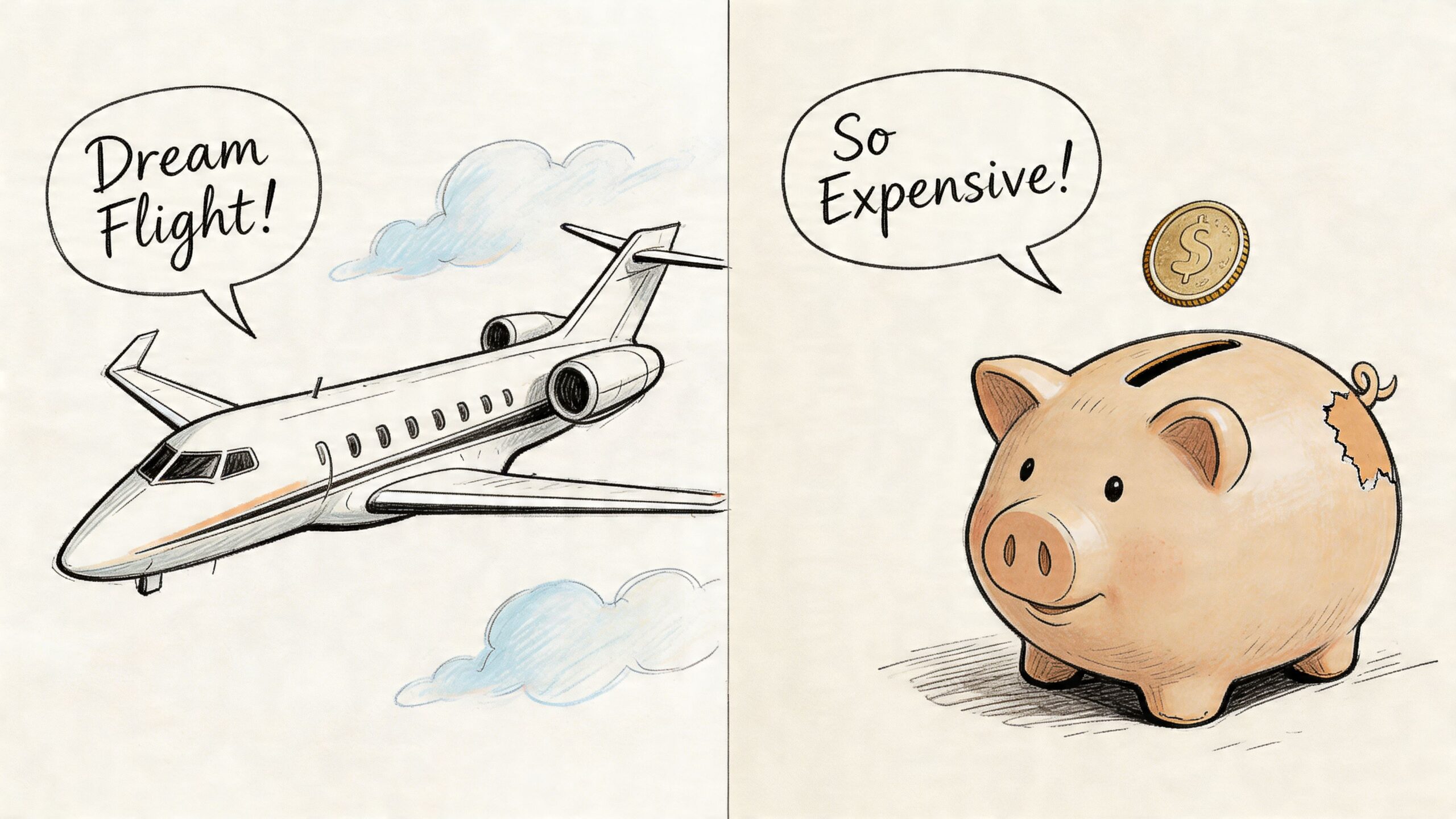
The aircraft is often flying anyway to reposition for its next assignment. The operator would rather recover part of that cost than move the jet empty. That’s the opening that creates a discounted private trip.
Why these opportunities exist
In charter aviation, aircraft rarely move in perfect circles. A traveler books a one-way trip to a destination, but the airplane may need to return to base or continue to another airport for its next job. That repositioning segment is the hidden engine behind many unusually attractive offers.
This isn’t a niche corner case. Nearly 40% of all private jet flights operate as empty legs or deadhead flights, which is why these opportunities show up so often across the charter market, according to Flycraft’s empty leg flight statistics.
Deadhead pricing isn’t magic. It’s an operator trying to turn an unavoidable repositioning cost into partial revenue.
Why smart travelers pay attention
For the right passenger, this can be one of the most efficient ways to access private aviation. You still get the private terminal experience, the aircraft cabin, and the direct routing. What you give up is control.
That trade can work very well for:
- Flexible leisure trips where a one-way route already matches your plans
- Family repositioning travel when schedule precision matters less than comfort
- Opportunistic travelers who can leave when the aircraft needs to move
It doesn’t work as well when timing is critical. That’s where many first-time buyers get tripped up. They focus on the discount and ignore the operating reality behind it.
What Exactly Is a Private Jet Deadhead Flight
A private jet deadhead is a repositioning flight. The aircraft has to move for operational reasons, but the client who triggered the original trip is no longer on board. In charter sales, you will also hear empty leg used for the same basic idea.
It works much like a car service returning after a one-way drop-off. The vehicle still has to get to its next assignment. In private aviation, that repositioning segment can sometimes be sold to another traveler instead of flying empty.
Why charter operators create them
This happens because charter demand is rarely balanced. A client may book Aspen to Van Nuys, while the aircraft’s next assignment, maintenance stop, or home base is somewhere else. The jet still needs to move, whether another passenger buys that segment or not.
That operating reality is the whole reason deadheads exist.
If you want a plain-English explanation of the term, Air Trek also breaks it down in this guide to what an empty leg flight is.
Deadhead and empty leg are close cousins
From a client’s perspective, the distinction is usually less important than brokers make it sound. What matters is whether you are buying a flight built around your schedule, or fitting into a flight the aircraft already needs to make.
| Term | What it means in practice | What the traveler should care about |
|---|---|---|
| Deadhead flight | Aircraft repositioning without its primary paying passenger | The trip exists because the jet must move |
| Empty leg flight | A repositioning segment being offered for sale | The route and timing are already mostly fixed |
Some operators use “deadhead” internally and “empty leg” in client-facing materials. Either way, the commercial logic is the same. You are buying leftover positioning capacity, not commissioning a custom itinerary.
What’s included and what isn’t
The aircraft is still a private jet. The crew is still operating under the same standards. You still use the private terminal process.
The limitation is control.
With a standard charter, the itinerary starts with your needs. With a deadhead, your trip has to fit the aircraft’s existing movement. That usually means tighter departure windows, less flexibility on airports, and fewer chances to adjust once the flight is booked.
A simple rule helps. If you already know you may need to shift departure time, change passengers, or add a stop, a deadhead is usually the wrong tool. A full charter costs more, but it buys back control.
Deadhead Flight vs Standard Charter A Clear Comparison
A deadhead and a full charter can use the same aircraft, crew, and private terminal. What changes is who controls the trip.
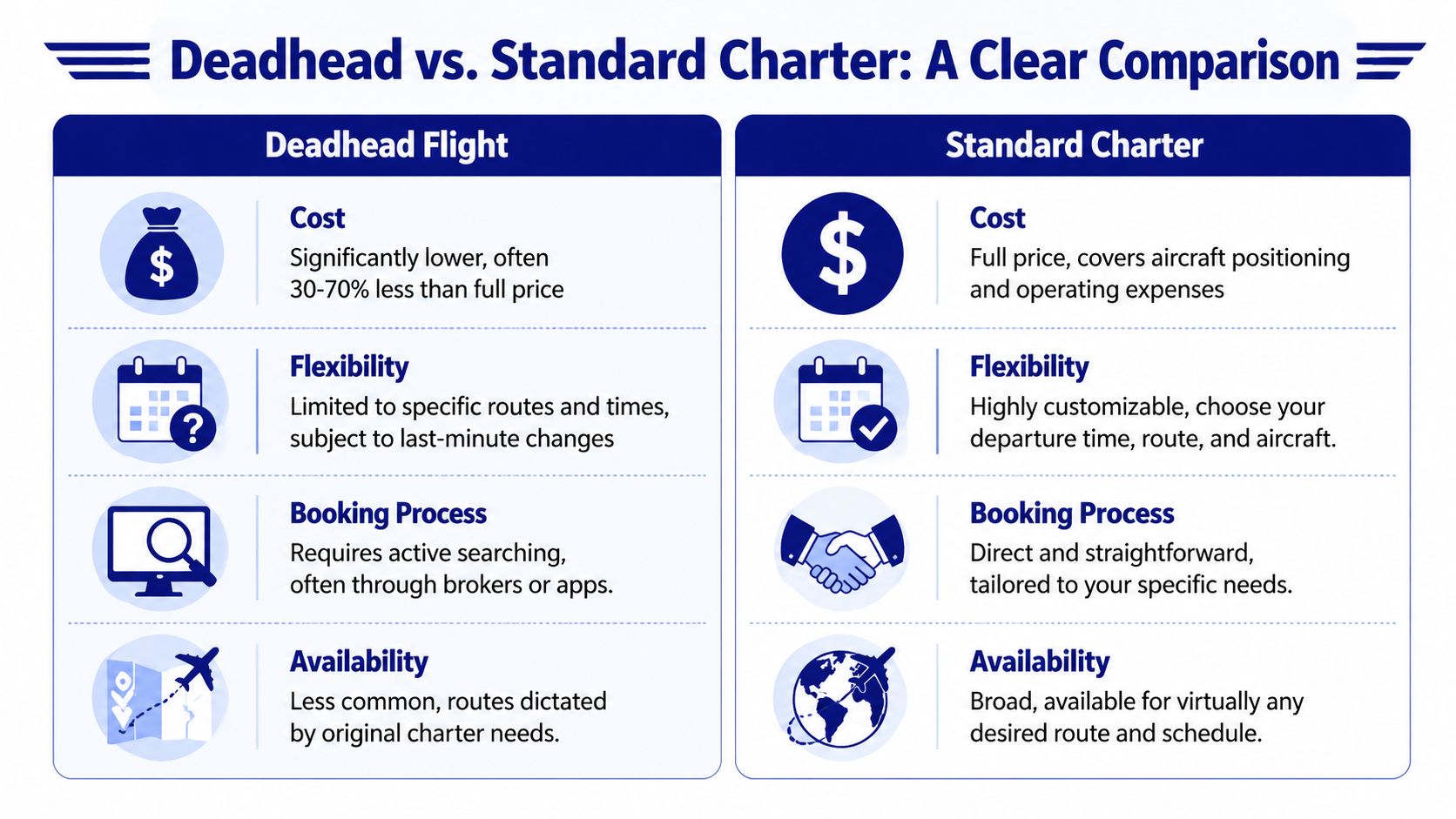
Clients often focus on price first. In practice, the better question is whether the lower fare justifies giving up control over timing, routing, and changes after booking.
Cost
Deadheads can be priced well below a custom trip because the aircraft already needs to reposition. You are helping offset an operating leg that would otherwise fly empty.
A standard charter is priced differently because the mission starts with your needs. With Air Trek’s private charter service, the aircraft, schedule, and routing are built around your trip rather than fitted around someone else’s. That is what you are paying for.
The savings on a deadhead can be real. The trade-off is just as real. If a lower rate forces a bad departure time, the wrong airport, or an overnight you did not want, the apparent value can disappear quickly.
Flexibility
At this point, many deadhead bookings succeed or fail.
A standard charter usually gives you meaningful control over departure time, airport selection, passenger adjustments, catering requests, and last-minute revisions. A deadhead usually comes with a tighter window and less room to negotiate because the aircraft still has to make its next assignment.
That difference matters more than cabin type on many trips.
If a client tells me, “We may need to leave two hours earlier,” I stop treating a deadhead as the default option. The cheapest flight is not the right flight when the day depends on timing.
Availability
A full charter is demand-driven. You request the trip, then the broker or operator sources the right aircraft.
A deadhead is opportunity-driven. It exists only when an aircraft has to reposition, and those opportunities tend to show up on certain city pairs, certain days, and around heavy seasonal traffic. That can work very well for one-way leisure travel. It is much less dependable if you need a specific aircraft on a specific route at a specific hour.
Booking process
The booking process also reflects that difference in control.
| Decision factor | Deadhead flight | Standard charter |
|---|---|---|
| Cost profile | Lower priced because the aircraft is already scheduled to move | Full trip pricing for a custom mission |
| Time control | Usually limited to a fixed or narrow departure window | Departure timing built around your schedule |
| Route control | Restricted to the aircraft’s required repositioning path | Based on your preferred city pair and airport choices |
| Change tolerance | Limited once the flight is confirmed | Better suited to revisions and added complexity |
| Best use case | Flexible one-way leisure or opportunistic travel | Time-sensitive business, family, or multi-stop itineraries |
A simple buying rule works well. Choose a deadhead when the existing flight already matches your trip. Choose a full charter when your trip has to be built precisely.
When a full charter is plainly the better call
Some itineraries should not be forced into a deadhead structure:
- Board meetings and investor travel where a late arrival affects the rest of the day
- Weddings and milestone events where a timing slip creates problems for multiple people
- Family trips with pets, luggage, and fixed ground transport where airport and timing details matter
- Multi-leg business itineraries where the first departure time affects every stop after it
Deadheads are useful when the fit is natural. Standard charters are the better tool when reliability, control, and trip design matter more than the discount.
When to Book a Deadhead Flight and How to Find One
The best deadhead clients are not necessarily bargain hunters. They’re travelers whose plans naturally fit the operational shape of the flight.
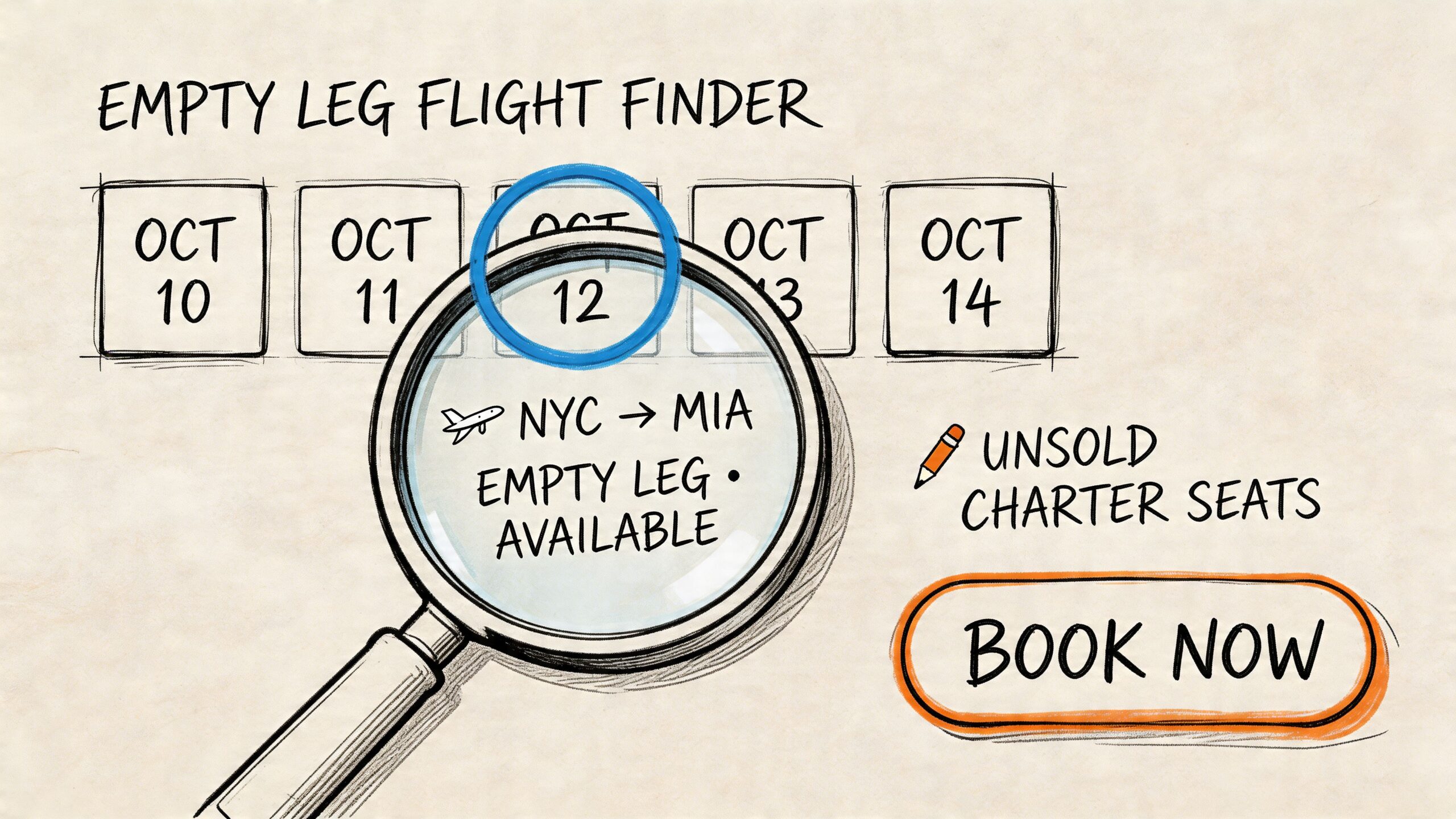
A couple heading to the Caribbean for a few days can often work with a fixed departure. An executive trying to make a same-day client session in two cities usually can’t. The flight itself may be attractive in both cases, but only one traveler is structurally suited to it.
The right trips for deadheads
Deadheads tend to fit when your planning style is adaptable.
Good fits include:
- Weekend getaways where shifting departure by part of a day won’t hurt the trip
- One-way leisure travel when you already need the exact city pair
- Repositioning a family or small group without needing a custom return
- Experience-driven travel when cabin privacy matters more than exact timing
Poor fits are easy to recognize too:
- Must-attend business meetings
- Cruise departures and fixed event check-ins
- Trips with hard crew, yacht, or driver handoff times
- Any itinerary where a cancellation leaves no acceptable backup
How to search without wasting time
Most travelers search too narrowly. They want one exact airport pair and one exact departure hour. That approach rarely works with deadheads.
A more effective method is:
- Broaden the airport radius. Consider nearby executive airports, not just the obvious major field.
- Think one-way first. Deadheads are usually strongest as point-to-point opportunities.
- Ask about near matches. A route that lands close to your destination may still be useful, but you need to understand whether it’s still a true deadhead or something closer to a discounted repositioning arrangement.
- Use operator listings, broker networks, and alerts. These flights move quickly, and stale inventory is common.
Air Trek is one option because it publishes empty leg and charter availability guidance. Broker networks and operator mailing lists can also help if you’re watching a region regularly.
A short video can help if you want to see how operators and brokers usually present these opportunities:
Questions worth asking before you say yes
Don’t just ask for the price. Ask the questions that reveal whether the trip is operationally workable.
- How firm is the departure window? Some flights have a little tolerance. Some effectively don’t.
- Is this a true empty leg or a near-match proposal? The distinction affects price and flexibility.
- What happens if the primary mission changes? You want the answer before payment, not after.
- What’s included in the quoted number? Ground fees, international handling, and other add-ons can change the actual value.
- Are pets allowed on this specific flight? Don’t assume the policy matches a standard charter.
The best deadhead booking is the one that still makes sense after you ask the inconvenient questions.
The Real Risks and Inherent Limits of Deadhead Flying
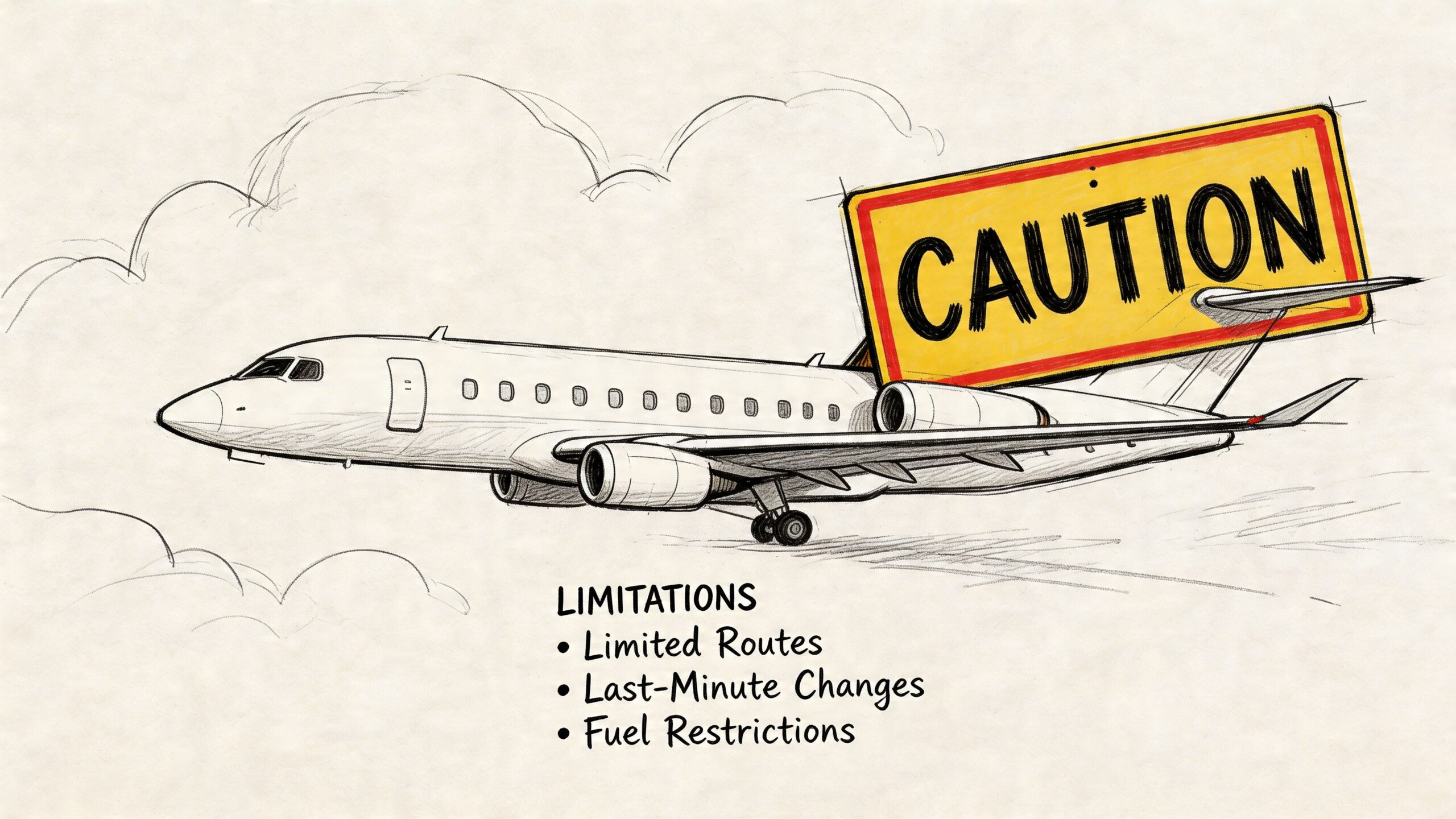
Deadheads are useful, but they are not stable inventory. That’s the part many glossy listings soften or skip.
The biggest issue is simple. The flight only exists because of another trip. If the primary charter changes, the deadhead may disappear with it.
Cancellation risk is real
That dependency is why time-sensitive travelers need to be cautious. Some industry reporting suggests up to 25% of listed empty legs are canceled due to primary charter changes, a risk highlighted in evoJets’ discussion of empty leg flights.
That doesn’t mean every deadhead is unreliable. It means you should treat every deadhead as conditional inventory until the underlying mission is secure.
The schedule is more rigid than many expect
Clients often hear “private” and assume freedom. Deadheads don’t work that way. The route, timing, and sometimes even the airport choice are tied to broader operational planning.
That can include:
- Aircraft positioning needs for the next mission
- Crew legality requirements that limit how far the day can stretch
- Maintenance or handling constraints at specific airports
- Tight handoff timing between one client trip and the next
If you need to move the departure significantly, add a stop, or wait for a late passenger, the economics of the deal can disappear quickly. At that point, the operator may decline the change or reprice the mission altogether.
The deal can get weaker after the first quote
Deadheads also come with terms that are often less negotiable than a normal charter.
A few practical trouble spots:
- Fixed route terms that don’t allow meaningful deviations
- Add-on charges that narrow the headline savings
- Pet restrictions on flights where the operator wants to avoid cleaning or allergen complications
- Backup limitations if the deadhead disappears and no substitute aircraft is available at similar pricing
A deadhead is best treated like a favorable opportunity, not a guaranteed travel platform.
For leisure travelers, that’s often acceptable. For executives with no slack in the day, it usually isn’t.
Your Deadhead Flight Questions Answered by Air Trek
What happens if my deadhead flight is canceled
Ask this before booking. The flight depends on the primary charter, so a change upstream can remove your segment. The practical move is to understand the rebooking path, refund terms, and whether a standard charter backup is available if timing becomes critical.
If your trip can’t tolerate disruption, request a custom option through Air Trek’s private charter quote page instead of relying only on deadhead inventory.
Can I bring my pet on a deadhead flight
Sometimes, yes. Don’t assume it’s automatic.
Per Silverhawk Aviation’s overview of empty leg flights, pet rules are often stricter on deadheads, and estimates show only 40% of operators allow pets on deadheads versus 80% on full charters. If you’re traveling with a dog or cat, confirm approval for that exact aircraft and mission before you commit.
Are there hidden fees on deadhead flights
There can be added charges that change the actual value of the quote. Ask specifically about crew per diems, international fees, handling, and any route-related extras. A deadhead can still be a strong deal, but only if you’re comparing the full landed cost, not just the first number in the email.
Is a deadhead good for business travel
Sometimes, but only under the right conditions. If the meeting can move, if you have backup options, or if the trip is opportunistic, it can work well. If the arrival time is tied to a board session, investor roadshow, legal proceeding, or vessel departure, a standard charter is usually the smarter product.
What should I ask before I book
Keep the checklist short and direct:
- How firm is the schedule
- What exactly is included in the quote
- What happens if the primary charter changes
- Are pets approved on this flight
- Can you provide a backup option if this leg disappears
Those questions will tell you more than any discount headline will.
A private jet deadhead can be one of the smartest buys in private aviation. It can also be the wrong tool for an inflexible trip. If you treat it as an operational opportunity instead of a luxury bargain, you’ll make better decisions and avoid most of the common mistakes.