
You’re probably doing what most serious buyers do first. You open listings, see a clean turboprop in Naples, a piston twin near Fort Lauderdale, maybe even a larger cabin aircraft in South Florida, and ownership starts to feel sensible. Then the practical questions hit. What will this really cost me after closing? Who verifies the logs? What happens if the aircraft looks sharp but carries ugly maintenance history?
That’s the right moment to slow down.
Buying an aircraft in Florida can be a smart move. It can also become an expensive management project disguised as a luxury purchase. If you want the upside without the usual avoidable mistakes, treat the transaction like an acquisition, not a lifestyle impulse. The aircraft matters. The records matter more. The operating plan matters most.
Your Guide to Buying an Aircraft in Florida
The buyers who get good outcomes usually start with the wrong first question. They ask, “What plane should I buy?” The better question is, “What mission justifies ownership?”
If you fly often, need schedule control, carry executives or family on short notice, and want predictable access to the same type of aircraft, ownership can make sense. If you mainly want convenience and image, be careful. Ownership is not just access. It’s inspection risk, registration paperwork, tax exposure, insurance underwriting, maintenance coordination, storage, crew decisions, and resale timing.
Start with mission, not metal
List the trips you expect to take. Focus on real travel needs rather than fantasies.
Include:
- Typical route pattern: In-state hops, Southeast business travel, Caribbean access, or longer hemispheric trips
- Passenger reality: How many people you carry, not how many seats look nice in a brochure
- Baggage profile: Golf clubs, samples, pets, or light executive bags
- Runway needs: Whether you need smaller airports or longer paved runways
- Tolerance for complexity: Whether you want to manage ownership details personally or through advisors
A buyer who needs short regional flexibility should not force a jet decision because it feels more prestigious. A buyer who expects longer business missions shouldn’t underbuy and end up frustrated six months later.
Practical rule: Buy for your most common mission, not your rarest ambition.
The questions smart buyers ask early
Before you call a broker or seller, answer these plainly:
- What’s my real acquisition budget?
- What annual operating burden am I willing to carry?
- Do I want an asset, or do I want transportation?
- Who will handle maintenance oversight and records review?
- If the aircraft is down for service, what is my backup plan?
Those aren’t academic questions. They determine whether you should pursue planes for sale florida listings at all, or whether you’d be better served by charter access.
What buyers get wrong
The common mistake isn’t paying too much. It’s underestimating commitment. A buyer sees a purchase price and assumes the major decision is almost done. In reality, the purchase is the opening act. True commitment starts after title transfer.
If you remember one thing, remember this: the best aircraft to buy is the one you can operate cleanly, insure comfortably, maintain properly, and sell without apology later.
Navigating the Florida Aircraft Market
A buyer flies into South Florida, tours three attractive aircraft in two days, and leaves convinced one of them must be the answer. That is how people end up owning the wrong airplane. Florida offers volume, variety, and speed. Those are advantages only if you stay disciplined.
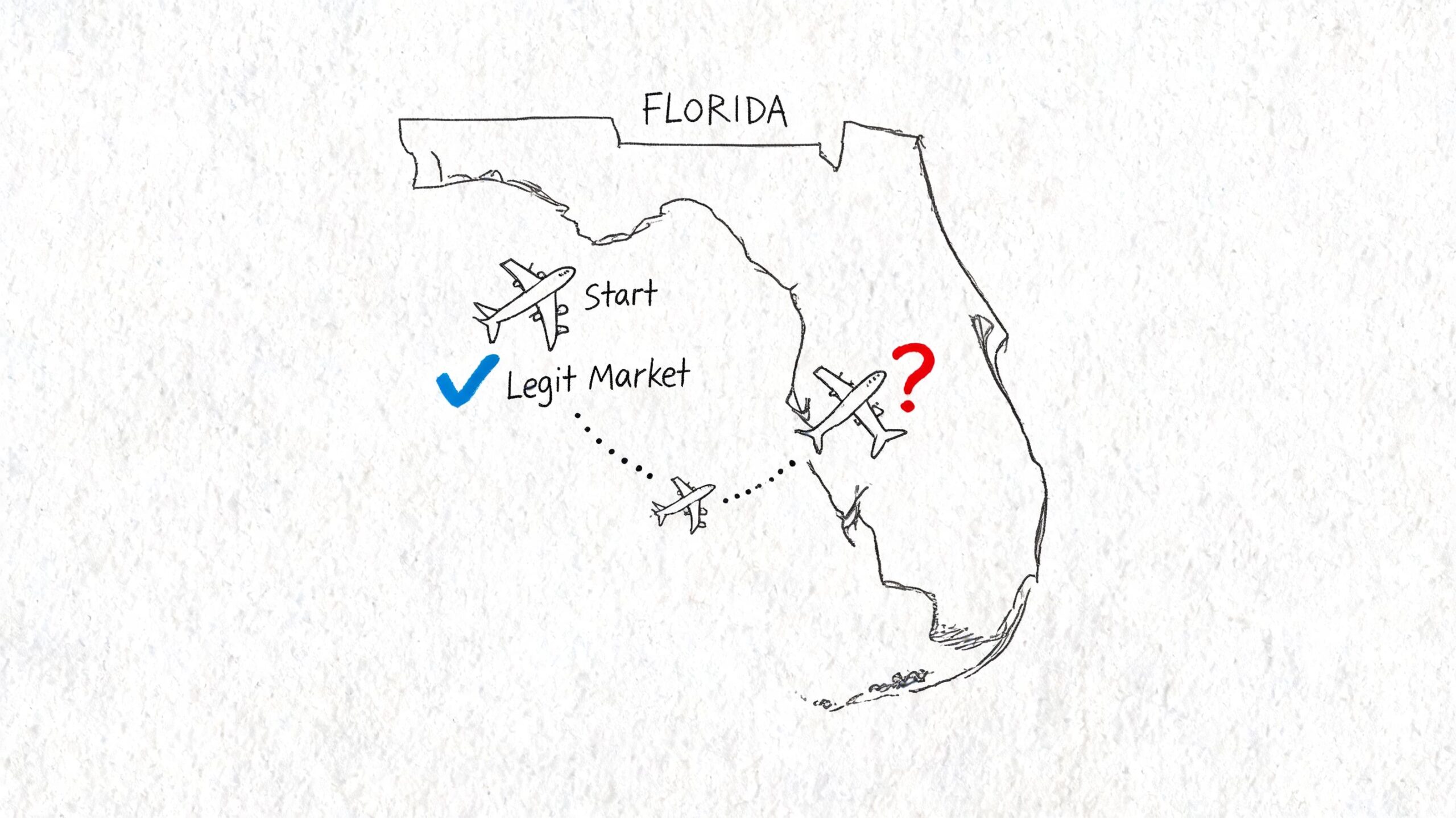
Florida is one of the strongest places in the country to shop aircraft because inventory turns constantly and the buyer pool is deep. You will see everything from entry-level piston aircraft to cabin-class business aircraft, often within the same region. Miami, Fort Lauderdale, Naples, Orlando, and Tampa all matter, but for different reasons. South Florida tends to offer visibility and international access. Central and North Florida often produce quieter opportunities with less showroom theater.
That matters because aircraft shopping in Florida can feel efficient while subtly becoming expensive. A large market creates more choice, but it also creates more distractions, more hurried seller timelines, and more pressure to confuse availability with suitability. Your job is to buy the aircraft that fits your mission and operating tolerance, not the one that happens to be parked closest to your meeting.
Broker or private seller
Use a broker if you value time, process control, and protection from your own enthusiasm.
A competent broker does more than introduce listings. They screen sellers, pressure-test asking prices, structure offers, coordinate escrow, organize records, and keep the deal moving without letting it get sloppy. Just as important, they stop bad purchases early. That alone can save far more than their fee.
Private sales can work well for experienced buyers who already know the model, know the maintenance shops, and know how to read weak records without getting charmed by cosmetics. Everyone else should assume a private deal carries a heavier diligence burden.
Here is the practical comparison:
| Path | Best for | Main advantage | Main risk |
|---|---|---|---|
| Brokered purchase | First-time buyers, busy executives, higher-value transactions | Better deal control and cleaner process management | Broker quality varies, so vet them carefully |
| Private sale | Experienced owners and repeat buyers | More direct negotiation with the owner | More exposure to incomplete records, poor pricing discipline, and avoidable surprises |
Where to look
Start with established listing channels, respected brokers, service centers, and local aviation networks. Florida is active enough that you do not need to chase obscure listings to find quality inventory.
Names worth knowing include Global Plane Search and Naples Jet Center. Use listing sites to build a shortlist, not to make a decision. The listing is marketing material. Actual work starts after an aircraft catches your attention.
If your mission calls for practical cabin space, redundancy, and regional flexibility, study twin-engine Cessna aircraft missions before you chase larger jet economics. Many owners buy more aircraft than they need, then spend years carrying the extra cost.
That is the point many guides miss. Shopping is the easy part. Ownership is the long part. In Florida especially, the smart buyer thinks past acquisition and asks a harder question early: will this aircraft still make sense after insurance, maintenance events, crew, hangar, scheduling friction, downtime, and resale pressure enter the picture? If the answer is not clear, charter may be the better tool.
A quick visual walk-through of the market can help before you start calling sellers:
The strongest position in any aircraft negotiation is the willingness to walk away before inspection costs and emotional commitment start distorting your judgment.
Questions buyers ask
- Is South Florida better than the rest of the state for inventory? It is better for visibility, broker concentration, and international buyer activity. It is not automatically better for value.
- Should I limit myself to local aircraft? No. Limit yourself to aircraft with clean records, credible maintenance history, and a realistic ownership profile.
- Can I trust online listings? Trust them enough to start a conversation. Never enough to relax your standards.
How to Evaluate and Inspect Your Aircraft
You find an aircraft in Florida that looks right on paper. The cabin photographs well, the paint is fresh, the panel is attractive, and the seller wants a deposit quickly. That is the point disciplined buyers slow down.
A pre-purchase inspection decides whether you are buying a useful asset or inheriting someone else’s maintenance backlog. The transaction is only the entry fee. The true exposure sits in deferred work, poor records, corrosion, engine condition, and future downtime.
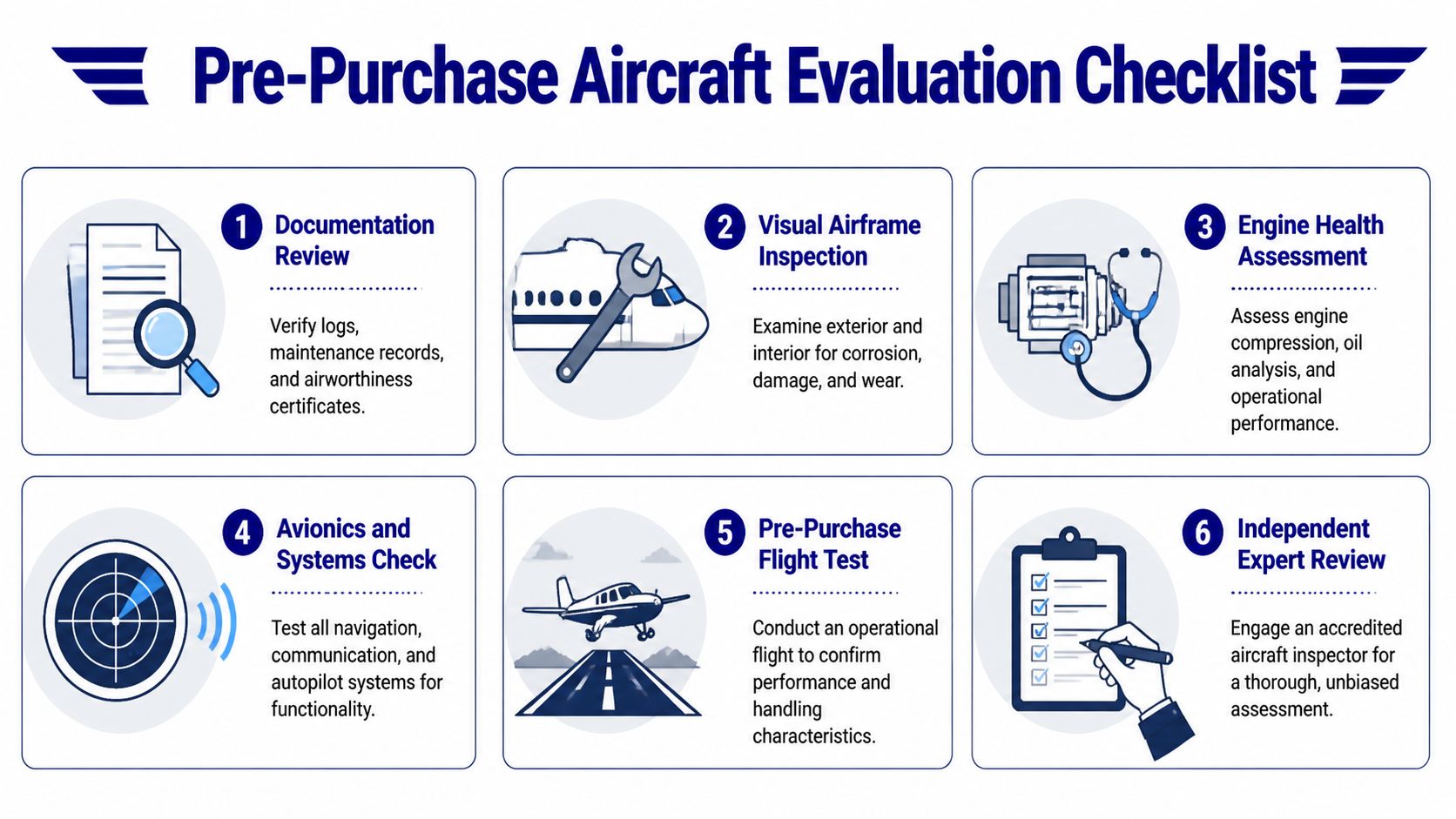
What a real pre-purchase inspection includes
A proper pre-purchase inspection, often called a PPI, belongs with an independent mechanic or inspection team. Use a shop that knows the exact make and model. If the seller insists on controlling the facility, the scope, or the timeline, assume your risk is rising.
The inspection should examine three things separately, because each one can sink the deal on its own:
Physical condition
- Exterior skin, paint, windows, control surfaces, landing gear, brakes, tires, interior wear, and signs of corrosion or past repairs
Records and logbooks
- Airframe logs, engine logs, propeller logs where applicable, maintenance sign-offs, airworthiness documents, and consistency across entries
Compliance and component status
- Required inspections, overdue items, equipment approvals, life-limited parts, and major components that are nearing expensive events
Treat the PPI as a decision tool, not a ceremonial step before closing.
For some buyers, that conclusion leads somewhere useful. If your mission changes often, if utilization is uncertain, or if downtime would be expensive, charter can be the more practical luxury. Options such as empty leg flights for flexible private travel often solve the trip requirement without exposing you to maintenance surprises, storage costs, and resale pressure.
Logbooks matter more than presentation
The logbooks determine value. Paint and interior only influence first impressions.
An aircraft with incomplete, reconstructed, or oddly quiet records deserves a discount at best and a rejection at worst. Buyers who focus on cosmetics get trapped. Experienced advisers start with the paperwork and let the records set the tone for the entire negotiation.
Review the logs for:
- Damage history: documented repairs can be acceptable. Vague stories and missing paperwork are not.
- Maintenance continuity: long gaps create questions that usually return at resale.
- Recurring discrepancies: repeated write-ups for the same system point to an unresolved issue.
- Major maintenance events: engine work, avionics installations, corrosion treatment, landing gear work, and structural repairs need clear documentation.
Firm rule: If the records do not support the story, trust the records.
This is also where ownership discipline starts to show. A careful owner keeps records organized because the aircraft is a financial asset, not just a machine. If you want a useful primer on how asset value changes over time, read Bookkeeping and Accounting's insights. The accounting concept is simple. The practical lesson is sharper. Weak records and deferred maintenance usually hit value twice, once during ownership and again at resale.
Engine time and airframe time need context
Buyers fixate on low numbers. That is a mistake.
You will see SMOH, or since major overhaul. Lower time since overhaul sounds attractive, but low time alone proves nothing. A poor overhaul, weak supporting documents, or long inactivity can turn a low-time engine into an expensive problem.
Airframe time works the same way. Higher total time is acceptable if maintenance has been consistent and the aircraft has flown regularly. Lower total time can hide deterioration if the aircraft sat for long periods in a harsh environment without proper preservation.
A Florida listing may advertise details such as total time since new and recent overhauls. Those details matter only after your mechanic confirms them in the records and during inspection. Listing language starts the conversation. Verification decides the value.
Red flags that justify walking away
Use this screen before you spend heavily on legal work, escrow, and closing preparation:
- Seller resists an independent inspection: walk away.
- Logs are incomplete or reconstructed: assume value impairment and future resale friction.
- The aircraft sat inactive for long periods: verify preservation, maintenance, and return-to-service work.
- Shop history is hard to trace: expect hidden costs.
- Upgrades are described vaguely: ask for exact equipment, installation documents, and approvals.
- The process feels rushed: somebody wants your money committed before the facts are clear.
One more point. Florida ownership adds environmental exposure. Salt air, humidity, and storm-related storage issues can accelerate problems that a casual visual review will miss. Corrosion control and storage history deserve direct attention during inspection.
Questions to settle before you sign
Ask these plainly:
- Who selects the inspection facility?
- Can my mechanic review the logs before the deposit becomes hard?
- Are there known damage events or insurance claims?
- Which discrepancies will the seller fix, and which become a price adjustment?
- What is the exit right if the inspection finds material issues?
Aircraft buyers do not lose money because the machine is mysterious. They lose money because they commit before they understand the condition, the records, and the operating burden that follows closing.
Understanding the Financials of Aircraft Ownership
The purchase price gets attention because it’s visible. The true cost of ownership is wider, slower, and less forgiving.
A buyer who can wire funds for an aircraft is not automatically prepared to own one well. Financing, insurance, depreciation, reserves, and transaction costs all shape whether the deal remains sensible after the excitement fades.
Purchase ranges and what they do not tell you
The brief calls for a table, but there’s a hard accuracy problem here. Verified source material does not provide dependable class-by-class price ranges for single-engine pistons, turboprops, or light jets across Florida. So I won’t invent them.
What I can tell you is this: the Florida market includes a wide spread, from smaller piston aircraft to premium business aircraft. The verified Florida listing set includes examples as different as a 1990 King Air C90A priced at $1,395,000 and Boeing 737-700 listings, which tells you the market is broad rather than narrow.
| Aircraft Category | Typical Purchase Price Range |
|---|---|
| Single-engine piston | Varies widely by age, engine status, avionics, and records |
| Twin-engine piston | Varies widely by maintenance history and mission capability |
| Turboprop | Varies widely by model, refurbishment level, and engine program status |
| Light jet | Varies widely by engine cycles, avionics, and cabin condition |
| Large cabin aircraft | Market-specific and highly dependent on technical status |
That’s not evasive. It’s disciplined. In aircraft acquisition, fake precision is worse than no precision.
Financing is specialized
Aircraft loans don’t behave like standard consumer loans. Lenders examine the aircraft, the borrower, the intended use, and the exit risk. They care about the model’s liquidity, condition, records, and whether the buyer presents a coherent ownership plan.
Expect scrutiny around:
- Borrower profile: liquidity, credit quality, business structure
- Aircraft profile: age, marketability, logbook quality, maintenance status
- Use case: personal, corporate, or mixed operational expectations
- Down payment and reserves: lenders like borrowers who won’t be strained by the first major maintenance event
Insurance is underwriting your judgment
Insurance isn’t just a cost line. It’s an external opinion on how much risk your ownership structure creates.
Two basic categories matter:
- Liability coverage, which addresses claims involving injury or property damage
- Hull coverage, which addresses physical damage to the aircraft itself
Underwriters will look closely at pilot experience, aircraft type, training, intended usage, and storage arrangements. A buyer who stretches into a more complex aircraft than their operating setup can support often feels that pain through insurance friction before anything else.
Buy the aircraft your operation can defend, not the one your ego prefers.
Depreciation and accounting discipline
Aviation buyers often speak fluently about speed and range and casually about accounting. That’s backward. If the aircraft sits on your balance sheet, accounting treatment matters.
A useful refresher on depreciation mechanics appears in Bookkeeping and Accounting's insights from Bookkeeping and Accounting of Florida Inc. You still need aviation-specific tax and legal advice, but understanding how depreciation works helps frame ownership as a business asset decision rather than a trophy purchase.
The overlooked comparison
Before you buy, compare ownership against flexible access. For some clients, occasional demand and schedule variability make alternatives more rational than tying capital to one airframe. Reviewing how empty leg flights work can help you think more clearly about where ownership stops being efficient.
Questions worth asking your advisors
- How much capital do I want tied up in a depreciating asset?
- What happens if resale conditions soften when I want out?
- Do I have budget room for unexpected maintenance without resenting the aircraft?
- Will financing terms limit how I use or hold title to the aircraft?
- Does this purchase serve transportation needs or executive identity?
If you can’t answer those cleanly, you’re not ready to close.
The Hidden Hurdles of Registration and Taxes
Most buyers think the hard part is finding the aircraft. It often isn’t. The harder part is closing correctly.
Title transfer, FAA registration, ownership structure, and tax handling can create problems that survive long after a successful ferry flight home. You don’t want a beautiful aircraft wrapped in sloppy paperwork.
Registration is administrative, but not minor
Aircraft registration sounds routine until it isn’t. The buyer has to ensure title transfer documents are correct, filing steps are timely, and ownership is recorded in the right name or entity. That could be an individual, a company, or a special-purpose ownership structure depending on legal and operational goals.
The point is simple. Don’t improvise this with general business paperwork.
Use an aviation attorney or closing service that handles aircraft transactions regularly. They should review title chain, liens, filing order, and entity details before money moves.
Tax mistakes are expensive and avoidable
Florida buyers often hear fragments about sales tax, use tax, and exemptions, then proceed as if those fragments add up to advice. They don’t.
The practical questions are:
- Where is the sale deemed to occur?
- Where will the aircraft be based and used?
- Is there a legitimate exemption or planning path available?
- Does the ownership structure help or hurt the tax position?
- Are there storage or hangar-related tax implications after closing?
Some buyers focus only on acquisition tax and miss the broader compliance picture. That’s shortsighted. Tax exposure can follow the aircraft into storage, use, and operational decisions.
The cheapest way to handle aircraft tax is before closing, with counsel. The most expensive way is after an audit notice.
The fly-away conversation
Many buyers ask about a fly-away exemption or similar planning strategies. That’s a valid question, but it’s not something to treat casually or copy from someone else’s deal. Facts matter. Timing matters. Documentation matters.
A strategy that works for one buyer can fail for another because the use pattern, title structure, or delivery details changed. That’s why boilerplate advice on aviation forums is dangerous. It gives confidence without protection.
A short buyer checklist
Before closing, ask your attorney and tax advisor:
- Who is the registered owner? Confirm whether you’re buying personally or through an entity, and why.
- Has title been searched? Liens and filing issues should be resolved before funding.
- What taxes could apply? Ask about sales tax, use tax, and any ongoing tax implications tied to storage or use.
- What documents must be preserved? If a tax position depends on delivery, movement, or use facts, the file should prove them.
- Who coordinates closing? One experienced quarterback beats five disconnected advisors.
This is not the place to economize on expertise. The legal bill for clean structuring is often trivial compared with the cost of fixing a bad closing later.
Life After the Purchase Owning and Operating in Florida
Once the aircraft is yours, the romance ends and the operating discipline begins. Some owners enjoy that. Others discover they bought a transport solution that behaves like a small company.
Florida is attractive for flying and storage, but day-to-day ownership still requires systems. You’ll need a place to keep the aircraft, a maintenance relationship, and a practical operating routine with your preferred airport and FBO.
Storage and hangar reality
Your first recurring decision is where the aircraft lives. Shared T-hangars may suit smaller aircraft and cost-conscious owners. Private hangar arrangements offer more control, better presentation, and often easier access, but they also increase fixed overhead.
What matters most isn’t prestige. It’s consistency.
You want a storage arrangement that protects the aircraft, supports maintenance access, and doesn’t create logistical friction every time you need to depart. If the plane is hard to access, inconveniently positioned, or subject to avoidable exposure, you’ll feel it quickly.
Maintenance is not a line item. It’s a management function
New owners usually think in terms of annual inspections and routine service. Experienced owners think in terms of maintenance posture.
That includes:
- Scheduled maintenance: inspections, recurring service intervals, required checks
- Unscheduled maintenance: failures, discrepancies, surprise squawks, parts delays
- Component planning: engines, propellers, landing gear, avionics, and consumables
- Maintenance oversight: who reviews invoices, scopes work, and challenges unnecessary recommendations
If you own the aircraft directly, someone must make technical decisions. If that someone is you, you need a trusted maintenance shop and enough discipline to ask hard questions.
Engine reserves and budgeting sanity
One of the smartest habits in aircraft ownership is setting aside reserves for future engine and major component work. Even if you don’t formalize it in accounting, you should think that way.
If you fly regularly and fail to reserve mentally and financially for large maintenance events, the aircraft will eventually feel more expensive than it really is. The problem isn’t the maintenance. The problem is pretending it won’t arrive.
An aircraft doesn’t become costly because it needs maintenance. It becomes costly because the owner budgeted as if it wouldn’t.
The role of the FBO
A good Fixed-Base Operator, or FBO, shapes your ownership experience. Fueling, parking, ground handling, passenger reception, catering coordination, and crew support all sit here.
Choose FBO partners with the same care you use in choosing service providers elsewhere in your life. An unreliable FBO creates friction on departure days. A good one makes ownership feel organized.
Questions owners should ask themselves after closing
- Do I know who authorizes maintenance and at what threshold?
- Where will the aircraft be stored during storms or extended downtime?
- Which shop knows this make and model well?
- Who monitors logbook continuity after each maintenance event?
- If the aircraft is unavailable next week, what is my transportation backup?
Ownership works best for people who want both access and responsibility. If you only want access, the burden starts to feel disproportionate.
Is Ownership Right for You The Charter Alternative
A buyer finds the right aircraft in Florida, closes quickly, and feels satisfied for about 30 days. Then the serious commitment starts. Crew planning, maintenance scheduling, hangar arrangements, insurance renewals, downtime, and resale strategy all sit behind the simple idea of "having your own airplane."
That is why many people searching planes for sale florida should pause before they buy. What they usually want is dependable private access, privacy, schedule control, and the right cabin for the trip. Ownership can provide that, but it also turns aviation into another asset that needs oversight, capital, and management discipline.
When charter is the smarter move
Charter is the better choice if your travel pattern changes, if you do not want funds tied up in one aircraft, or if you want the freedom to choose a different cabin class depending on the mission. It is also the right answer if you do not want maintenance events or unexpected downtime disrupting your calendar.
That is a luxury. You keep the benefit of private flying without taking on the full lifecycle burden of ownership.
For many buyers, the better comparison is not ownership versus convenience. It is ownership versus a more flexible operating model. Reviewing what changes the price of chartering a private jet in Florida is a useful way to frame that decision in financial terms.
My recommendation
Buy only if you have a repeatable mission, a defined operating plan, and a genuine willingness to manage the asset well over time. Do not buy because the listings look attractive or because ownership feels like the expected next step for someone in your position.
If private aviation fits your needs but aircraft ownership does not, a conversation with a charter partner like Air Trek is a logical next step. For many executives and families, charter delivers the access they want with far less operational drag, less capital exposure, and fewer unpleasant surprises.